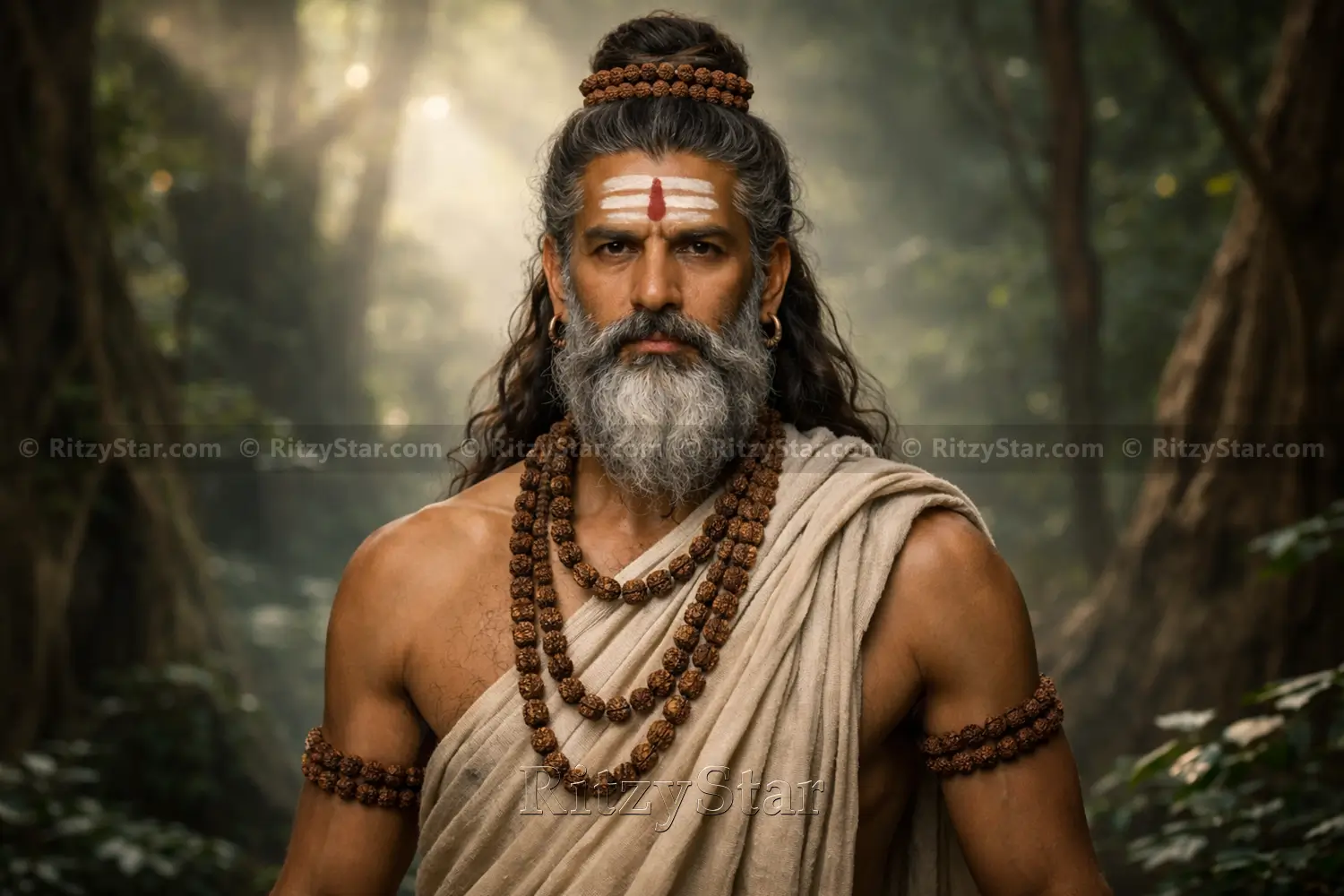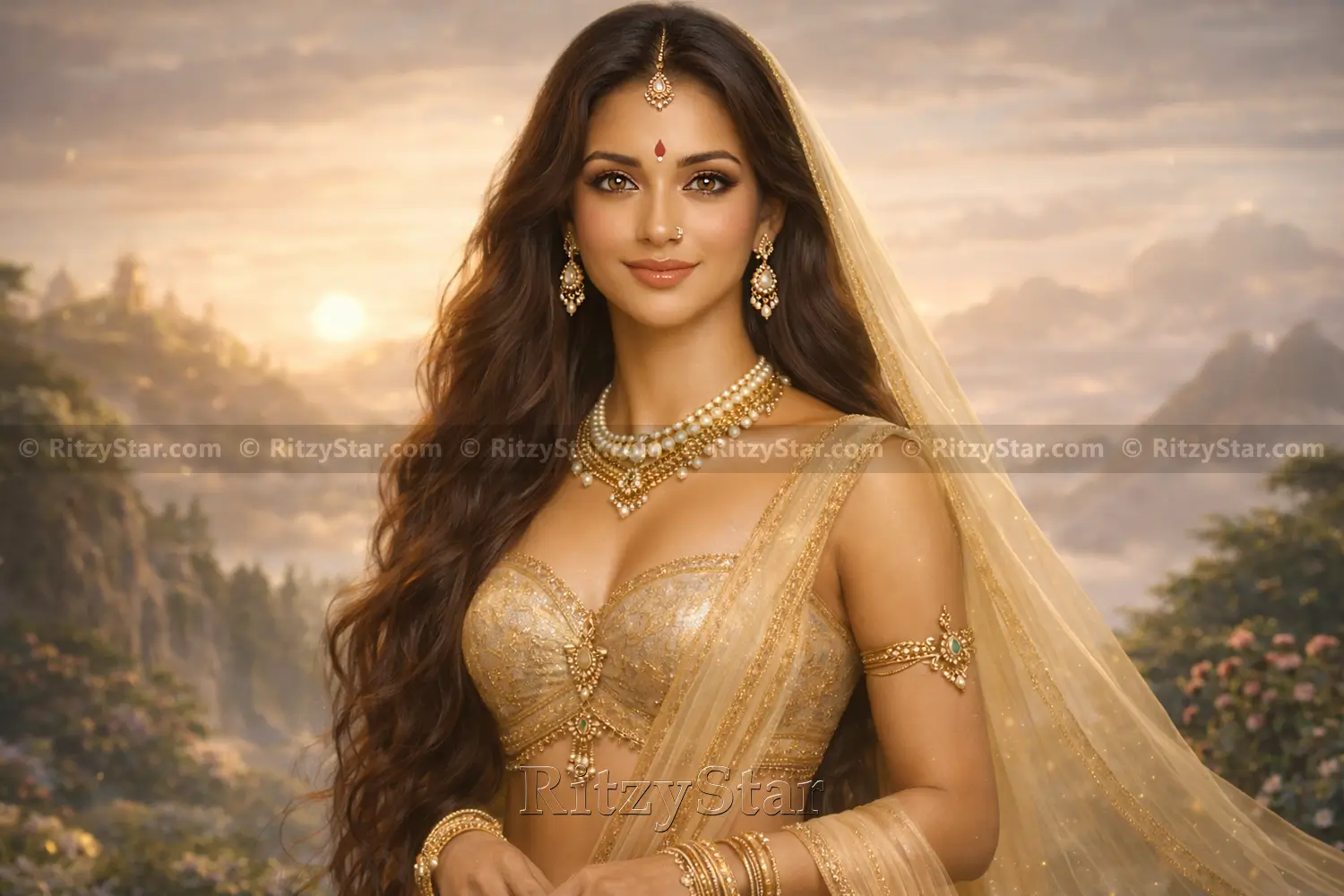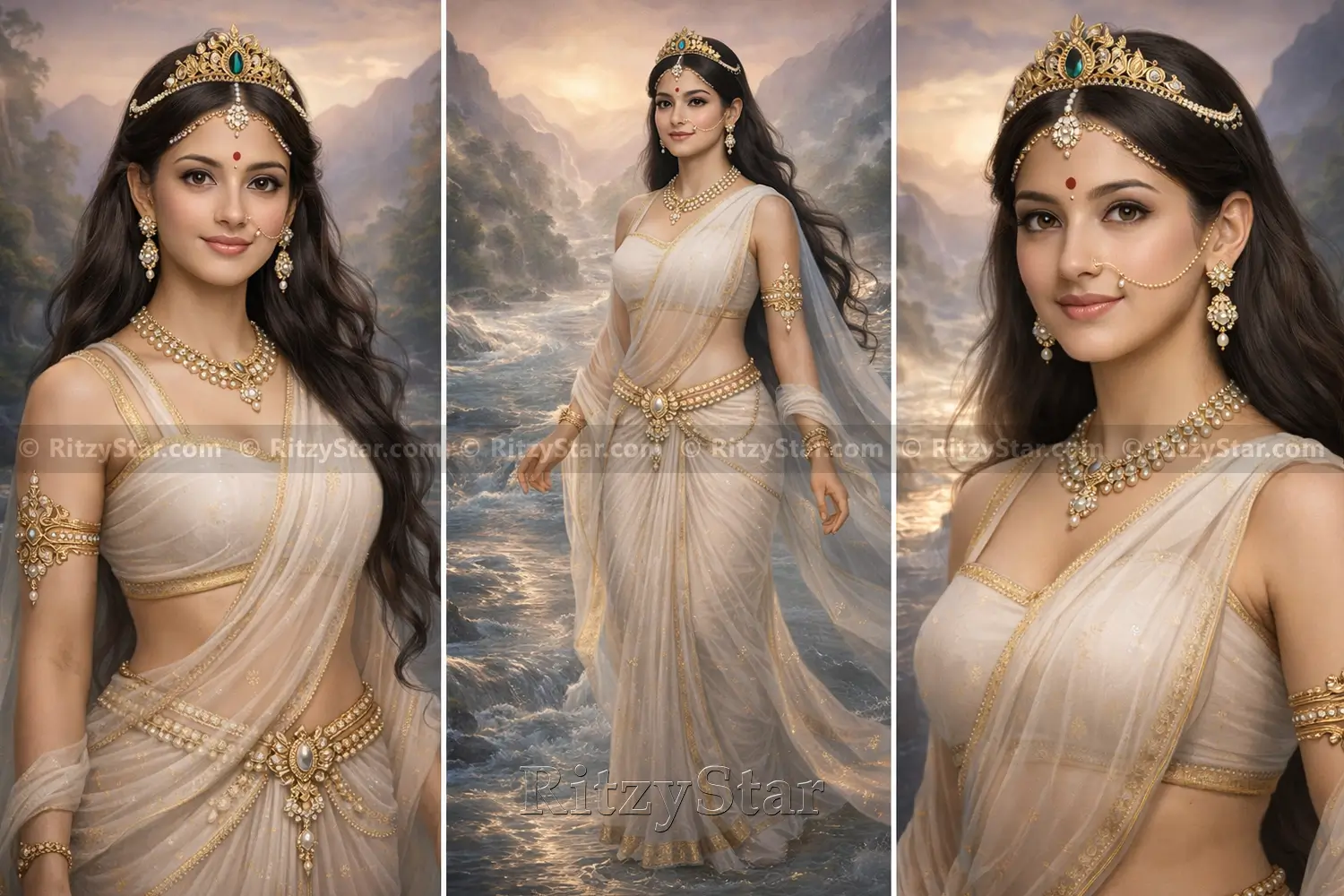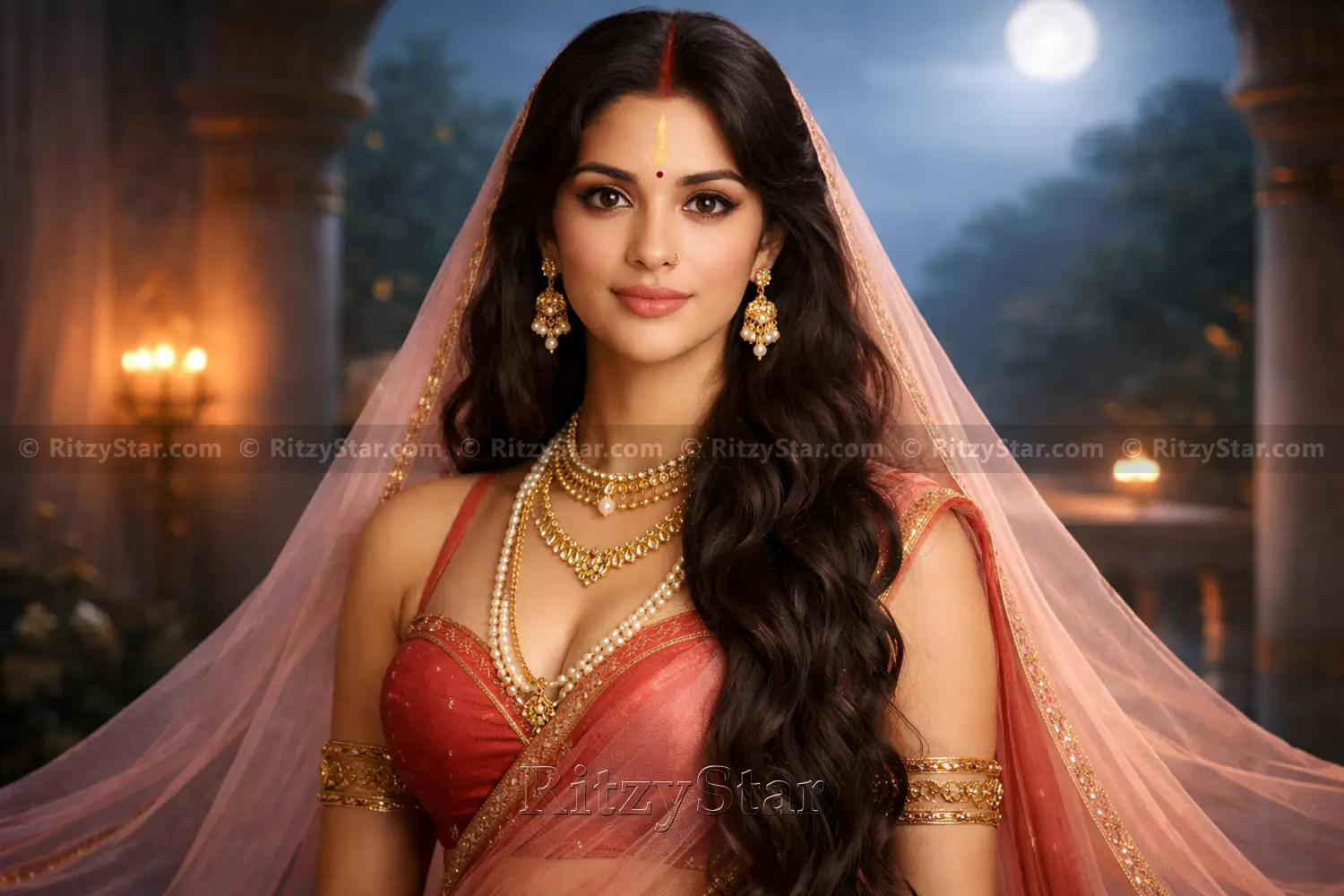
The Princess Who Was Bartered for Horses
Daughter of Yayati, Mother of Kings, The Forgotten Sacrifice
“माधवी सा महाभागा ययातिसुता शुभा।
हयानां कारणात् दत्ता राज्यं संस्थाप्य सप्तधा॥”
— Ancient Verse
Meaning: Madhavi, the blessed one, the virtuous daughter of Yayati, was given away for the sake of horses, establishing kingdoms through her sacrifice.
🌸 Introduction: The Princess They Traded for Horses
She was a princess of the mightiest dynasty on earth. She possessed a divine boon that made her more valuable than gold, more precious than kingdoms. And yet, her father gave her away like currency—bartered for eight hundred white horses with one black ear each.
This is the story of Madhavi.
Not the story of a queen who ruled, but of a princess who was used. Not the tale of a wife who found love, but of a woman who was passed from king to king like a sacred vessel meant only to carry royal seed. Not the biography of a conqueror, but of the mother of conquerors—four sons who would found mighty dynasties while she herself faded into the silence of the forest.
“न राज्यं न च भोगांश्च माधवी समकाङ्क्षत।
पितुः प्रियहिते युक्ता तेन सा पूजिता सुरैः॥”
— by Author
Meaning: Neither kingdom nor pleasures did Madhavi desire; devoted to her father’s welfare, she was worshipped by the gods themselves.
In the vast canvas of Indian mythology, where gods wage wars and heroes perform miracles, Madhavi’s story stands apart for its quiet tragedy. It asks uncomfortable questions: What is the price of a daughter? What happens when duty demands the ultimate sacrifice of personal happiness? And when a woman gives everything—her youth, her body, her children—what is left for her?
📜 Who Was Madhavi? The Princess with a Divine Curse-Blessing
Madhavi was the daughter of the legendary Emperor Yayati, one of the most celebrated rulers of the Chandravansha (Lunar Dynasty). Yayati, the son of Nahusha, was an ancestor of both the Kauravas and Pandavas—which means Madhavi’s blood flowed through the veins of virtually every major dynasty of ancient India.
Her mother was Sharmishtha, the daughter of the demon king Vrishaparva. This mixed heritage—divine royal blood on her father’s side, asura lineage on her mother’s—gave Madhavi a unique position in the celestial hierarchy. She was neither fully goddess nor mortal, but something in between.
“ययातेर्दुहिता दिव्या माधवी कमलेक्षणा।
रूपेणाप्रतिमा लोके गुणैश्च सुरसुन्दरी॥”
— by Author
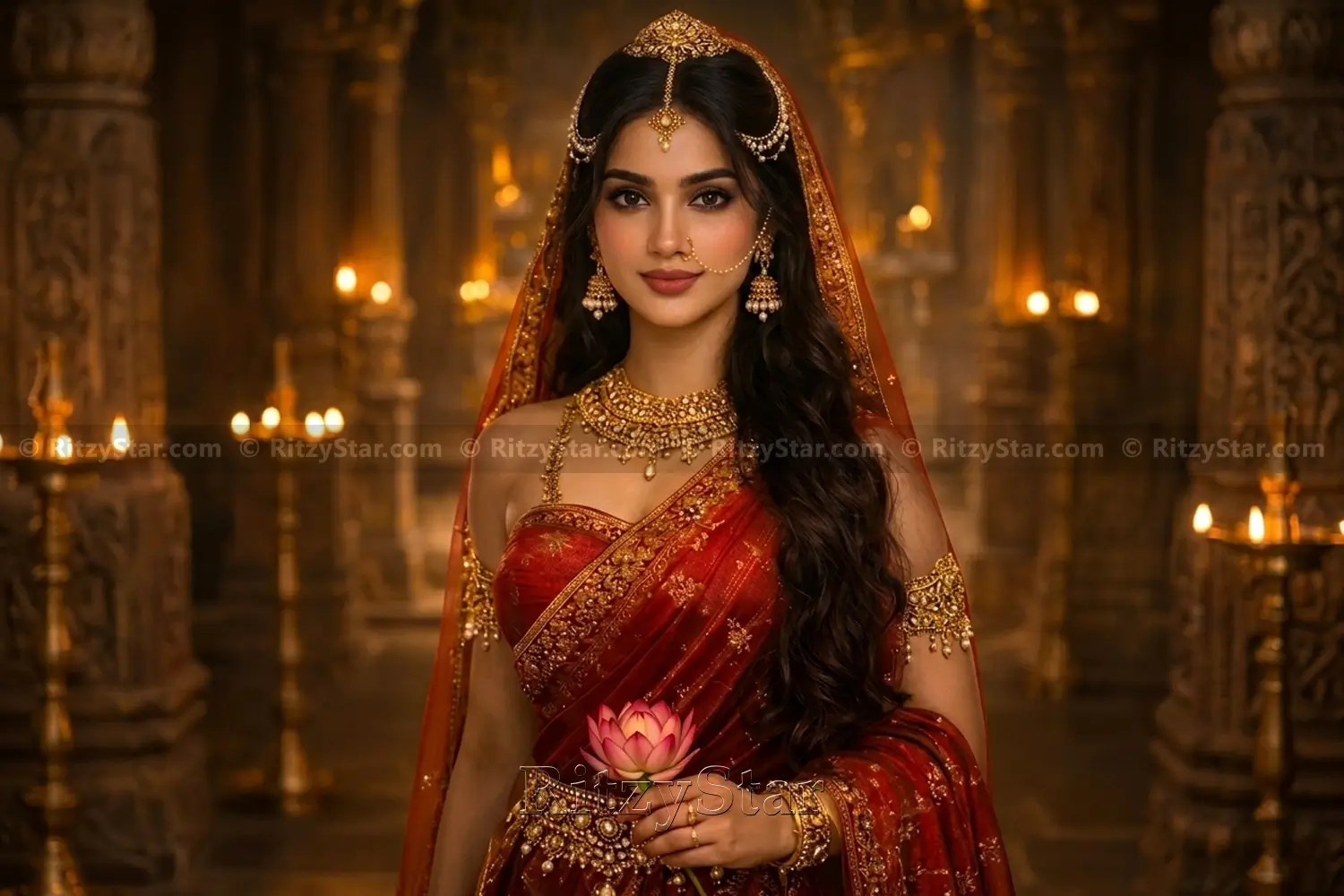
Meaning: Yayati’s divine daughter, Madhavi with lotus eyes, was matchless in beauty in all the world, and in virtues, like a celestial nymph.
The Mahabharata, in the Udyoga Parva (Book of Effort), introduces us to Madhavi through the narration of the sage Narada. He describes her as extraordinarily beautiful, accomplished in all the arts, and possessing a quality that made her uniquely valuable—a divine boon from her grandfather that would shape her entire existence.
✨ The Divine Boon – Gift of Eternal Youth
The origins of Madhavi’s extraordinary gift lie with her maternal grandfather, Shukracharya—the preceptor of the demons and master of the Mrita-Sanjivani (the art of reviving the dead). Shukracharya, pleased with his granddaughter, bestowed upon her a unique boon:
“शुक्रप्रसादाद् या कन्या यौवनं पुनराप्नुयात्।
तस्याः पुत्रा महावीर्या राजानश्च भवन्ति हि॥”
— by Author
Meaning: The maiden who, by Shukracharya’s grace, could regain her youth; her sons would be mighty warriors and become kings.
This boon had two extraordinary components:
First: After each childbirth, Madhavi would return to her maiden state—virgin and young again, as if she had never borne a child. Her youth was inexhaustible, her beauty undiminished by time or motherhood.
Second: Any son born to her would be destined for greatness. He would become a mighty warrior, a king, a founder of dynasties. Her womb was not merely a vessel for life—it was a forge for royalty.
“अक्षय्ययौवना कन्या पुत्रपुत्रवती सदा।
माधवी लोकमातेव पुत्रान् राज्येऽभ्यषेचयत्॥”
— by Author
Meaning: The maiden of inexhaustible youth, always blessed with sons and grandsons, Madhavi, like a universal mother, anointed her sons to kingdoms.
What seemed like a blessing would become the central tragedy of her life. Because this boon made her valuable—too valuable. She was no longer a daughter to be cherished, but an asset to be deployed. Her body became a resource, her womb a commodity, her sons the product of transactions she never consented to.
👨👧 The Father’s Decision – When a Daughter Becomes Currency
The chain of events that would consume Madhavi’s life began with a simple enough premise: a sage needed to pay his guru.
The Story of Galava
Galava was a disciple of the great sage Vishwamitra. After completing his studies, he approached his guru and asked what he could offer as guru-dakshina (the traditional offering to a teacher upon completion of studies). Vishwamitra, perhaps testing his disciple, made an extraordinary demand:
“अष्टौ शतानि राजेन्द्र हयानां चन्द्रभास्करान्।
एककर्णाः सिता राजन् गुरुदक्षिणया ददौ॥”
— by Author
Meaning: Eight hundred horses, O king, white as the moon’s rays, each with one black ear—this was the guru-dakshina demanded.
Eight hundred white horses, each with one black ear. Such horses were virtually impossible to find—they were celestial creatures, not earthly animals. Galava was devastated. He had no wealth, no kingdom, no means of fulfilling this impossible demand.
Galava’s Journey
For years, Galava wandered across the earth, approaching kings and emperors, begging for the horses. But none could provide them. Some offered him wealth instead; others offered their daughters. But Galava remained steadfast—he needed the horses, nothing else.
Finally, in despair, he approached King Yayati—the most powerful emperor of the age, Madhavi’s father.
Yayati’s Proposal
Yayati listened to Galava’s predicament with sympathy. He, too, could not provide the eight hundred horses—such creatures simply did not exist in anyone’s stable. But he had something else to offer.
“इमां माधवीं राजन् ब्रह्मन् प्रतिगृह्यताम्।
अनेय राजानो याचितव्यास्तुरंगमाः॥”
— by Author
Meaning: “O Brahmin, accept this Madhavi. Through her, you can request the horses from kings.”
Yayati explained his daughter’s divine boon: she could restore youth to any king who married her, and she would bear him a son destined for greatness. Surely, Yayati argued, there would be kings who, though unable to provide the rare horses, would be willing to part with two hundred of them in exchange for youth and an heir.
The Transaction Begins
Thus, Madhavi was handed over to Galava—not as a wife, not as a bride, but as a tool to be used in his quest. She would be given to kings, and after each king received a son from her, Galava would receive two hundred horses and Madhavi would be returned to him, still young, still virgin, ready for the next transaction.
“पित्रा दत्ता गलवाय माधवी हयकारणात्।
सा राजभ्यः प्रदातव्या पुत्रार्थं हयलिप्सया॥”
— by Author
Meaning: Given by her father to Galava for the sake of horses, she was to be given to kings for sons, with the desire for horses.
The text does not record Madhavi’s response to this arrangement. Her voice is absent from the narrative. We do not know if she wept, if she protested, if she begged her father to reconsider. Her silence is perhaps the most heartbreaking aspect of her story—a silence imposed by duty, by dharma, by the expectations of her time.
👑 The First Union – King Haryashva of Ayodhya
Galava’s journey with Madhavi began in Ayodhya, the ancient capital of the Ikshvaku dynasty, the Solar Line of kings. Here ruled King Haryashva, a powerful monarch who, despite his prosperity, faced a terrible dilemma.
The King’s Sorrow
Haryashva had no children. His dynasty, which traced its lineage to the sun god himself, faced extinction. He had reached an age where hope of producing an heir had faded, and he was preparing for the inevitable—to renounce his kingdom and retire to the forest, leaving his throne to a distant relative.
“हर्यश्वो राजशार्दूलः पुत्रहीनो महीपतिः।
वनं गन्तुं मनश्चक्रे राज्यं त्यक्त्वा सुदुःखितः॥”
— by Author
Meaning: Haryashva, the tiger among kings, was without a son. He decided to go to the forest, abandoning his kingdom, greatly sorrowful.
When Galava arrived with Madhavi and explained her divine qualities, Haryashva saw a ray of hope in the darkness of his despair.
The Arrangement
Haryashva could not provide the eight hundred horses—no one could. But he could provide two hundred. And in exchange, he asked for something far more precious than horses: a son to continue his lineage.
“राज्यं त्यक्त्वा गमिष्यामि तपसे धर्मसंश्रयात्।
माधवी मे सुतं दद्याद् यो मे वंशधरो भवेत्॥”
— by Author
Meaning: “I am ready to renounce my kingdom and go to the forest for penance. Let Madhavi give me a son who will be my heir and continue my dynasty.”
The agreement was made. Madhavi would stay with Haryashva until she bore him a son. In return, Haryashva would give Galava two hundred of the rare white horses with one black ear each. After the birth, Madhavi would return to Galava, her youth restored by her divine boon, ready for the next king.
The Union
The text does not describe Madhavi’s feelings about this arrangement. Was she hopeful? Resigned? Terrified? We see only the transaction, not the woman.
For a year, Madhavi lived in the palace of Ayodhya as Haryashva’s queen. The king, rejuvenated by her presence (the boon included restoration of youth to her husband as well), treated her with the honor due to a royal consort. But she was not his wife in the full sense—she was a temporary arrangement, a means to an end.
The Birth of Vasumanas
In due time, Madhavi gave birth to a son. He was radiant, beautiful, and destined for greatness. They named him Vasumanas—the good-minded one. In some texts, he is also called Harita, and would become the founder of the Harita dynasty within the Ikshvaku lineage.
“वसुमानसमित्युक्तो हरितश्चेति विश्रुतः।
स राजा हरितानां तु पूर्वजः प्रथितो भुवि॥”
— by Author
Meaning: Called Vasumanas and renowned as Harita, that king was the famous progenitor of the Haritas on earth.
Haryashva was overjoyed. He had his heir, his dynasty was saved. He gratefully handed over two hundred horses to Galava and prepared to embrace his new life—not as a renunciate, as he had planned, but as a father and mentor to his growing son.
The Return
But for Madhavi, joy was mixed with sorrow. As soon as Vasumanas was born, her boon activated. She returned to her maiden state—young, beautiful, virginal—as if she had never borne a child. And with that transformation came separation.
Galava took her away from Ayodhya, away from her newborn son. She would not see Vasumanas grow up. She would not hold him again until he was a grown king, meeting her as a stranger at her father’s sacrifice years later.
“सुषुवे माधवी पुत्रं हर्यश्वाय महात्मने।
तं विसृज्य गता देवी गालवेन सहैव सा॥”
— by Author
Meaning: Madhavi bore a son to the great-souled Haryashva, and leaving him, the goddess departed with Galava.
🏹 The Second Union – King Divodasa of Kashi
Galava and Madhavi next traveled to Kashi (modern Varanasi), the ancient city of learning and liberation. Here ruled King Divodasa, a monarch of immense power and piety.
The King’s Ambition
Divodasa was not childless like Haryashva. He had sons, he had heirs. But he was ambitious—he wanted a son who would be extraordinary, who would surpass all others in valor and wisdom. When he heard of Madhavi’s boon—that her sons were destined for greatness—his interest was kindled.
“दिवोदासो महातेजा माधवीं प्रतिगृह्य सः।
तस्यां पुत्रमजनयद् यः प्रतर्दन उच्यते॥”
— by Author
Meaning: The greatly radiant Divodasa, accepting Madhavi, begot upon her a son who was called Pratardana.
The Arrangement
Like Haryashva, Divodasa could not provide eight hundred horses. But he could provide two hundred. In exchange, he would receive a son from Madhavi—a son who would bring glory to Kashi and establish its dominance among the kingdoms of the land.
The agreement was made. Madhavi would stay with Divodasa until she bore him a son, then return to Galava with her youth restored, and Divodasa would provide two hundred horses.
The Birth of Pratardana
Madhavi’s second son was born in the sacred city of Kashi. They named him Pratardana—the crusher, the destroyer of enemies. And true to his name, he grew up to be one of the most formidable kings of his age.
“प्रतर्दनो महावीर्यः काशीनामधिपोऽभवत्।
इन्द्रादपि च तेजोभिर्विद्यया च समन्वितः॥”
— by Author
Meaning: Pratardana of great valor became the lord of Kashi. He was endowed with splendor and wisdom even greater than Indra’s.
The Kaushitaki Upanishad mentions a King Pratardana who attained spiritual wisdom through instruction from Indra himself. This is likely the same Pratardana—a king who was not only a mighty warrior but also a seeker of truth, a philosopher-king in the ancient tradition.
Another Separation
With the birth of Pratardana, Madhavi’s purpose in Kashi was fulfilled. Her boon activated once more, restoring her youth and virginity. And once more, she was separated from her child.
“प्रतर्दनं सुतं दत्त्वा दिवोदासाय धीमते।
माधवी गालवेनाथ पुनरेव समागता॥”
— by Author
Meaning: Having given the son Pratardana to the wise Divodasa, Madhavi again came back to Galava.
Imagine her state: two sons born, two sons left behind. Each time she held her newborn, she knew she would have to leave him. Each time she formed that bond of motherhood, she knew it would be severed. The boon that made her eternally youthful also made her eternally childless—not in body, but in experience. She was a mother who never got to be a mother.
⚔️ The Third Union – King Shibi of the Ushinara Kingdom
Galava and Madhavi continued their journey. Their next destination was the kingdom of King Shibi, son of Ushinara—a ruler whose name would become synonymous with righteousness and sacrifice.
The Righteous King
Shibi was already legendary for his virtue. The story of Shibi offering his own flesh to save a dove from a hawk (who were actually the gods Agni and Indra in disguise) is one of the most famous tales of sacrifice in Indian mythology. He was a king who placed dharma above all else—even his own life.
“शिबिरौशीनरो राजा धर्मात्मा सत्यविक्रमः।
माधवीं प्रतिजग्राह गालवाद्धयलिप्सया॥”
— by Author
Meaning: Shibi, son of Ushinara, the righteous king of true valor, accepted Madhavi from Galava, desiring horses.
The Arrangement
When Galava approached Shibi with Madhavi and explained the situation, the righteous king faced a dilemma. He wanted to help the brahmin—it was his dharma to do so. But he also could not provide eight hundred of the rare horses. What he could provide was two hundred, and in exchange, he would receive a son from Madhavi.
But Shibi added his own condition, one that reveals his character:
“न केवलं हयार्थं वै माधवीं प्रतिगृह्णते।
पुत्रार्थं च महाभागां धर्मार्थं च विशेषतः॥”
— by Author
Meaning: “Not only for the sake of horses do I accept Madhavi, but for the sake of a son, and especially for the sake of dharma.”
For Shibi, this was not merely a transaction. It was an act of dharma—helping a brahmin in need, ensuring the continuation of his lineage, and participating in a divine plan that he sensed was larger than any of them.
The Birth of Varshina
Madhavi’s third son was born in Shibi’s kingdom. They named him Varshina (or Varshneya), and he would become the founder of the Varshina dynasty within the larger Shibi clan.
“शिबिरौशीनरो राजा माधव्यां जनयत् सुतम्।
वर्षिणं नाम राजानं यो वंशं प्रथितं नयत्॥”
— by Author
Meaning: King Shibi, the son of Ushinara, begot upon Madhavi a son named Varshina, a king who spread his dynasty far and wide.
The Shibi clan, known for their generosity and adherence to truth, would spread across what is now Punjab and Rajasthan. Varshina carried forward his father’s legacy of righteousness, ruling with wisdom and compassion.
The Third Return
And then, for the third time, Madhavi experienced the agony of separation. Her boon activated, her youth returned, and Galava took her away from yet another son.
“वर्षिणं तनयं दत्त्वा शिबये धर्मचारिणे।
पुनर्गालवमभ्यागात् माधवी हयलिप्सया॥”
— by Author
Meaning: Having given her son Varshina to Shibi, the follower of dharma, Madhavi again returned to Galava, still desiring horses.
Three sons. Three kingdoms. Three separations. And still the mission was not complete—Galava had six hundred horses, but he needed eight hundred. Two hundred more were required.
🤝 The Fourth Union – The Sage Vishwamitra
Galava, now with six hundred horses, returned to his guru Vishwamitra, hoping that the great sage would accept the partial payment and release him from his obligation.
Vishwamitra’s Test
But Vishwamitra was not satisfied. Perhaps he was testing his disciple’s perseverance, or perhaps he had his own reasons. He insisted on the full eight hundred—no less.
“अष्टौ शतानि सम्पूर्णान्यानयस्व ममाज्ञया।
न न्यूनानि ग्रहीष्यामि गुरुदक्षिणया तव॥”
— by Author
Meaning: “Bring the full eight hundred by my command. I will not accept less as your guru-dakshina.”
Galava was devastated. He had traveled the earth, approached countless kings, given Madhavi to three rulers, obtained six hundred of the rarest horses imaginable—and still it was not enough. In desperation, he considered the unthinkable.
The Desperate Thought
“गालवो माधवीं विक्रेतुं मनश्चक्रे महामुनिः।
दुःखितः शोकसंतप्तो निर्वेदं परमं गतः॥”
— by Author
Meaning: The great sage Galava thought of selling Madhavi; distressed, tormented by sorrow, he reached the height of despair.
Selling a woman—especially a princess, especially one who had been given to him in trust—was unthinkable. It violated every principle of dharma. But Galava saw no other way. He had exhausted all options. Madhavi was his only remaining asset.
Vishwamitra’s Intervention
But the cosmos had other plans. Vishwamitra, through his divine vision, perceived his disciple’s desperate intention. And he intervened.
“विश्वामित्रस्तदा ज्ञात्वा स्वयमेव समागमत्।
मा विक्रेतुं कृथा राज्ञीं माधवीं पापमुत्तमम्॥”
— by Author
Meaning: Vishwamitra, understanding this, himself came forward. “Do not sell the queen Madhavi—that would be the greatest sin.”
Vishwamitra proposed an alternative. He himself would accept Madhavi. Not as a wife in the traditional sense, but to produce a son. And with that son’s birth, Galava’s obligation would be considered fulfilled—the remaining two hundred horses would no longer be required.
The Union with the Sage
Thus, Madhavi’s fourth and final union was with the great sage Vishwamitra himself—the very sage whose demand had set this entire chain of events in motion.
“माधवी मम पुत्रं त्वं जनयस्व महामुने।
तेन तुष्टो भविष्यामि गुरुदक्षिणया तव॥”
— by Author
Meaning: “O great sage, let Madhavi bear me a son. With that, I will be satisfied, and your guru-dakshina will be fulfilled.”
The irony is profound. Vishwamitra, who had demanded eight hundred impossible horses, was now satisfied with a son born from the very woman who had been used to obtain them. The horses were no longer necessary. All of Galava’s struggles, all of Madhavi’s sacrifices, could have been avoided if Vishwamitra had simply stated his true desire from the beginning.
But perhaps that was the point. Perhaps Vishwamitra’s demand was never really about the horses—it was a test, a cosmic lesson about attachment, desire, and the true meaning of guru-dakshina.
The Birth of Sushruta (Ashtaka)
From the union of Madhavi and Vishwamitra was born a son. He was called Sushruta in some texts, Ashtaka in others. This child combined within himself the royal blood of the Lunar Dynasty and the spiritual power of one of the greatest sages who ever lived.
“अष्टको नाम तेजस्वी माधव्यां जनयत् प्रभुः।
विश्वामित्रो महातेजा राजर्षिर्ब्रह्मर्षितां गतः॥”
— by Author
Meaning: The lord Vishwamitra of great splendor, who went from royal sage to Brahmin sage, begot the radiant Ashtaka upon Madhavi.
Sushruta/Ashtaka grew up to be a king-sage, moving between the worlds of power and spirituality. His descendants would include both warriors and sages, carrying forward the unique legacy of his parents.
👨👩👦 The Family Table of Madhavi
| Sl.No | Name | Relationship | Children | Remarks |
|---|---|---|---|---|
| 1 | King Haryashva of Ayodhya (Ikshvaku Dynasty – Solar Line) | First Union (arranged by Galava for horses) | 1. Vasumanas (Harita) – Became king of Ayodhya; founder of the Harita dynasty within the Ikshvaku lineage. Known for his piety and administrative skills. Expanded his father’s kingdom significantly. | Haryashva was childless and planning to renounce his kingdom when Galava arrived with Madhavi. He gave 200 white horses with one black ear each in exchange for a son. After Vasumanas’s birth, Madhavi returned to Galava with her youth restored. |
| 2 | King Divodasa of Kashi (Varanasi Kingdom) | Second Union (arranged by Galava for horses) | 1. Pratardana – Became one of the most celebrated kings of Kashi. Mentioned in the Kaushitaki Upanishad as a king who received spiritual wisdom from Indra. Known for both military conquests and philosophical wisdom. | Divodasa already had sons but desired an extraordinary heir. He accepted Madhavi to produce a son destined for greatness, giving Galava 200 horses in exchange. Madhavi returned to Galava after Pratardana’s birth. |
| 3 | King Shibi of Ushinara (Shibi Dynasty) | Third Union (arranged by Galava for horses) | 1. Varshina (Varshneya) – Founder of the Varshina clan within the larger Shibi dynasty. His descendants spread across northern and central India (modern Punjab and Rajasthan regions). Known for continuing his father’s legacy of righteousness. | Shibi, renowned for his piety and the famous dove sacrifice story, accepted Madhavi both for horses and for dharma. He gave 200 horses to Galava. Madhavi returned to Galava after Varshina’s birth. |
| 4 | Sage Vishwamitra (Great Sage, former king) | Fourth Union (to complete Galava’s guru-dakshina) | 1. Sushruta (Ashtaka) – Combined royal blood with Brahmanical spiritual power. His descendants included both warriors and sages. In some traditions, he is associated with the founding of the Ashtaka dynasty. Known for his wisdom and spiritual authority. | Vishwamitra intervened when Galava considered selling Madhavi. He accepted her to produce a son, thereby considering Galava’s guru-dakshina fulfilled without requiring the remaining 200 horses. This union completed Madhavi’s journey. |
🌿 The End of the Journey – Madhavi’s Freedom?
With the birth of her fourth son, Madhavi’s role in Galava’s mission was finally complete. She had given sons to three kings and one sage. She had helped obtain six hundred of the rarest horses in existence. She had fulfilled every duty asked of her.
“चत्वारः पृथिवीपाला माधवीतनया नृप।
वसुमान्प्रतर्दनश्च शिबिरौशीनरोऽष्टकः॥”
— by Author
Meaning: Four protectors of the earth were Madhavi’s sons, O King: Vasumanas, Pratardana, Shibi’s son (Varshina), and Ashtaka (Sushruta).
But what was left for Madhavi?
Her youth was intact—the boon still held. Her beauty remained. She could, theoretically, have been given to more kings, produced more sons, obtained more horses. But Galava’s mission was complete. Vishwamitra was satisfied. The guru-dakshina was fulfilled.
For the first time in years, Madhavi was free.
But freedom after so long is a strange thing. She had spent her entire adult life being passed from man to man, kingdom to kingdom. She had borne four sons and raised none of them. She had no home, no family, no identity except as a vessel for others’ desires.
The Return to Her Father
Galava, his mission accomplished, returned Madhavi to her father Yayati. The transaction was complete. The tool was no longer needed.
“गालवो माधवीं राजन् ययाते प्रत्यपादयत्।
कृतकृत्यस्तदा राजन् धर्मराजमुवाच ह॥”
— by Author
Meaning: Galava, O King, returned Madhavi to Yayati. Having accomplished his purpose, he spoke to the king of dharma.
How must that moment have felt for Madhavi? Returned to her father like a borrowed object, her purpose fulfilled, her body intact but her spirit carrying the weight of four separations? The text does not record her emotions. It never does.
🕊️ The Reunion – Meeting Her Sons
Years passed. Madhavi’s sons grew up in their respective kingdoms, unaware of their mother’s story. Vasumanas ruled in Ayodhya, Pratardana in Kashi, Varshina among the Shibis, and Sushruta/Ashtaka in his father Vishwamitra’s domain. They became powerful kings, each expanding his kingdom and establishing his dynasty.
The Great Sacrifice
Then came the day when their grandfather, Emperor Yayati, performed a great sacrifice (yajna). It was one of the most magnificent ceremonies ever conducted—kings from across the land were invited, including Madhavi’s four sons.
“ययातियज्ञे संप्राप्ताश्चत्वारो माधवीसुताः।
समेत्य मातरं दृष्ट्वा ववन्दिरे भक्तिपूर्वकम्॥”
— by Author
Meaning: At Yayati’s sacrifice, the four sons of Madhavi, having gathered together, saw their mother and bowed to her with devotion.
Imagine the scene. Four mighty kings, rulers of great kingdoms, conquerors and founders of dynasties, stand before a woman in simple ascetic clothing. They do not know her at first—they have never seen her. But something draws them. Perhaps Yayati reveals the truth. Perhaps the recognition comes through divine intuition.
And then, the moment of truth: they learn that this woman is their mother. The woman who gave them life and then disappeared. The woman who bore them in palaces and left them in cradles, not by choice but by fate.
The Bowing of Kings
The four kings bow before Madhavi. They touch her feet. They offer her the respect due to a mother—and more. Because they now understand the magnitude of her sacrifice. She gave them life, but she also gave them kingdoms. Without her willingness to be bartered for horses, none of them would exist.
“नमो मात्रे महाभागे नमः पुत्रप्रदायिनि।
नमस्ते तपसां सिद्ध्यै नमस्ते धर्मचारिणि॥”
— by Author
Meaning: “Salutations to the blessed mother, salutations to the giver of sons. Salutations to the accomplishment of your austerities, salutations to the follower of dharma.”
For Madhavi, this moment is both fulfillment and loss. She sees her sons—grown, powerful, magnificent—and she knows she had no part in their raising. She missed their first steps, their first words, their first battles. She is a stranger to them, and they to her.
And yet, they bow. They honor her. They acknowledge that everything they are, they owe to her.
🌿 Madhavi’s Final Years – The Ascent to the Forest
After the birth of her fourth son and the completion of Galava’s mission, Madhavi was finally free—or so it seemed. She had fulfilled every duty asked of her: she had served her father’s obligation, helped a sage complete his guru-dakshina, provided heirs to three kings, and given a son to the great Vishwamitra.
But what was left for her?
“माधवी तु तदा राजन् पुत्रान् दृष्ट्वा महाबलान्।
वनं जगाम धर्मज्ञा तपस्तप्तुं समाहिता॥”
— by Author
Meaning: Madhavi then, O King, having seen her mighty sons, went to the forest, devoted to dharma, to perform austerities.
According to the Mahabharata, after her sons had grown up and established themselves as rulers, Madhavi chose to retire to the forest. She had lived her life according to the wishes of others—her father, the sages, the kings. Now, finally, she could live for herself.
In the forest, she engaged in severe austerities, seeking spiritual liberation rather than worldly fulfillment. Her years of sacrifice had perhaps prepared her for this final stage of life—a stage where she could turn inward and find the peace that had eluded her in the palaces and royal courts.
🕊️ The Reunion – Recognition by Her Sons
One of the most touching episodes in Madhavi’s story occurs when her sons, now grown and ruling their respective kingdoms, gather at a great sacrifice (yajna) being performed by their grandfather Yayati. It is here that they learn the full truth of their origins.
“ययातियज्ञे संप्राप्ताश्चत्वारो माधवीसुताः।
समेत्य मातरं दृष्ट्वा ववन्दिरे भक्तिपूर्वकम्॥”
— by Author
Meaning: At Yayati’s sacrifice, the four sons of Madhavi, having gathered together, saw their mother and bowed to her with devotion.
The moment of recognition is profound. These four powerful kings—rulers of great kingdoms, founders of dynasties—bow before the woman who had given them life and then, by circumstance, had been separated from them. They honor her not just as their mother but as the source of their very existence and their royal status.
Madhavi, seeing her sons united, finally experiences a moment of fulfillment. Her sacrifices had not been in vain. From her womb had sprung kings who would shape the destiny of nations.
📜 The Deeper Meaning – What Madhavi’s Story Teaches Us
Like all great myths, Madhavi’s story operates on multiple levels. It is at once a historical narrative, a moral lesson, and a spiritual allegory.
The Feminist Reading: A Woman’s Value
From a contemporary perspective, Madhavi’s story raises uncomfortable questions about the value placed on women in patriarchal societies. She was valued—but only for what she could produce. Her beauty, her youth, her womb—these were assets to be deployed. Her feelings, her desires, her autonomy—these were irrelevant.
“नाम्ना राज्ञी गुणैः दासी भोगैः देवी तपस्विनी।
माधवी जीवनं तस्याः करुणाक्रन्दनं महत्॥”
— by Author
Meaning: In name a queen, in qualities a slave; in pleasures a goddess, in reality an ascetic—Madhavi’s life was a great cry of pathos.
Yet within this constrained existence, Madhavi maintained her dignity. She never complained, never rebelled. Her power lay not in resistance but in endurance—in transforming suffering into strength, in finding meaning in sacrifice.
The Spiritual Allegory: The Soul’s Journey
Some interpreters see Madhavi as representing the human soul in its journey through multiple lives. The four kings represent different stages of spiritual practice: Haryashva (the childless king) represents the soul seeking continuation; Divodasa (the ambitious king) represents the soul seeking excellence; Shibi (the righteous king) represents the soul seeking dharma; Vishwamitra (the sage-king) represents the soul seeking liberation.
“माधवी साधना रूपा राजानो विविधा व्रताः।
तत्पुत्राः सिद्धयः प्रोक्तास्तासां जन्म सुखावहम्॥”
— by Author
Meaning: Madhavi represents spiritual practice; the various kings represent different vows or disciplines; her sons represent the spiritual powers (siddhis) born from those practices.
In this reading, the four sons born to Madhavi are the four siddhis (spiritual attainments) that arise from dedicated practice:
- Vasumanas (the good-minded) represents Dharma (righteousness)
- Pratardana (the crusher) represents Jnana (knowledge)
- Varshina (the rain-giver) represents Aishvarya (prosperity)
- Sushruta/Ashtaka (the eight-formed) represents Vairagya (renunciation)
The Karmic Lesson: Actions and Consequences
Madhavi’s story also illustrates the complex workings of karma. Her father Yayati, by using his daughter as currency, incurred a karmic debt that would be repaid through his descendants. Her sons, born through transactional unions, would go on to shape the destiny of nations—good karma emerging from questionable means.
“ययातिः स्वसुतां दत्त्वा गालवाय महात्मने।
मोक्षं प्राप स धर्मात्मा पुत्राणां च महद्यशः॥”
— by Author
Meaning: Yayati, having given his own daughter to the great-souled Galava, attained liberation and great fame through his sons.
The text presents Yayati’s act as ultimately dharmic—he helped a brahmin, he fulfilled an obligation, and through his daughter’s sacrifice, great dynasties arose. But the story does not gloss over the cost. Madhavi’s suffering is not hidden. The text records her pain even as it justifies the actions that caused it.
🌺 The Symbolism of Horses
The eight hundred white horses with one black ear each are not arbitrary. In Vedic symbolism, horses represent energy, power, and sensory faculties. White horses represent pure energy, and the single black ear represents the one imperfection that all embodied beings carry.
“अश्वाः प्राणा इति प्रोक्ताः श्वेताः शुद्धस्वरूपिणः।
एककर्णास्तु संसारचिह्नं विद्याद्विचक्षणः॥”
— by Author
Meaning: Horses are said to be the life-forces; white ones represent pure nature. The single black ear should be known by the wise as the mark of worldly existence.
In this interpretation, Galava’s quest for eight hundred such horses represents the spiritual seeker’s quest for complete mastery over the life-forces—a mastery that is virtually impossible to achieve. The horses cannot be obtained because complete mastery is not possible in embodied existence. Something always remains—that one black ear, that one imperfection.
Madhavi, in this reading, becomes the means by which partial mastery is achieved. Through her, Galava obtains six hundred horses—near-complete mastery. And through her final union with Vishwamitra, he obtains the equivalent of the remaining two hundred—not through horses, but through the birth of a son who represents spiritual attainment.
🕉️ Madhavi and Tara – A Comparative Reflection
The stories of Madhavi and Tara, when read together, offer complementary perspectives on the feminine in Hindu mythology:
| Aspect | TARA | MADHAVI |
|---|---|---|
| Identity | Wife of Brihaspati, beloved of Chandra | Daughter of Yayati, mother of four kings |
| Primary Role | Catalyst for cosmic war | Instrument for obtaining horses |
| Agency | Active (chose to go with Chandra) | Passive (given by father, given by Galava) |
| Conflict | Caused war (Tarakamaya) | Caused no conflict; accepted her fate |
| Children | One son (Budha) | Four sons (one from each union) |
| Resolution | Truth revealed by Brahma | Recognition by sons at yajna |
| Symbolic Meaning | Wisdom transmitted from guru to disciple | Spiritual practice yielding multiple attainments |
| Later Worship | Tantric goddess; Buddhist deity | Venerated as matriarch; not widely worshipped |
| Legacy | Planetary deity; cosmic figure | Matriarch of dynasties; symbol of sacrifice |
Where Tara’s story is one of passion and cosmic consequence, Madhavi’s is one of quiet endurance and earthly impact. Tara’s beauty shook the heavens; Madhavi’s sacrifice shaped the earth. Both, however, represent the transformative power of the feminine—whether through desire or through duty.
🏵️ Madhavi’s Legacy – The Mother of Kings
Perhaps the greatest legacy of Madhavi lies in her sons and their descendants. Through them, her blood flowed into countless royal families across ancient India.
The Ikshvaku Connection
Through Vasumanas, Madhavi became connected to the Solar Dynasty of Ayodhya—the dynasty of Rama. The Harita branch, descended from Vasumanas, produced several notable kings and sages.
The Kashi Legacy
Through Pratardana, Madhavi’s lineage ruled Kashi (Varanasi), one of the oldest continuously inhabited cities in the world. Pratardana’s descendants maintained the spiritual and political importance of Kashi for generations.
The Shibi Dynasty
Through Varshina, Madhavi’s bloodline spread among the Shibi clans, who were known for their generosity and adherence to truth. The Shibi kingdom, located in what is now Punjab and Rajasthan, played important roles in later epic narratives.
The Vishwamitra Connection
Through Sushruta (Ashtaka), Madhavi’s lineage combined with that of one of the most powerful sages in Hindu tradition. Vishwamitra, the former king who became a brahmarshi, gave Madhavi’s son a unique status—part Kshatriya, part Brahmin—allowing his descendants to move between the worlds of power and spirituality.
🌅 Conclusion – The Star That Shines in Silence
The story of Madhavi is not one of dramatic battles or cosmic wars. It is a quiet story—a story of a woman who gave everything and asked for nothing, who was used by others and yet remained untouched in her essential dignity.
“माधवी जननी धन्या यस्याः पुत्रा महीपतयः।
स्वयं तु विजने वने तपस्तप्त्वा दिवं गता॥”
— by Author
Meaning: Blessed is Madhavi the mother, whose sons were lords of the earth; she herself, having performed austerities in the solitary forest, attained heaven.
Madhavi represents all those women in history and mythology whose names are barely remembered but whose sacrifices made possible the greatness of others. She is the mother who gives her children to the world and then retreats into silence. She is the daughter who obeys her father’s command even when it breaks her heart. She is the woman who endures.
The Unanswered Questions
Her story leaves us with questions that echo across the millennia:
What did Madhavi feel when she held each newborn son, knowing she would have to leave him?
What dreams did she nurture in the silent nights of her forest austerities?
Did she ever forgive her father? Did she ever find peace?
The text does not answer these questions. Madhavi’s inner life remains hidden, as hidden as the hearts of countless women whose sacrifices built the world but whose voices were never recorded.
The Eternal Mother
But in one sense, Madhavi is not silent. She lives on in her sons, and in their sons, and in the countless generations that followed. The Lunar Dynasty, which produced the Kauravas and Pandavas, flows through her blood. Every king of the Chandravansha, every hero of the Mahabharata, carries a trace of Madhavi in his veins.
“या देवी सर्वभूतेषु माधवीरूपेण संस्थिता।
नमस्तस्यै नमस्तस्यै नमस्तस्यै नमो नमः॥”
— by Author
Meaning: To that goddess who abides in all beings in the form of Madhavi, salutations to her, salutations to her, salutations to her again and again.
Madhavi, like the star Tara, shines with a quiet light—the light of endurance, of sacrifice, of love that asks nothing in return. In the constellation of mythological women, she is the star that burns steadily in the background, illuminating the paths of others while asking only to be remembered.
And remember her we must, for in her story we see reflected the stories of countless women across time—women whose sacrifices built the world but whose names have been forgotten. Madhavi reminds us that sometimes the greatest heroes are not those who fight battles or win kingdoms, but those who give themselves away, piece by piece, and still remain whole.
Discover more from RitzyStar
Subscribe to get the latest posts sent to your email.