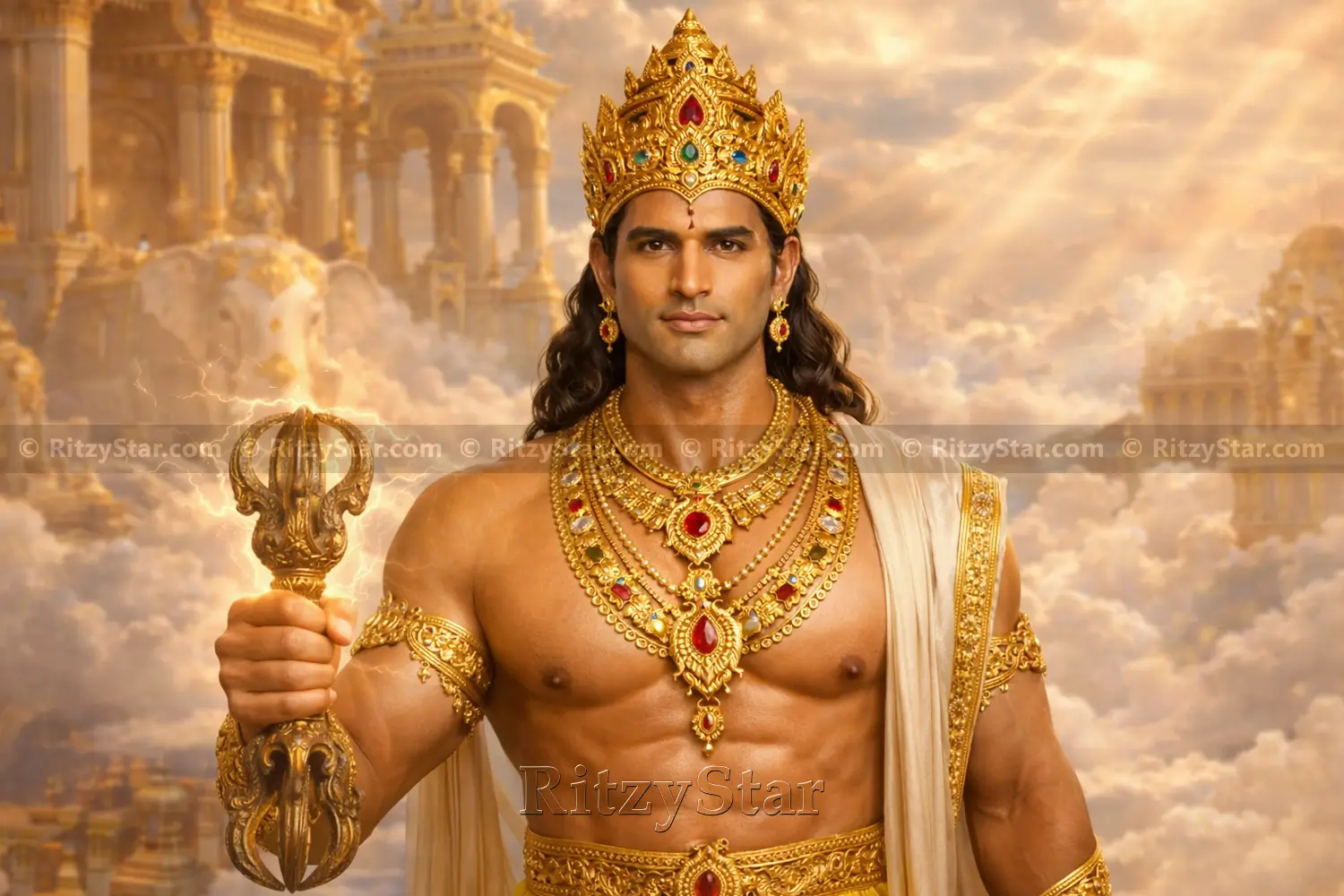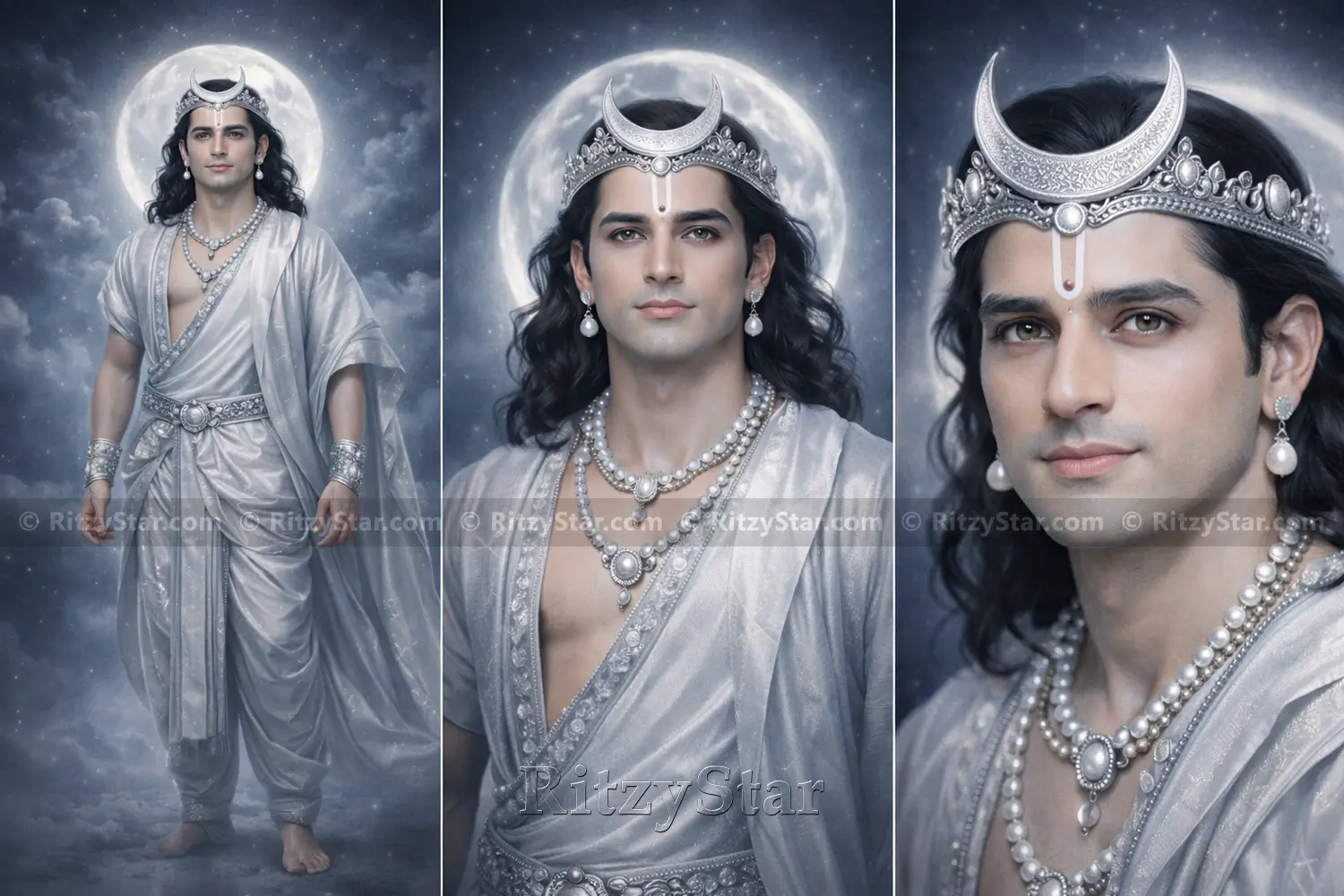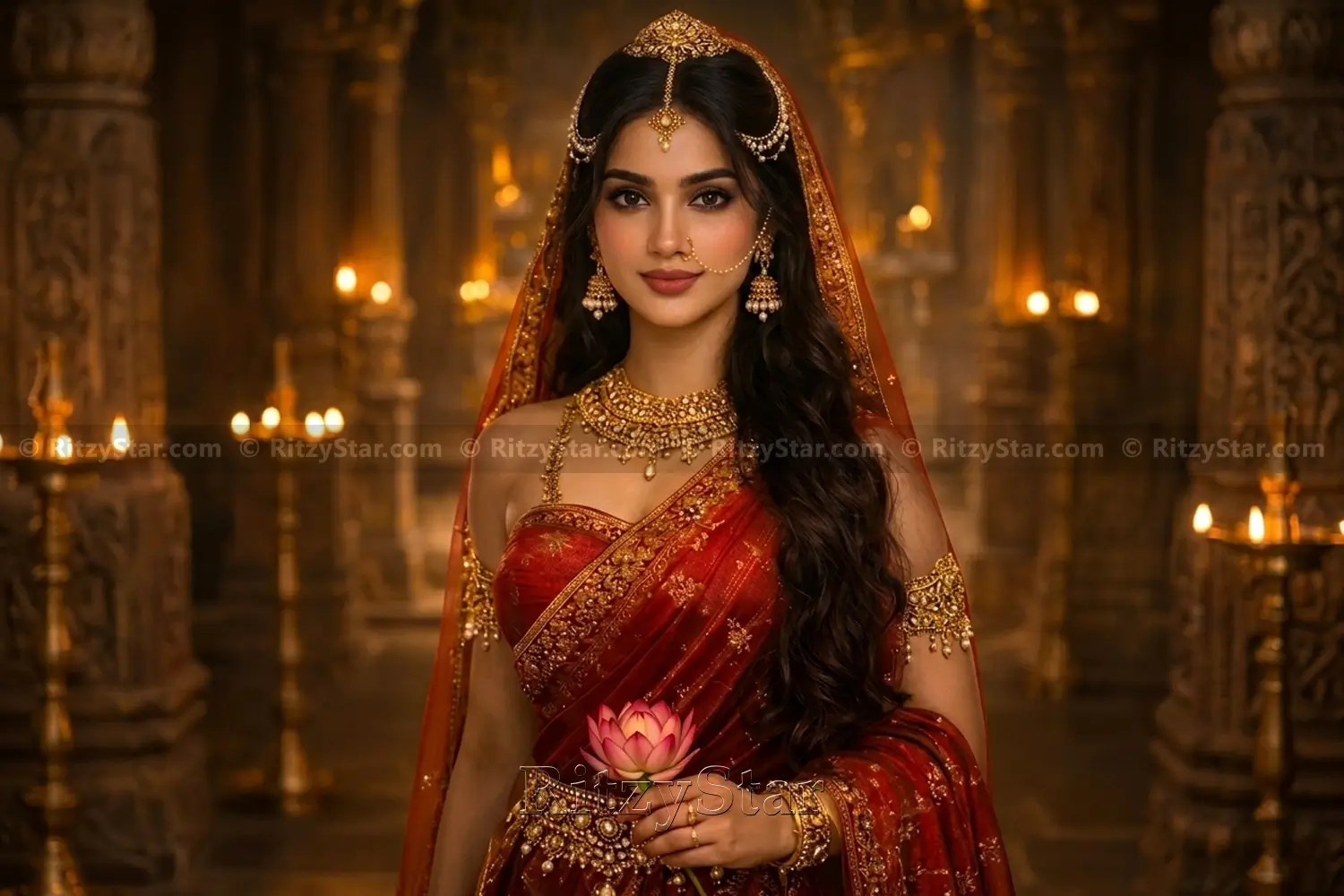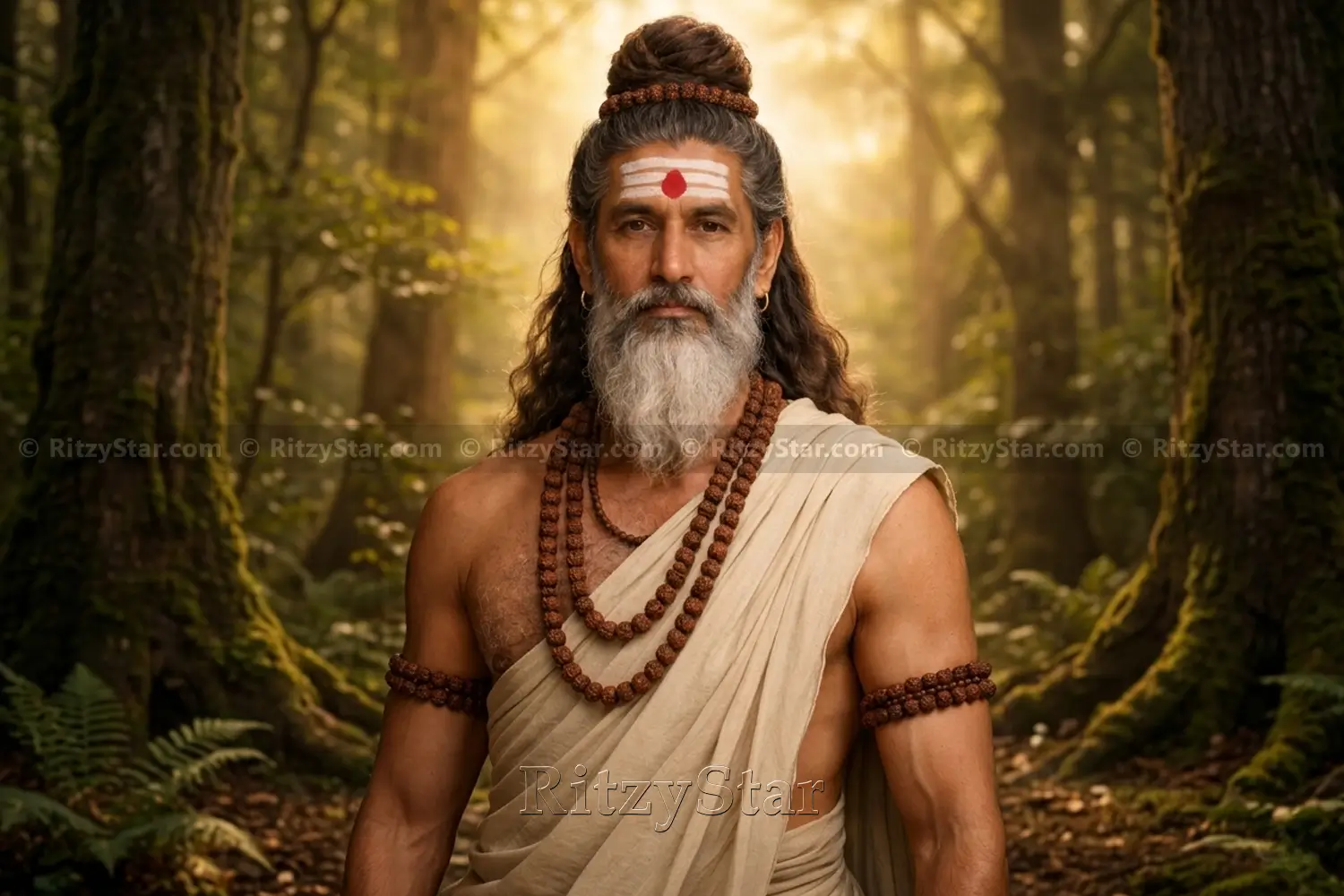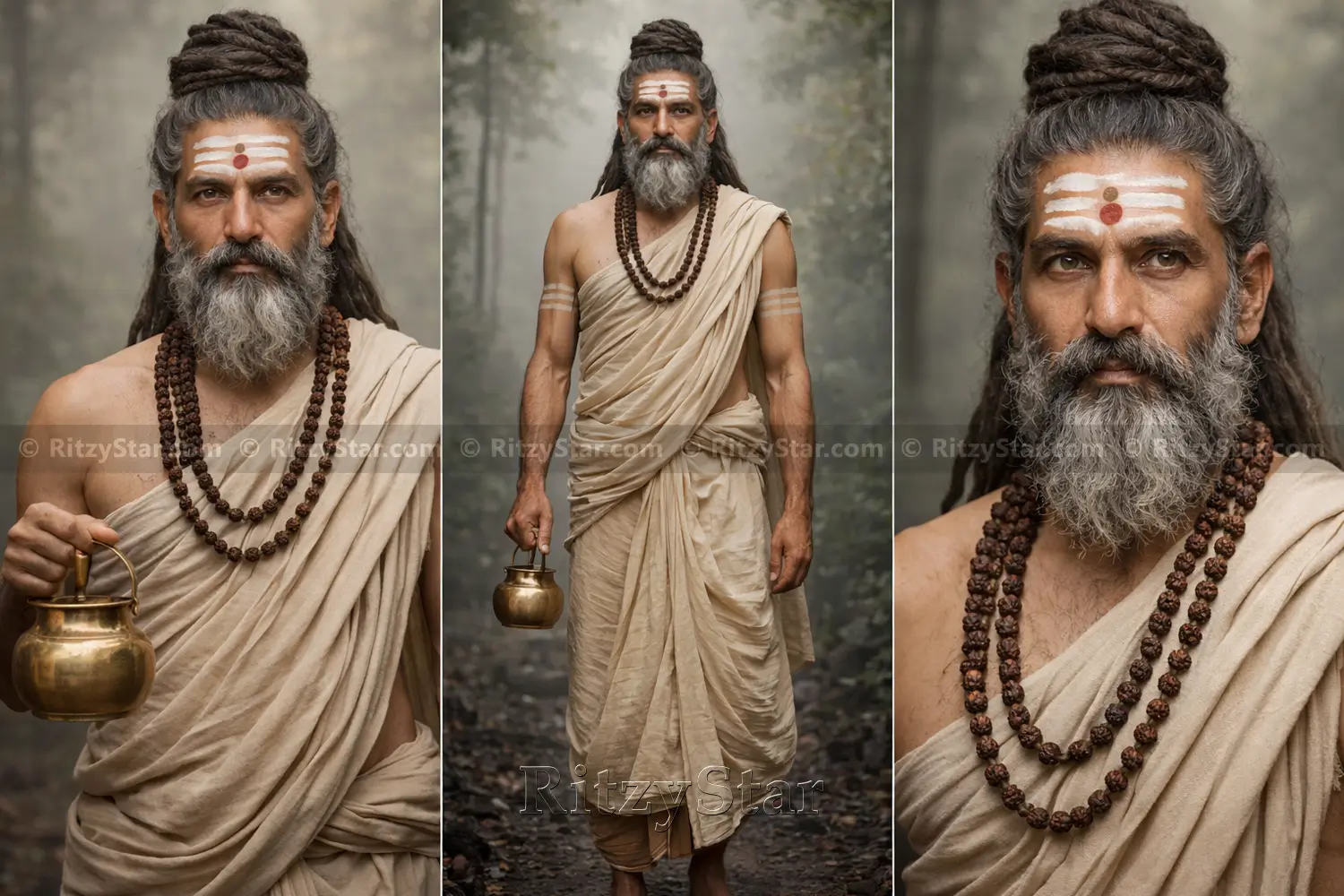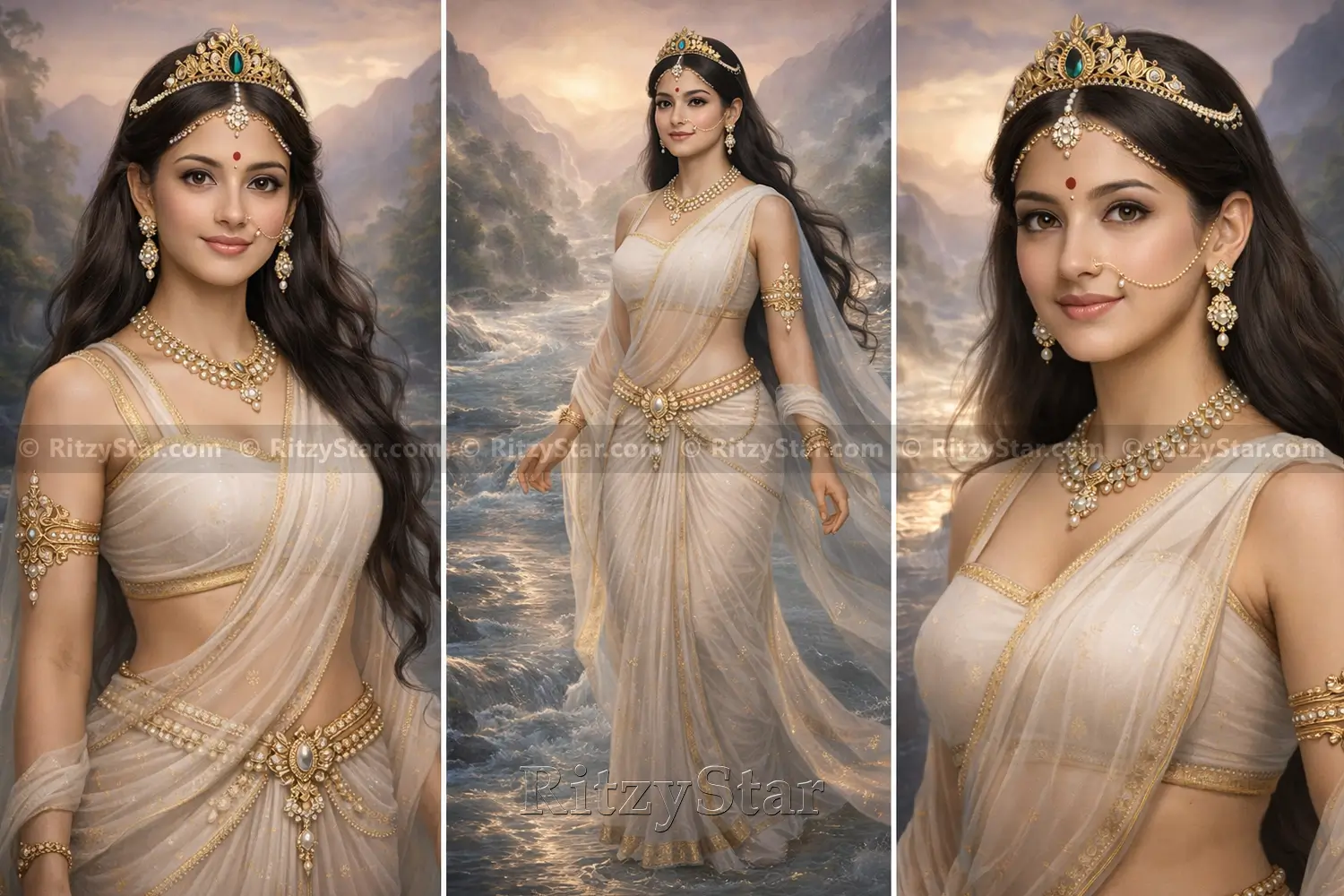

“रेणुका तु महाभागा जामदग्न्यस्य धीमतः।
पतिव्रता महाभागा पुत्रवती च भामिनी॥”
— Ancient Sanskrit Verse
Meaning: Renuka, the greatly blessed one, wife of the wise Jamadagni, was a devoted wife, highly fortunate, a radiant mother of sons.
Oh, what purity and tragedy, what devotion and transformation echo through the sacred legends of Bharata! Among the luminous matriarchs who adorn the tapestry of Hindu mythology, one name shines with an intensity both tender and terrible—Renuka, the chaste wife of Sage Jamadagni and mother of Parashurama, the sixth avatar of Lord Vishnu. Her story is not merely a tale of ancient times—it flows like a sacred river through the consciousness of millions, carrying within its currents the deepest questions of duty, devotion, motherhood, and the mysterious ways of divine will.
Who Was Renuka, the Mother of Parashurama?
“रेणुका नाम या देवी जामदग्न्यस्य धीमतः।
पतिव्रता महाभागा पुत्रवती च भामिनी॥”
— by Author
Meaning: Renuka, the goddess-like one, wife of the wise Jamadagni, was a devoted wife, highly fortunate, and a radiant mother.
Who can fully capture in words the essence of this remarkable woman? She was born a princess, became a sage’s wife, and through trials that would shatter ordinary mortals, emerged as a goddess worshipped across the length and breadth of India. Her story contains elements of the miraculous and the mundane, the tender and the terrifying, the human and the divine.
Renuka was the daughter of a king—according to some texts, her father was King Prasenajit, while folk traditions name her father as Renu, or even describe her as the daughter of a mountain king who was none other than Shiva himself, with his consort Parvati taking the form of Jamilika . From her royal birth, she carried the dignity of a princess, yet she chose the path of an ascetic’s wife, embracing a life of simplicity and service in the forest hermitage.
“राजपुत्री तपस्विनी मुनिपत्नी च धार्मिका।
रेणुका सर्वलोकेषु पूज्या पावनकारिणी॥”
— by Author
Meaning: A king’s daughter, an ascetic woman, a sage’s righteous wife—Renuka is worshipped across all worlds as one who purifies all.
Her marriage to Sage Jamadagni was no ordinary union. Jamadagni, a descendant of the mighty Bhrigu lineage, was a brahmarshi of immense power and austerity. When he sought the hand of Renuka from her father, the king recognized the sage’s spiritual stature and willingly bestowed his daughter upon him . Thus Renuka left the comforts of the palace and entered the forest hermitage, where she would spend her life serving her husband and raising their sons.
The Many Names of Renuka – A Reflection of Her Divine Nature
“नामान्यस्याः पृथक् पृथक् लोकेषु परिकीर्तिता।
प्रत्येकं तेषु नाम्नां हि गुणानन्त्यं प्रकाशितम्॥”
— by Author
Meaning: Her various names are celebrated across different worlds, each name revealing the infinity of her virtues.
Just as the great goddess is known by many names, each revealing a different aspect of her divine nature, Renuka too is called by numerous names across scriptures and regional traditions. Each name carries its own significance, origin story, and reveals a facet of her extraordinary personality.
“रेणुका येल्लम्मा मरियम्मा जगदम्बिका।
नामभिः पञ्चभिः प्रोक्ता सा देवी परमेश्वरी॥”
— by Author
Meaning: Renuka, Yellamma, Mariyamman, Jagadambika—with these names is she addressed, that goddess, the supreme queen.
Thus, in her very names we find the story of her evolution—from a princess married to a sage, through unimaginable trials and transformations, into a goddess worshipped by millions. Each name is a thread in the rich tapestry of her existence, and together they weave the portrait of one of the most complex and compelling female figures in Hindu mythology.
Family of Renuka
| Sl.No | Name | Relationship | Kids | Remarks |
|---|---|---|---|---|
| 1 | Jamadagni – One of the Saptarishis (Seven Great Sages), a descendant of the sage Bhrigu. | Husband | 1. Ṛumaṇvān – The eldest son. 2. Suhotra – The second son. 3. Vasu – The third son. 4. Viśvāvasu – The fourth son. 5. Parashurama – The youngest son; the sixth avatar of Vishnu, known for his immense warrior skills and the axe (parashu) given to him by Shiva. | Renuka was the daughter of King Prasenajit (or Renu). Her marriage to Jamadagni united the royal and sage lineages. |
| 2 | Citrasena – A King of the Gandharvas (celestial beings). | Object of momentary desire | (None) | While fetching water from the river one day, Renuka saw Citrasena and his queen sporting in the water. She was momentarily captivated by his beauty, which led to her losing her spiritual powers earned through chastity. This incident is the catalyst for the central event of her legend. |
The Miraculous Powers of the Chaste Wife
“प्रतिदिनं सा रेणुका गङ्गातीरं जगाम ह।
वालुकाभिः घटं कृत्वा तोयं गृहीत्वा आगच्छत॥”
— by Author
Meaning: Daily, Renuka would go to the riverbank, create a pot from sand, fill it with water, and return.
What made Renuka extraordinary was not merely her royal birth or her role as a mother, but the spiritual powers she possessed through her absolute chastity and devotion. Every day, Renuka would journey to the river to fetch water for the hermitage’s rituals. But she did not carry an ordinary pot. Through the power of her pativratya dharma—the virtue of absolute devotion to her husband—she would take handfuls of loose sand from the riverbank and fashion them into a pot. The sand would miraculously hold together, and she would fill this pot with water and carry it back to the ashram, the pot remaining intact through her spiritual power alone .
“पतिव्रतामहिम्ना सा वालुकाभिः घटं दृढम्।
कृत्वा तोयं समानीय यज्ञार्थं प्रददौ मुनिः॥”
— by Author
Meaning: Through the power of her devotion to her husband, she would make a firm pot from sand, bring water, and give it to the sage for sacrifices.
This daily miracle was not magic in the ordinary sense—it was the manifestation of spiritual energy generated by her absolute purity, her unwavering focus on her husband as her personal deity, and her strict adherence to the duties of a chaste wife. Renuka embodied the ideal of pativratya, wherein the wife’s devotion to her husband becomes a form of tapasya (austerity) in itself, generating spiritual power that could accomplish what ordinary effort could not.
The Moment of Distraction – The Unraveling of Perfection
“एकदा सा वनं गत्वा नद्यां स्नात्वा च पुण्यतः।
ददर्श चित्ररथं राजा क्रीडन्तं जलकेलिभिः॥”
— Mahabharata, Vana Parva
Meaning: One day, having gone to the forest and bathed in the sacred river, she saw King Chitraratha sporting in water sports.
But perfection, however luminous, remains vulnerable to the slightest crack. One fateful day, Renuka went to the river as usual. After bathing, as she prepared to form her sand pot, her eyes fell upon a scene across the water. King Chitraratha of Martikavata, a Gandharva king, was sporting in the river with his queens, wearing a lotus garland on his chest, engaged in playful amorous pursuits .
“तं दृष्ट्वा रेणुका देवी मुमोह कामबाणतः।
तस्याश्चित्तं चलं जातं पतिव्रतधरा अपि॥”
— by Author
Meaning: Seeing him, the goddess Renuka was overcome by the arrow of desire; her mind became agitated, though she was devoted to her husband.
For just a moment—a single, fleeting moment—Renuka’s mind wavered. She was not unfaithful in action, nor even consciously in thought. But the purity of her focus was disturbed. A ripple of desire, however momentary, passed through her consciousness. And in that instant, her spiritual power dissolved. The sand she tried to form into a pot would not hold together. It crumbled in her hands. She returned to the ashram empty-handed, her heart filled with fear and shame .
The Discovery and the Terrible Command
“जामदग्न्यस्तु तां दृष्ट्वा चिन्तयामास धर्मवित्।
ध्यानेनाज्ञासीत् तत्सर्वं यद्वृत्तं नद्यां तदा॥”
— Mahabharata, Vana Parva
Meaning: Jamadagni, the knower of dharma, seeing her, meditated and through his spiritual vision understood all that had happened at the river.
Sage Jamadagni, through his yogic powers, immediately perceived what had occurred. The sage, known for his short temper and fierce adherence to dharma, was filled with righteous anger. He saw that the luster of his wife’s chastity had been momentarily dimmed, and in his understanding of the strict codes of conduct expected of a brahmin’s wife, this constituted a grave transgression .
“एनां हतेति पुत्रांस्तान् आज्ञापयत वै मुनिः।
रुमण्वान् सुषेणश्च वसुर्विश्वावसुस्तथा॥”
— Mahabharata, Vana Parva
Meaning: The sage commanded his sons—Rumanvan, Sushena, Vasu, and Vishvavasu—saying, “Kill this woman.”
One by one, Jamadagni called his four elder sons—Rumanvan, Sushena, Vasu, and Vishvavasu—and commanded each to behead their mother. One by one, they stood frozen, unable to comprehend the command, unable to move against the mother who had borne and raised them. Their refusal was not defiance but sheer paralysis in the face of an impossible choice .
“ते न शेकुस्तदा कर्तुं मातृहत्यां महामुनिम्।
क्रुद्धः शशाप तान् सर्वान् जडीभूता भवन्त्विति॥”
— by Author
Meaning: They could not bring themselves to commit matricide. Enraged, the great sage cursed them all, saying, “Become idiots.”
Jamadagni’s anger turned upon his elder sons. In his wrath, he cursed them to lose their intelligence and become like insentient beings, their consciousness dimmed, comparable in conduct to beasts and birds . Thus they fell, struck by their father’s curse, deprived of the very reason that had made them hesitate.
Parashurama’s Terrible Duty
“ततः परशुरामोऽपि ज्येष्ठान् भ्रातॄन् निपातितान्।
दृष्ट्वा प्रविवेशाश्रमं पित्रा समभिचोदितः॥”
— Mahabharata, Vana Parva
Meaning: Then Parashurama, seeing his elder brothers struck down, entered the ashram, commanded by his father.
At that moment, Parashurama—then known simply as Rama, the youngest son—returned to the hermitage, carrying fuel for the sacred fire. Jamadagni, seeing his youngest and most powerful son, issued the same terrible command: “Kill this wicked mother of thine, without compunction, O my son” .
“पितुर्वाक्यं समाकर्ण्य रामः परशुधारकः।
मातरं रेणुकां देवीं शिरश्छेदमकारयत्॥”
— by Author
Meaning: Hearing his father’s words, Rama, the axe-wielder, beheaded the goddess Renuka, his mother.
What happened next stands as one of the most agonizing moments in all of mythology. Parashurama, the son who would later be recognized as an avatar of Vishnu, raised his axe and severed his mother’s head. He did not hesitate. He did not question. He obeyed his father’s command with absolute fidelity, placing duty to the father’s word above even the bond with the mother who had given him life .
The Boons – Restoration and Reconciliation
“तस्य तत्कर्म सत्कृत्य जामदग्न्योऽभिनन्द्य च।
प्रीतिमानभवद् राजन् वरं वरय चेत्यथ॥”
— Mahabharata, Vana Parva
Meaning: Approving of that deed, Jamadagni, well-pleased, O king, became gratified and said, “Ask for a boon.”
As soon as the act was done, Jamadagni’s wrath subsided. Pleased with his son’s absolute obedience, he offered Parashurama any boon he desired. And Parashurama, in that moment of unimaginable grief, asked for what his heart truly desired .
“प्रथमं तु वरं वव्रे मातुर्जीवितमात्मनः।
द्वितीयं तु वरं वव्रे भ्रातॄणां ज्ञानमुत्तमम्॥”
— by Author
Meaning: First, he asked for his mother’s life; second, he asked for his brothers’ restoration to knowledge.
Parashurama requested that his mother be restored to life, that he might have no memory of the terrible deed, that he be free from sin, that his brothers regain their former state, that he be invincible in battle, and that he be granted long life. Jamadagni, his penances powerful beyond measure, granted all these wishes . Renuka was restored to life, pure and perfect as before, her momentary lapse erased by the power of her son’s devotion and her husband’s boon.
The Tamil Tradition – The Birth of Mariyamman
“दक्षिणे तु कथाभेदः शिरसः परिवर्तनम्।
रेणुकायाः शरीरेण युक्ता मरियम्मन् स्मृता॥”
— by Author
Meaning: In the south, there is a different story—of the head being exchanged; Renuka’s head joined to another body is remembered as Mariyamman.
In the Tamil version of the legend, the story takes a different turn that explains the origin of the goddess Mariyamman. According to this tradition, when Parashurama pursued his fleeing mother, he entered the dark house of a Paraiyar (low-caste) woman. In the confusion, he mistakenly beheaded both his mother and the Paraiyar woman, mixing up their heads .
“मातुः शिरः परियायाः कायेन योजितं तदा।
परियायाः शिरो मातुः कायेनापि योजितम्॥”
— by Author
Meaning: The mother’s head was joined to the Paraiyar woman’s body, and the Paraiyar woman’s head to the mother’s body.
When Jamadagni granted Parashurama the boon of restoring his mother, the son in his haste joined Renuka’s head to the body of the Paraiyar woman. When Renuka awoke with this new body, she realized she could not return to her husband in this form. The gods appeared and declared that she would henceforth be known as Mariyamman, the goddess of rain and smallpox, worshipped by all castes alike. She would distribute smallpox “pearls” (muttu) to humanity, and in return, people would offer her food .
Thus Renuka’s story merged with the folk goddess traditions of South India, creating one of the most powerful and widely worshipped female deities of the region.
The Andhra Folk Tradition – Renuka the Warrior Goddess
“शैलराजसुता रेणुका जामदग्न्या महाबला।
राक्षसानां विनाशाय युद्धदेवी प्रकाशिता॥”
— by Author
Meaning: Renuka, daughter of the mountain king and wife of Jamadagni, of great power, manifested as the goddess of war for the destruction of demons.
A fascinating folk tradition from Andhra Pradesh presents a completely different Renuka—not as the victim of circumstance, but as a warrior goddess in her own right. In this version, Renuka was the daughter of a mountain king (identified as Shiva) and his wife Jamilika (Parvati). When rakshasas attacked her father’s kingdom and he fled in fear, Renuka approached her husband Jamadagni for permission to enter the battlefield .
“सप्तकुम्भान् समादाय शिरसा रेणुका ययौ।
जामदग्न्यस्यानुमतिं योद्धुं राक्षससेनया॥”
— by Author
Meaning: Carrying seven pots on her head, Renuka went to seek Jamadagni’s permission to fight the rakshasa army.
On her way to seek Jamadagni’s blessing, she encountered Vishnu and Narada disguised as beggars. Taking pity on them, she shared some grain and water from her pots. When Jamadagni learned that part of his food had been given away, he burned with anger and ordered Parashurama to behead his mother .
Parashurama obeyed, but immediately repented and chopped off his own hand in remorse. Where his severed hand fell, mushrooms sprang up, and Renuka came alive in the form of a cobra. She approached her husband again, and when he continued to heckle her, she assumed the form of a thousand-armed Shakti, wielding spears and swords. Faced with this fierce form, Jamadagni finally gave his consent .
In the battle that followed, Renuka killed all the rakshasas. But when their blood touched the earth, they sprang back to life. Her brother Poturaju spread his tongue to suck away all the blood before it could reach the ground, and thus Renuka achieved victory .
Renuka’s Daily Life in the Hermitage
“प्रातरुत्थाय सा देवी सम्मार्जनविधानतः।
आश्रमं शोधयामास पुण्यतीर्थजलैः शुभैः॥”
— by Author
Meaning: Rising early, the goddess Renuka would purify the ashram through sweeping and sprinkling holy waters.
Between these dramatic moments, Renuka’s life was one of simple, dedicated service. She rose before dawn, bathed in the river, and cleaned the hermitage. She gathered flowers for worship, prepared food for her husband and sons, and tended to the needs of visiting sages and disciples. She maintained the sacred fire, ensured the availability of water for rituals, and created an atmosphere of peace and purity in which her husband could pursue his meditations and her sons could study the Vedas.
“पञ्च पुत्रान् सम्प्राप्य रेणुका धर्मचारिणी।
धन्याहमिति मन्वाना पालयामास तान् सदा॥”
— by Author
Meaning: Having obtained five sons, Renuka, devoted to dharma, always cared for them, thinking, “I am blessed.”
Her greatest joy was her five sons, with Parashurama the youngest being particularly dear. She watched them grow, learn the Vedas, and develop their spiritual and martial powers. Little did she know that this beloved youngest son would one day be commanded to raise his axe against her—and that through that terrible act, she would be transformed from a mortal woman into an immortal goddess.
The Death of Jamadagni – A Mother’s Grief
“जामदग्न्यं मुनिं हत्वा हैहयाधिपतेः सुताः।
रेणुकायाः शिरश्छित्वा जग्मुस्ते विजयोद्धताः॥”
— by Author
Meaning: Having killed the sage Jamadagni, the sons of the Haihaya king, after beheading Renuka, departed, intoxicated with victory.
The peace of the hermitage was shattered when the sons of Kartavirya Arjuna, seeking revenge for their father’s defeat at Parashurama’s hands, attacked the ashram in Parashurama’s absence. Jamadagni, though immensely powerful, was engaged in meditation and would not fight. They slew him mercilessly .
“रामोऽपि समनुप्राप्तः समित्कुशफलाहृतः।
ददर्श पितरं वीरो निहतं पार्थिवैस्तदा॥”
— Mahabharata, Vana Parva
Meaning: Rama, having gathered fuel, kusha grass, and fruits, returned and saw his father slain by the warriors.
When Parashurama returned to find his father murdered, his grief knew no bounds. He performed the funeral rites and then took a terrible vow—he would rid the earth of the entire Kshatriya race twenty-one times over. In the wars that followed, he fulfilled this vow, emptying the earth of warrior clans and filling five lakes with their blood .
Renuka, restored to life, lived to see her son fulfill his terrible destiny—the destiny that had been set in motion on the day she had glanced at a king sporting in the river.
The Symbolic Interpretation – Renuka as the Human Mind
“रेणुका मानसं प्रोक्ता जामदग्न्यः परात्परः।
भोगासक्तिर्यदा जाता तपःशक्तिः प्रणश्यति॥”
— by Author
Meaning: Renuka is said to be the mind, Jamadagni the Supreme Self; when attachment to pleasure arises, the power of austerity is destroyed.
Scholars and spiritual teachers have long interpreted the Renuka story allegorically. Dr. K. Subramanyam, in his discourses on the Srimad Bhagavatam, explained that Renuka represents the human mind, and her daily journey to the river represents the mind’s movement toward the source of purity—the divine consciousness .
“ध्यानशक्त्या घटं कृत्वा रेणुका तोयमाहरत्।
चाञ्चल्येन विनष्टं तद् भोगाकाङ्क्षाप्रजाग्रतः॥”
— by Author
Meaning: Through meditative power, Renuka formed the pot and brought water; when desire arose, it was destroyed by restlessness.
The sand pot that Renuka formed each day through her spiritual power represents the temporary but functional unity of the personality achieved through concentration and spiritual practice. The water she brought back represents the nourishment that such a mind can provide to the soul. Her momentary distraction by the sight of the sporting king represents the mind’s vulnerability to sensory temptations, the way even a highly developed consciousness can be unsettled by a fleeting image .
“मातृहत्या तु सा प्रोक्ता मनसो निग्रहः परः।
रामस्तु योगी विज्ञेयः संयमेन समन्वितः॥”
— by Author
Meaning: The killing of the mother is said to be the complete control of the mind; Rama should be known as the yogi endowed with self-control.
Parashurama’s beheading of his mother thus symbolizes the necessity of “killing” or completely subduing the distracted, desire-ridden mind. The “head” of the mind—its tendency toward sensory engagement—must be severed. Only then can the mind be restored in a purified form, free from the impressions of past distractions. This interpretation transforms a seemingly brutal myth into a profound teaching about spiritual practice .
Renuka’s Legacy – The Goddess of the People
“रेणुका देवता सूक्ष्मा ग्रामदेवी प्रकाशिता।
उच्चनीचविभेदेन पूज्यते सर्वमानवैः॥”
— by Author
Meaning: Renuka, the subtle goddess, manifested as the village deity, is worshipped by all humans regardless of high and low distinctions.
Today, Renuka is worshipped across India, but particularly in the southern and western states—Maharashtra, Karnataka, Andhra Pradesh, Telangana, and Tamil Nadu. Her main temple and pilgrimage site is at Saundatti in the Belgaum district of Karnataka, where she is venerated as Yellamma or Jagadamba .
“येल्लम्मा रेणुका देवी मरियम्मा जगदम्बिका।
भक्तानां कामदा नित्यं भवबन्धविमोचनी॥”
— by Author
Meaning: Yellamma, Renuka Devi, Mariamman, Jagadambika—she ever grants the wishes of devotees and liberates them from worldly bonds.
What makes Renuka unique among Hindu goddesses is her accessibility. She is not a distant, celestial deity but a goddess of the people, intimately connected with the joys and sorrows of ordinary human existence. Her temples are often located in rural areas, and her devotees come from all castes and communities. She is particularly important to women, who pray to her for fertility, family harmony, and the well-being of their children.
The jogini tradition, though controversial in its modern manifestations, historically connected to Renuka worship, with women dedicating their lives to the goddess’s service. In her transformed identity as Mariyamman, she presides over smallpox and other diseases—feared and respected, capable of both causing and curing illness.
The Eternal Relevance of Renuka
“रेणुकायाश्चरित्रं यः पठेद्भक्त्या समन्वितः।
तस्य सर्वाणि पापानि नश्यन्ति धर्मशालिनः॥”
— by Author
Meaning: Whoever reads the story of Renuka with devotion, all their sins are destroyed, and they become established in dharma.
The story of Renuka continues to resonate across millennia because it touches upon eternal human questions. What is the nature of purity? Can a momentary lapse erase a lifetime of virtue? What do we owe to duty versus what we owe to love? How does suffering transform us? Can tragedy lead to transcendence?
“पतिव्रतापरा नारी पुत्रवती च रेणुका।
दुःखेन तपसा चैव देवत्वं समपद्यत॥”
— by Author
Meaning: Renuka, the woman devoted to her husband, blessed with a son, attained divinity through suffering and austerity.
Renuka’s journey from princess to ascetic’s wife, from devoted mother to victim of circumstance, from mortal woman to immortal goddess, mirrors the journey of countless women who have faced unimaginable trials and emerged transformed. She is not a distant, unapproachable goddess but one who has known human suffering intimately—the pain of separation, the terror of judgment, the ultimate agony of death at a beloved son’s hand.
Conclusion – The Eternal Mother
“नमो रेणुकायै देव्यै जामदग्न्यप्रियायै च।
परशुराममात्रे च नमः शक्तिस्वरूपिण्यै॥”
— by Author
Meaning: Salutations to the goddess Renuka, beloved of Jamadagni, mother of Parashurama, salutations to her who is the embodiment of Shakti.
Renuka stands at the crossroads of multiple traditions—the Sanskritic Puranic tradition, the folk goddess traditions of South India, the allegorical interpretations of spiritual teachers, and the living devotional practices of millions. She is simultaneously the chaste wife, the devoted mother, the tragic victim, the fierce warrior, and the compassionate goddess.
“राजपुत्री मुनिपत्नी योगिनी युद्धदेवता।
रेणुका त्वं जगन्मातः पाहि नः शरणागतान्॥”
— by Author
Meaning: King’s daughter, sage’s wife, yogini, goddess of war—you are Renuka, mother of the universe; protect us who have come to you for refuge.
In her, seeming contradictions coexist—purity and lapse, obedience and transformation, mortality and divinity. She is the goddess who understands human weakness because she herself experienced a moment of weakness. She is the mother who was killed by her son and yet became immortal through that very act. She is the chaste wife who merged with the body of a low-caste woman and became the goddess of all.
“रेणुके त्राहि त्राहि मां।
जगदम्बे त्राहि मां।
येल्लम्मा रक्ष मां।
मरियम्मा पालय माम्॥”
— Traditional Prayer
Meaning: Renuka, save me, save me. Jagadamba, save me. Yellamma, protect me. Mariamman, nourish me.
Thus Renuka lives on—in temple sanctums and roadside shrines, in Sanskrit verses and folk songs, in the hearts of women seeking strength and men seeking blessings. She is the grain of sand that became a mountain, the momentary lapse that led to eternal glory, the mother who died and was reborn as the universe itself.
“यस्याः स्मरणमात्रेण दुःखदारिद्र्यनाशनम्।
तस्यै रेणुकायै नित्यं नमो नमः॥”
— by Author
Meaning: To her, by whose mere remembrance sorrow and poverty are destroyed, to that Renuka, always salutations, salutations.
Discover more from RitzyStar
Subscribe to get the latest posts sent to your email.