
The Celestial Dancer Whose Beauty Became Her Destiny
“रम्भा नामाप्सरा श्रेष्ठा देवराजस्य सुन्दरी।
यस्याः नृत्येन मोदन्ते देवाः सर्वे सवासवाः॥”
— Ancient Verse
Meaning: Rambha, the foremost celestial nymph, the beautiful one of the king of gods; by whose dance all the gods, together with Indra, rejoice.
🌸 Introduction: The Most Desired Woman in Heaven
She was born from the churning of the cosmic ocean—one of the most exquisite treasures to emerge from the primordial waters. The gods themselves gazed upon her in wonder. Indra, the king of heaven, made her his own. She danced before the divine assembly, and the heavens rejoiced.
This is the story of Rambha.
Not just a celestial nymph, but the celestial nymph—the standard by which all earthly beauty would be measured, the woman whose very name became synonymous with enchantment. She was the queen of Indra’s court, the premier entertainer of the gods, the apsara who set the standard for all who came after her. Even Urvashi, Menaka, and Tilottama—famous in their own right—are often described as being like Rambha, or as second only to her.
“रम्भायाः सदृशी नान्या विद्यते त्रिषु लोकेषु।
रूपेणाप्रतिमा दिव्या मोहिनी सुरसुन्दरी॥”
— by Author
Meaning: There is no other like Rambha in the three worlds; matchless in beauty, divine, enchanting among celestial beauties.
But her story is not merely one of beauty and pleasure. Like all great mythological figures, Rambha’s tale is woven with threads of tragedy. She was desired by demons and gods alike. She was used as a pawn in cosmic rivalries. She was cursed by a powerful sage—not once, but twice—and her beauty, which was her greatest gift, became the source of her deepest suffering.
🪷 Who Was Rambha? The Foremost Celestial Nymph
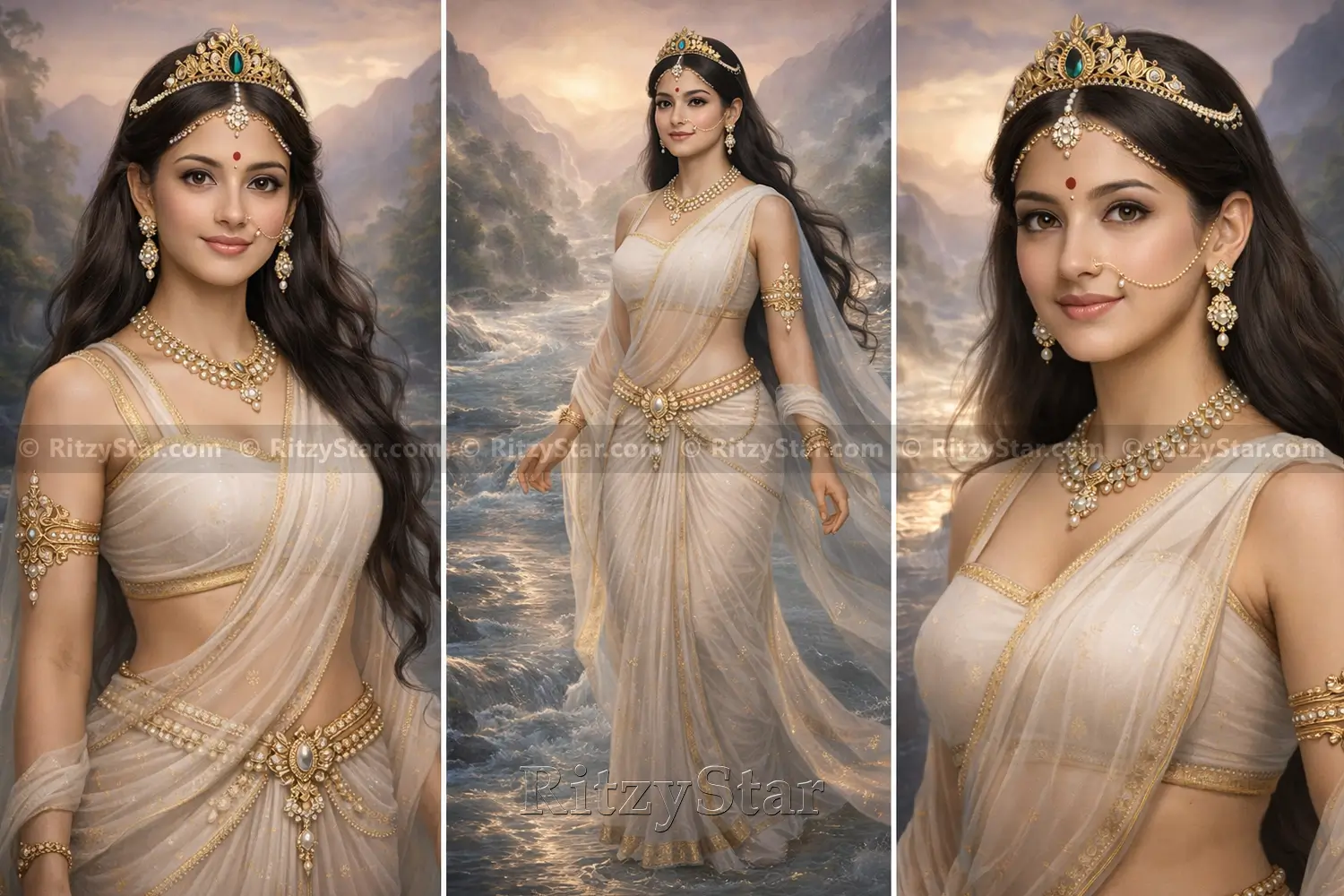
In the hierarchy of the divine court, Rambha held a position of unique honor. She was not merely one among many apsaras (celestial nymphs); she was the foremost, the chief, the most celebrated. Her name derives from the Sanskrit root ramb—to hang, to cling, to desire—and it suited her perfectly, for she was the embodiment of desire itself.
“रम्भा नाम महाभागा सर्वाप्सरस्सु पूजिता।
इन्द्रसभायां नृत्येन रञ्जयन्ती सुरान् सदा॥”
— by Author
Meaning: Rambha, the blessed one, honored among all apsaras, forever delights the gods in Indra’s assembly with her dance.
The apsaras were created to serve a specific purpose in the cosmic order. They were the entertainers of the gods, the dancers and singers who graced Indra’s court. But they had another, more strategic function: they were sent to disrupt the penances of sages whose spiritual power threatened the balance of the cosmos. A sage deep in meditation, accumulating immense tapas (spiritual heat), could become powerful enough to challenge the gods themselves. The apsaras, with their unparalleled beauty and arts of seduction, were the solution to this problem.
And Rambha was the best of them.
✨ The Origins of Rambha – Born of the Cosmic Waters
The story of Rambha’s origin is as magnificent as the woman herself. According to the Puranas, Rambha emerged during the great churning of the cosmic ocean (Samudra Manthan)—that primordial event when the devas and asuras joined forces to churn the ocean of milk and obtain the nectar of immortality.
“क्षीरोदमथनाद् जाता रम्भा नामाप्सरोत्तमा।
रत्नभूता वरारोहा सर्वलोकनमस्कृता॥”
— by Author
Meaning: From the churning of the ocean of milk was born Rambha, the foremost of apsaras; a jewel among maidens, revered by all worlds.
As the churning progressed, countless treasures arose from the depths: Lakshmi, the goddess of fortune; Chandra, the moon god; the celestial horse Uchchaihshravas; the wish-fulfilling tree Kalpavriksha; and among these precious beings came Rambha, her beauty so radiant that even the gods stood in awe.
Some traditions place her origin differently, suggesting she was one of the apsaras created by Brahma during the creation of the universe. But the majority of sources—including the Vishnu Purana, the Padma Purana, and the Mahabharata—describe her as emerging from the ocean, making her a contemporary of Lakshmi herself.
“लक्ष्मीश्चन्द्रश्च रम्भा च कौस्तुभः पारिजातकः।
एते प्रादुर्बभूवुश्च मथ्यमाने महार्णवे॥”
— by Author
Meaning: Lakshmi, Chandra, Rambha, Kaustubha gem, and Parijata tree—these appeared when the great ocean was churned.
Thus, from her very birth, Rambha was marked as extraordinary—not created from a mortal womb but born of cosmic forces, a divine being who belonged to all the worlds and yet to none of them.
👑 Rambha in Indra’s Court – Queen of Celestial Entertainers
Upon her emergence, Rambha was received into Indra’s court. The king of gods, ever appreciative of beauty and pleasure, recognized her worth immediately. She became the foremost apsara, the jewel of his celestial harem, the dancer whose performances were the highlight of every divine gathering.
Her Role in Heaven
In the court of Indra, Rambha was more than an entertainer. She was a symbol of divine glory, a testament to the splendor of Swarga (heaven). When gods gathered for council, when victorious warriors ascended to the celestial realm, when great sacrifices were completed—Rambha danced.
“नृत्यन्तीं रम्भया सार्धं गन्धर्वाः प्रगायन्ति।
देवाश्च तालं कुर्वन्ति सभायाममरेश्वराः॥”
— by Author
Meaning: With Rambha dancing, the Gandharvas sing, and the gods themselves keep time in the assembly of the king of immortals.
Her dance was not merely entertainment. It was a cosmic art form—a representation of the rhythm of the universe, the flow of creation and dissolution, the eternal play of divine forces. The gods did not simply watch Rambha dance; they participated, their presence and attention completing the performance.
The Apsara Hierarchy
Rambha held a position of authority among the apsaras. She was their leader, their representative, their most celebrated member. The hierarchy of celestial nymphs, as described in various Puranas, placed Rambha at the top:
| Rank | Apsara | Known For |
|---|---|---|
| 1 | Rambha | Foremost among apsaras; queen of Indra’s court; standard of beauty |
| 2 | Urvashi | Beloved of King Pururavas; subject of the famous love story |
| 3 | Menaka | Mother of Shakuntala; seduced Sage Vishwamitra |
| 4 | Tilottama | Created to destroy the asuras Sunda and Upasunda |
| 5 | Ghritachi | Mother of several sages and kings |
“रम्भोर्वशी मेनका च तिलोत्तमा घृताची च।
एताः प्रधानाप्सरसः सर्वेषां लोकसम्मताः॥”
— by Author
Meaning: Rambha, Urvashi, Menaka, Tilottama, and Ghritachi—these are the foremost apsaras, honored by all worlds.
But even among these five, Rambha was considered the most beautiful, the most accomplished, the most desired.
💔 The First Curse – Sage Narada’s Anger
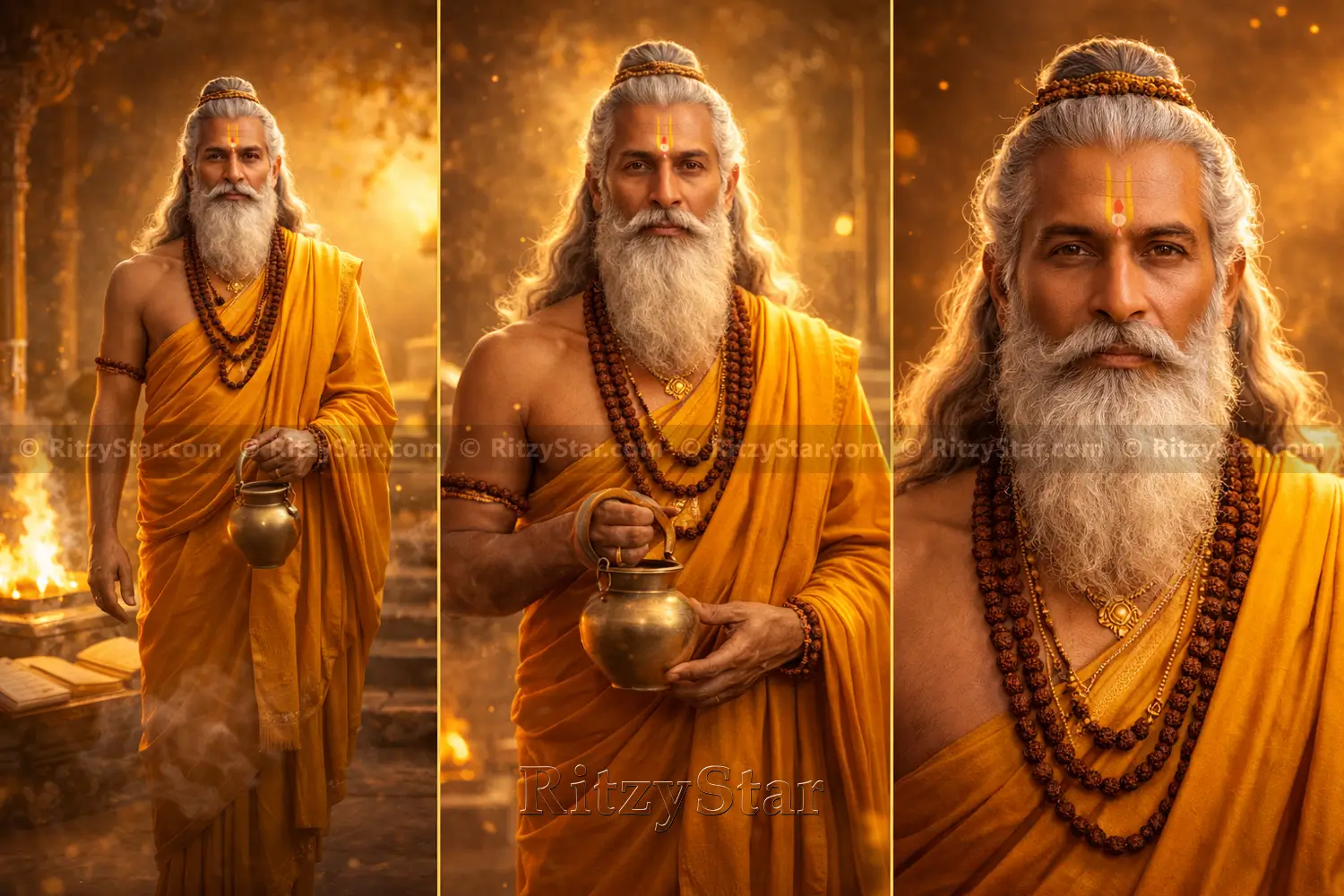
Rambha’s first major encounter with a sage’s curse came at the hands of Narada, the celestial sage who was known for his quick temper and his habit of causing trouble wherever he went. The story varies across texts, but the essence remains consistent.
The Dispute
According to one version, Narada had come to Indra’s court to deliver a message or to participate in a divine debate. Rambha, perhaps in jest or perhaps through genuine error, failed to show him the proper respect. She laughed at something he said, or she ignored him, or she made a comment that wounded the sage’s pride.
“नारदः क्रोधमापन्नो रम्भां शशाप वै तदा।
अहंकारसमायुक्तां दर्पोद्धतविलासिनीम्॥”
— by Author
Meaning: Narada, filled with rage, then cursed Rambha, who was full of pride and arrogance in her playful demeanor.
Narada’s curse was swift and devastating:
“यस्मान्मां नावजानासि दर्पेणाप्सरसां वरे।
तस्माद् भविष्यसि स्थाणुः शिलात्वं प्राप्स्यसे ध्रुवम्॥”
— by Author
Meaning: Because you insulted me in your pride, O foremost of apsaras, you shall become a pillar of stone, turning into rock.
Rambha, the most beautiful woman in the three worlds, was cursed to become stone.
The Intervention of the Gods
The curse sent shockwaves through heaven. Indra himself pleaded with Narada to reconsider. The other apsaras wept. The Gandharvas fell silent. Without Rambha’s dance, what would become of the celestial court?
“रम्भाशापं समाकर्ण्य देवाः सर्वे सवासवाः।
नारदं प्रणिपत्योचुः प्रसादं कर्तुमर्हसि॥”
— by Author
Meaning: Hearing of Rambha’s curse, all the gods together with Indra bowed to Narada and said, “You are worthy of showing mercy.”
Narada, though wrathful, was not without mercy. He modified his curse:
“शिलाभूता भविष्यसि यावत् पापः सुराधमः।
कोऽपि त्वां मोक्षयिष्यति सत्यमेतद् ब्रवीमि ते॥”
— by Author
Meaning: “You shall remain as stone until some sinner, some vile one among the gods, releases you. This truth I speak to you.”
Rambha would be freed from her stone form only when the most unlikely of beings—a sinner, a wretch, someone unworthy—touched her and restored her to life. The irony was cruel: her beauty, which she valued above all, would be restored only by the touch of someone who could not appreciate it.
The Transformation
And so it happened. Rambha, the enchanting dancer of Indra’s court, became a stone pillar—silent, motionless, cold. Where she stood, a rock rose, marking the spot of her punishment. The apsaras mourned, the gods lamented, and Indra’s court lost its greatest treasure.
“ततः प्रभृति रम्भा सा शिलीभूता बभूव ह।
अरुन्धतीव स्वर्गस्य निर्मिता दुःखभागिनी॥”
— by Author
Meaning: From that time onward, Rambha was transformed into stone, like the sorrowful counterpart of heaven’s Arundhati.
💧 The Release – Rambha and the Cursed King
The curse lay upon Rambha for ages. She remained stone, forgotten by the gods, passed by travelers who saw only a strange pillar in the forest. Generations came and went. The story of the apsara who became stone faded into legend.
The Cursed King
Then came a king—but not any king. He was a man burdened with his own curse, a sinner in the eyes of the world, a being whose very touch was considered defiling. Some texts identify him as King Vena, the wicked ruler who was eventually slain by sages for his crimes. Others name him as a lesser figure, a man cursed for his transgressions against the gods.
“वेनो नाम महीपालः पापात्मा धर्मनिन्दकः।
रम्भाशिलां स्पृशद्योऽसौ मोक्षयामास तां शुभाम्॥”
— by Author
Meaning: King Vena, the sinful one, the reviler of dharma—he touched Rambha’s stone form and released the auspicious one.
Whatever his identity, this king—wandering perhaps in exile or fleeing from his enemies—came upon the stone pillar in the forest. He leaned against it, or stumbled into it, or simply placed his hand upon it. And in that moment, the curse was broken.
The Rebirth of Rambha
The stone cracked. Light poured from within. And Rambha emerged—whole, beautiful, alive—as if she had only been sleeping. The apsara who had been frozen for ages returned to the world.
“शिलायाः सा विनिष्क्रम्य रम्भा रूपसमन्विता।
सर्वालङ्कारसम्पन्ना सुरूपा सुरसुन्दरी॥”
— by Author
Meaning: Emerging from the stone, Rambha was adorned with all ornaments, beautiful, a celestial enchantress.
The moment of her release was bittersweet. The curse had been lifted by the touch of a sinner, just as Narada had foretold. But Rambha did not dwell on the humiliation of her liberation. She was free—and she returned to the heavens, taking her place once more in Indra’s court.
“मुक्ता शिलाशापतस्तु रम्भा स्वर्गं पुनर्गता।
देवराजसभां प्राप्ता नृत्येन रञ्जयन्निव॥”
— by Author
Meaning: Freed from the stone curse, Rambha returned to heaven. Reaching the court of the king of gods, she delighted all with her dance.
🔥 The Second Curse – Sage Vishwamitra’s Wrath
If the first curse came from a moment of pride, the second came from a far more dangerous place—from being used as a weapon in a cosmic conflict between the gods and a sage of unparalleled power.
The Rise of Vishwamitra
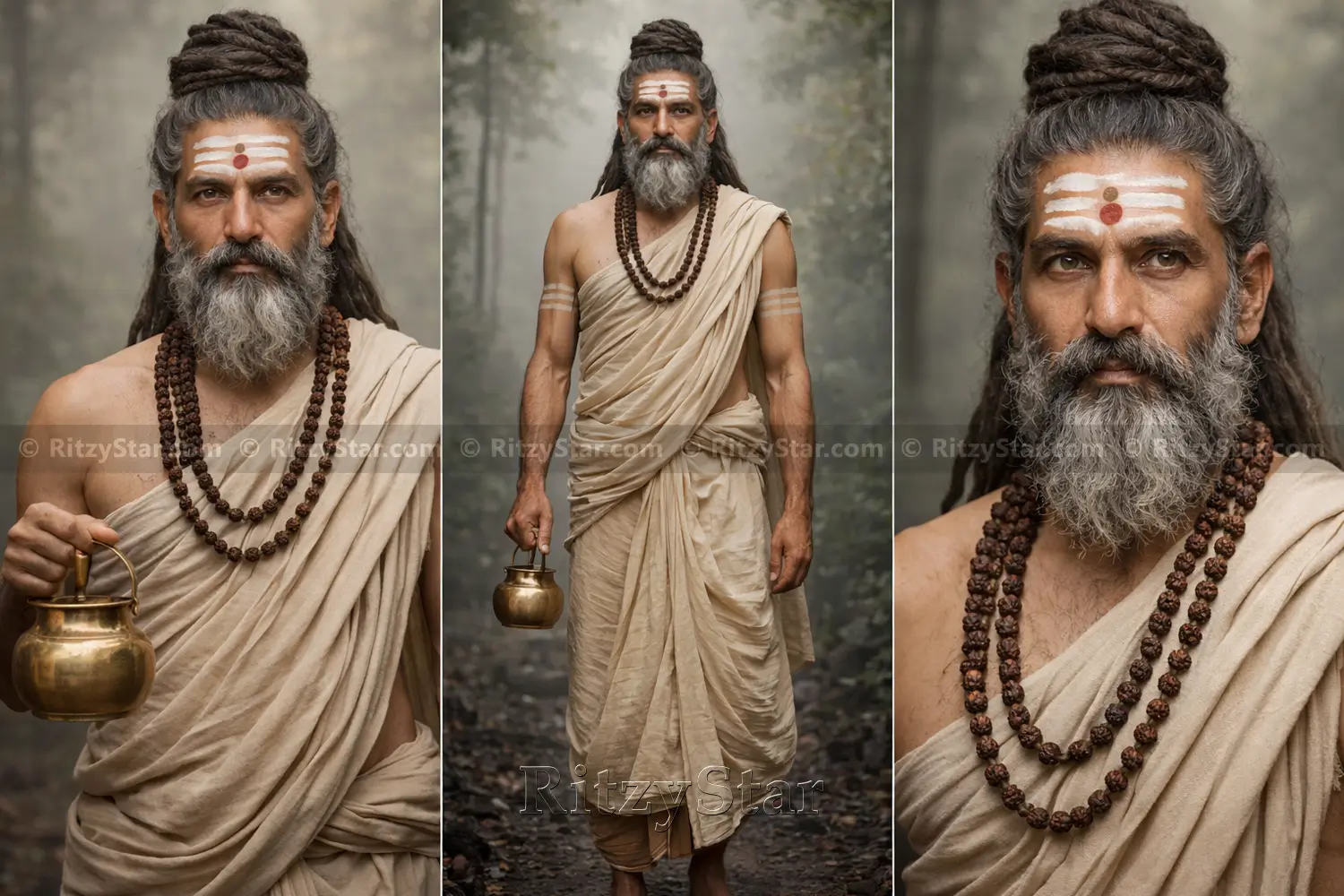
Sage Vishwamitra was no ordinary ascetic. A former king who had transformed himself into a Brahmarshi (Brahmin sage) through sheer force of will and austerity, he possessed spiritual power that threatened the gods themselves. His tapas was so intense that the very heavens trembled. Indra, ever vigilant against threats to his throne, watched Vishwamitra’s progress with growing alarm.
“विश्वामित्रो महातेजा घोरं तप्त्वा तपो महत्।
इन्द्रं चकम्पे त्रैलोक्यं देवाश्चासन् सभीरिताः॥”
— by Author
Meaning: Vishwamitra of great radiance, having performed terrible austerities, caused Indra to tremble, shook the three worlds, and the gods were filled with fear.
The Decision to Send Rambha
Indra called his council. The threat must be neutralized. And what better weapon than the one that had never failed? Rambha was summoned.
“रम्भे गच्छ महाभागे विश्वामित्रस्य चाश्रमम्।
तस्य तपो विनाशाय मोहयस्व महामुनिम्॥”
— by Author
Meaning: “O Rambha, blessed one, go to Vishwamitra’s hermitage. To destroy his penance, enchant the great sage.”
Rambha, ever loyal to Indra, accepted the mission. She had done this before—sent to disrupt the meditations of powerful sages, her beauty their undoing. This was her purpose, her function in the cosmic order. Why should this time be any different?
The Seduction Attempt
Rambha approached Vishwamitra’s hermitage. She came dressed in her finest, adorned with celestial jewels, her beauty at its most radiant. The forest around her seemed to brighten. The very air grew fragrant. She began to dance.
“रम्भा ननर्त सुश्रोणी विश्वामित्राश्रमे तदा।
गन्धर्वास्तालमानेषु प्रजगुश्चाप्सरोगणाः॥”
— by Author
Meaning: Rambha, the slender-waisted one, danced in Vishwamitra’s hermitage. Gandharvas kept time, and the apsara chorus sang.
She was perfection itself—every movement graceful, every gesture enchanting, every glance designed to awaken desire. She had seduced a hundred sages before. She had brought down the spiritual aspirations of countless ascetics. This would be no different.
But Vishwamitra was not like other sages.
The Sage’s Wrath
Vishwamitra opened his eyes. He saw Rambha dancing before him. He felt the pull of her beauty, the stirring of desire. For a moment, the years of austerity, the accumulated power of his penance, the hard-won discipline—all seemed to waver.
Then his anger flared.
“स्थाणुर्भव नृशंसे त्वं विश्वामित्रस्तदाब्रवीत्।
ब्रह्मघ्नी पापकर्माणी पापिष्ठा त्वमतोऽधिका॥”
— by Author
Meaning: “Become a pillar of stone, you cruel one!” Vishwamitra then said. “You are a destroyer of Brahman’s power, a sinner, most sinful of all!”
Unlike Narada’s curse, which had turned her to stone but promised eventual release, Vishwamitra’s curse was absolute. She was to become stone for ten thousand years—a punishment that would make even the gods weep.
“दशवर्षसहस्राणि स्थाणुत्वं प्राप्स्यसे शुभे।
भविष्यसि शिला रम्भे यावच्चन्द्रदिवाकरौ॥”
— by Author
Meaning: “For ten thousand years, O beautiful one, you will be turned to stone. You shall remain as rock, Rambha, as long as the moon and sun endure.”
Rambha fell to the ground, her dance halted, her beauty frozen. She had become stone—again.
🪨 The Two Curses – A Comparison
Rambha’s story is unique in mythology for featuring not one but two curses that turned her to stone. The parallels and differences between these events illuminate her character and her fate.
| Aspect | First Curse (Narada) | Second Curse (Vishwamitra) |
|---|---|---|
| Cause | Pride; disrespect to sage | Sent by Indra to seduce sage |
| Curse Giver | Sage Narada | Sage Vishwamitra |
| Duration | Until touched by a sinner | Ten thousand years |
| Resolution | Touched by cursed king | Released after completing penance |
| Her Role | Active (disrespectful) | Passive (used by Indra) |
| Sage’s Motivation | Personal insult | Threat to his tapas |
| Outcome | Returned to heaven | Became more devoted to spiritual practice |
The first curse came from her own actions—her pride, her disrespect. The second came from her duty—her obedience to Indra, her function as a weapon against sages. In the first, she was punished for her character; in the second, for her role.
“एको दोषः प्रथमतः द्वितीयो धर्मकारणात्।
उभौ शापौ महाभागा रम्भा सोढुं बभूव सा॥”
— by Author
Meaning: One fault was her own; the second was for the sake of dharma. Both curses, O blessed one, Rambha endured.
💎 The Deeper Meaning – Beauty as Destiny and Tragedy
Rambha’s story is, on one level, a cautionary tale about the dangers of pride. But on a deeper level, it is a meditation on the nature of beauty itself—its power, its vulnerability, and the way it can become a curse rather than a blessing.
The Weaponization of Beauty
Rambha was created beautiful. She was celebrated for her beauty. She was deployed as a weapon because of her beauty. But when she used her beauty in ways that powerful men resented, she was punished.
“रूपं यस्याः सुरैः पूज्यं सा शापेन हता द्विधा।
सौन्दर्यं यदि शस्त्रं स्यात् स्त्रीणां दुःखाय कल्पते॥”
— by Author
Meaning: She whose beauty was worshipped by the gods was twice destroyed by curses. If beauty is a weapon, it becomes a source of suffering for women.
The double curse on Rambha reflects a fundamental ambivalence in how mythological traditions treat female beauty. It is celebrated, desired, and used—but also punished when it becomes too powerful or when it is deployed in ways that threaten male authority.
The Innocence of Duty
In her second curse, Rambha was simply doing what she was created to do. The apsaras were made to enchant sages whose tapas threatened cosmic balance. This was their dharma—their sacred duty. Yet when Rambha performed this duty, she was cursed for it.
“येनाज्ञप्ता तु सा रम्भा तेनैव शप्ता स्वयम्।
कर्मणा यदि दण्ड्येत को नु दण्ड्यो भवेत् प्रिये॥”
— by Author
Meaning: She was commanded by Indra, yet cursed by the same. If one is punished for doing one’s duty, who then would not be punished, O beloved?
Vishwamitra’s curse raises uncomfortable questions: Was Rambha responsible for her actions when she was following orders? Should she have refused Indra’s command? But refusing the king of gods was not a simple matter. She was caught between competing authorities—the divine ruler who commanded her obedience, and the sage whose power made him dangerous to disobey.
The Endurance of the Feminine
Despite everything—despite being turned to stone twice, despite being used as a tool by gods and punished by sages—Rambha endured. She returned to the heavens after both curses. She danced again. She remained herself.
“शिलीभूतापि रम्भा सा पुनरेव विराजते।
यथा स्त्रीणां सहनशक्तिर्यथा तपसि च स्थितिः॥”
— by Author
Meaning: Though turned to stone, Rambha shines forth again. Such is women’s power of endurance, such is their foundation in austerity.
Her story is ultimately one of resilience. She was broken, but not destroyed. She was cursed, but she returned. The stone could not hold her forever—neither the stone of Narada’s curse nor the stone of Vishwamitra’s rage.
🌊 Rambha in the Mahabharata – The Sage’s Warning
Rambha’s story appears in the Mahabharata in a significant context. When the Pandava prince Arjuna was living in exile, he visited the sacred forest of Naimisha and encountered the sage Narada. The celestial sage, in his characteristic fashion, told Arjuna stories meant to instruct and caution him.
“रम्भायाश्चरितं पुण्यं शापमोक्षं च पार्थिव।
नारदः संश्रयामास अर्जुनाय महात्मने॥”
— by Author
Meaning: The sacred history of Rambha and her release from the curse, Narada narrated to the great-souled Arjuna.
The story was a warning about the dangers of pride and the importance of humility. But it was also a reminder that even the most powerful beings—gods, apsaras, kings—are subject to the consequences of their actions.
🕉️ The Family of Rambha
| Sl.No | Name | Relationship | Children | Remarks |
|---|---|---|---|---|
| 1 | Indra – King of the Gods, Lord of Heaven, Ruler of Swarga | Primary Consort / Lord | None recorded | Rambha was the foremost apsara in Indra’s court and considered his favorite. She danced for him and served as a key member of his celestial retinue. Her relationship with Indra was that of a patron and his prized artist, though some texts suggest a more intimate connection. |
| 2 | Nala-Kubera – Son of Kubera, Lord of Wealth; Grandson of Pulastya | Temporary Consort (in some traditions) | None recorded | Some Puranic traditions mention Rambha being temporarily associated with Nala-Kubera, the son of Kubera. This relationship is mentioned primarily in the context of her curse by Vishwamitra, as she was traveling to meet Nala-Kubera when the sage encountered her. |
| 3 | King Vena – Wicked king, son of Anga, cursed for his sins | Liberator (not a consort) | None | Rambha’s release from Narada’s curse came through the touch of King Vena, a sinner who stumbled upon her stone form. This was not a marital or romantic relationship but a karmic release fulfilling Narada’s prophecy. |
Important Notes on Rambha’s Family:
- No Recorded Children – Unlike many apsaras such as Menaka (mother of Shakuntala) or Ghritachi (mother of several sages), Rambha is not recorded as having any children in the major Puranic texts. Her role was primarily as a performer and enchantress rather than as a mother.
- Primarily Independent – Rambha’s identity was not defined by her relationships with men. She was a figure in her own right—the foremost apsara, celebrated for her own beauty and skill—rather than being primarily someone’s wife or mother.
- Indra’s Patronage – Her relationship with Indra was the most significant. As the king of gods, Indra controlled the apsaras and deployed them as needed. Rambha was his most prized asset, and she served him faithfully even when it led to her curses.
- Nala-Kubera Connection – The connection with Nala-Kubera is mentioned primarily in the context of her second curse. In some versions of the Vishwamitra story, Rambha was on her way to meet Nala-Kubera when the sage encountered her and cursed her. This suggests she may have had a more personal relationship with him, though the texts do not elaborate.
- No Permanent Marriage – Unlike human women in mythology, apsaras did not typically enter into permanent marriages. They moved between relationships, serving the gods, enchanting sages, and fulfilling their cosmic function. Rambha’s lack of a permanent husband or recorded children is consistent with this pattern.
- The Liberator, Not a Partner – King Vena’s role in her story is significant but not romantic. He was the instrument of her release, fulfilling Narada’s prophecy that a sinner would free her. She did not remain with him after her liberation.
🎭 Rambha’s Legacy – The Standard of Beauty
For millennia, Rambha’s name has been synonymous with feminine beauty. In Sanskrit literature, in regional poetry, in everyday speech, to call a woman “Rambha” is to acknowledge her as the epitome of loveliness.
In Classical Literature
The great poet Kalidasa, in his works, frequently references Rambha as the standard of beauty. In the Kumarasambhava, when describing the apsaras who attend the birth of Kartikeya, he notes that even Rambha was humbled by the occasion. In the Meghaduta, the exiled Yaksha compares his beloved’s beauty to Rambha’s, knowing that no higher praise exists.
“रम्भोरुः किल ते सखी जनपदे ख्याता न किं रम्भया”
— Kalidasa, Meghaduta
Meaning: “Is not your friend, the one with thighs like Rambha, famous in the country?”
In the Collective Imagination
Rambha’s name appears in countless contexts—not just in religious texts but in folk traditions, in dance forms, in the very language of courtship and desire. She represents an ideal, a standard, a measure against which all beauty is judged.
Yet her story, when fully told, complicates this simple image of beauty. She was cursed, twice. She was turned to stone, twice. She was used by gods and punished by sages. The woman whose name represents beauty’s peak also represents beauty’s vulnerability.
“यस्याः नामापि सौन्दर्यप्रतीकं जगतीतले।
सा शिलीभूता दुःखेन द्विधा शापेन पीडिता॥”
— by Author
Meaning: She whose very name is a symbol of beauty on earth, she was turned to stone in sorrow, twice afflicted by curses.
🌟 Rambha and Other Apsaras – A Comparison
| Aspect | RAMBHA | URVASHI | MENAKA | TILOTTAMA |
|---|---|---|---|---|
| Origin | Churned from cosmic ocean | Born from Vishnu’s thigh | Created by Brahma | Created by Vishwakarma |
| Primary Role | Foremost dancer; Indra’s favorite | Love of Pururavas; symbol of passion | Mother of Shakuntala; seduced Vishwamitra | Created to destroy Sunda and Upasunda |
| Key Relationships | Indra; Nala-Kubera | King Pururavas | Sage Vishwamitra | None permanent |
| Children | None recorded | Pururavas (through apsara relationship) | Shakuntala (with Vishwamitra) | None |
| Curses | Twice turned to stone | Cursed to leave Pururavas | Not cursed | Not cursed |
| Famous For | Beauty as standard; resilience | Tragic love story | Motherhood; seduction | Creating conflict between asuras |
| Legacy | Name synonymous with beauty | Subject of Kalidasa’s Vikramorvashiyam | Grandmother of Bharata (India’s namesake) | Symbol of crafted perfection |
🕉️ The Spiritual Significance – Beauty and Asceticism
Rambha’s story—particularly her second curse—touches on a central tension in Hindu spiritual thought: the opposition between worldly pleasure (kama) and spiritual discipline (tapas).
The Apsara as Obstacle
The apsaras were created to test the resolve of ascetics. A sage who could resist their charms was considered truly advanced, truly worthy of spiritual power. But this testing had a dark side: it treated the apsaras as instruments, as tools to be used and discarded, as obstacles to be overcome.
“रम्भा यन्त्रं तपोनाशे देवैः सृष्टा स्वकार्यतः।
तस्मात् शप्ता महर्षिणा न दोषस्तस्याः स्वयं प्रिये॥”
— by Author
Meaning: Rambha was created as an instrument by the gods to destroy penance. For this she was cursed by the great sage—but the fault was not hers, O beloved.
The Sage’s Hypocrisy
Vishwamitra’s curse of Rambha has been interpreted by some commentators as an example of the sage’s own failure. He was angry because he felt desire—but instead of acknowledging his own weakness, he blamed the woman who awakened it.
“यस्य क्रोधः समुत्पन्नः स्ववशत्वात् स धार्मिकः।
अन्यं शप्त्वा तु मुनिराट् स्वदोषं नापलक्षयत्॥”
— by Author
Meaning: Anger arose in him because he was not in control of himself. The great sage, cursing another, did not perceive his own fault.
This reading resonates with contemporary critiques of how mythology—and the patriarchal structures it reflects—often blames women for men’s desires.
🪞 Conclusion – The Stone That Dances
Rambha’s story ends where it begins: in Indra’s court, dancing.
After serving her ten thousand years of penance for Vishwamitra’s curse, she was released. She returned to the heavens, took her place among the apsaras, and danced once more for the assembly of the gods. The stone had given way to movement. The silence had yielded to music. The punishment was over.
“दशवर्षसहस्रान्ते मुक्ता शापाद्विश्वामित्रजात्।
रम्भा पुनर्विराजेत सुरलोके सुखं गता॥”
— by Author
Meaning: After ten thousand years, freed from the curse of Vishwamitra, Rambha shone again, having attained happiness in the world of the gods.
But what did she carry with her from those long millennia of stillness? What does a dancer learn when she cannot move? What does a woman of beauty learn when she is reduced to stone?
The story does not say. But perhaps it suggests that even the most cursed, the most broken, the most frozen can return. Can move again. Can dance again. The stone, after all, was never truly stone—it was only waiting.
“या देवी सर्वभूतेषु रम्भारूपेण संस्थिता।
नमस्तस्यै नमस्तस्यै नमस्तस्यै नमो नमः॥”
— by Author
Meaning: To that goddess who abides in all beings in the form of Rambha, salutations to her, salutations to her, salutations to her again and again.
Rambha, the stone that dances, the beauty that endures, the woman whose name means desire and whose life was shaped by the desires of others—she remains one of mythology’s most fascinating figures. Not merely beautiful, but resilient. Not merely desired, but desiring. Not merely cursed, but triumphant.
In her dance, we see not just the grace of the apsara, but the strength of one who has been broken and rebuilt, frozen and freed, cursed and redeemed.
Discover more from RitzyStar
Subscribe to get the latest posts sent to your email.