
“अग्निकुण्डात् समुत्पन्ना पाञ्चाल्यां यज्ञशालिनी।
द्रौपदी नाम या देवी पञ्चानां प्रियकामिनी॥”
— Ancient Verse
Meaning: From the sacrificial fire emerged she, born in Panchala’s sacred hall; Draupadi, the goddess-like one, beloved of five, destined to answer destiny’s call.
Oh, what fire and sorrow, what glory and defiance blazes through the tales of Bharata! Among the countless luminous figures who walk the pages of the Mahabharata, one name burns brighter than the rest—Draupadi, the daughter of fire, the queen of Indraprastha, the wife of five Pandavas, and the woman whose humiliation sparked the greatest war of ancient memory. Her story is not merely a tale of ancient times—it flows like a river of fire through the consciousness of every generation, reminding us of dignity, courage, and the eternal question of dharma.
Who Was Draupadi, the Extraordinary Queen of the Mahabharata?
“न यस्याः सदृशी काचित् रूपे शीले कुले दये।
द्रौपदी सत्यनित्यत्वात् पृथिव्यां यशसां निधिः॥”
— by Author
Meaning: There was none equal to her in beauty, character, lineage, or compassion; Draupadi, ever devoted to truth, was a treasury of fame on earth.
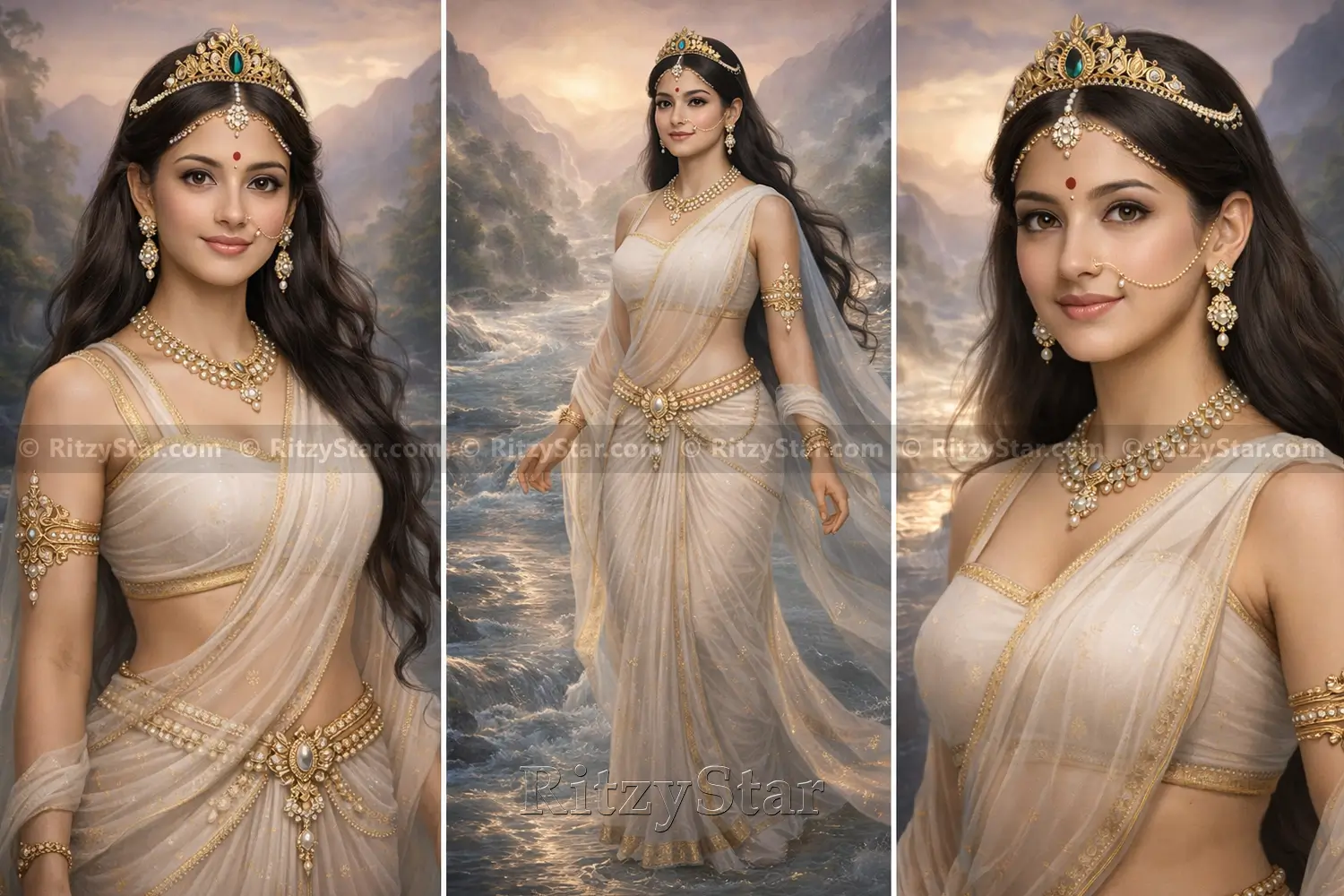
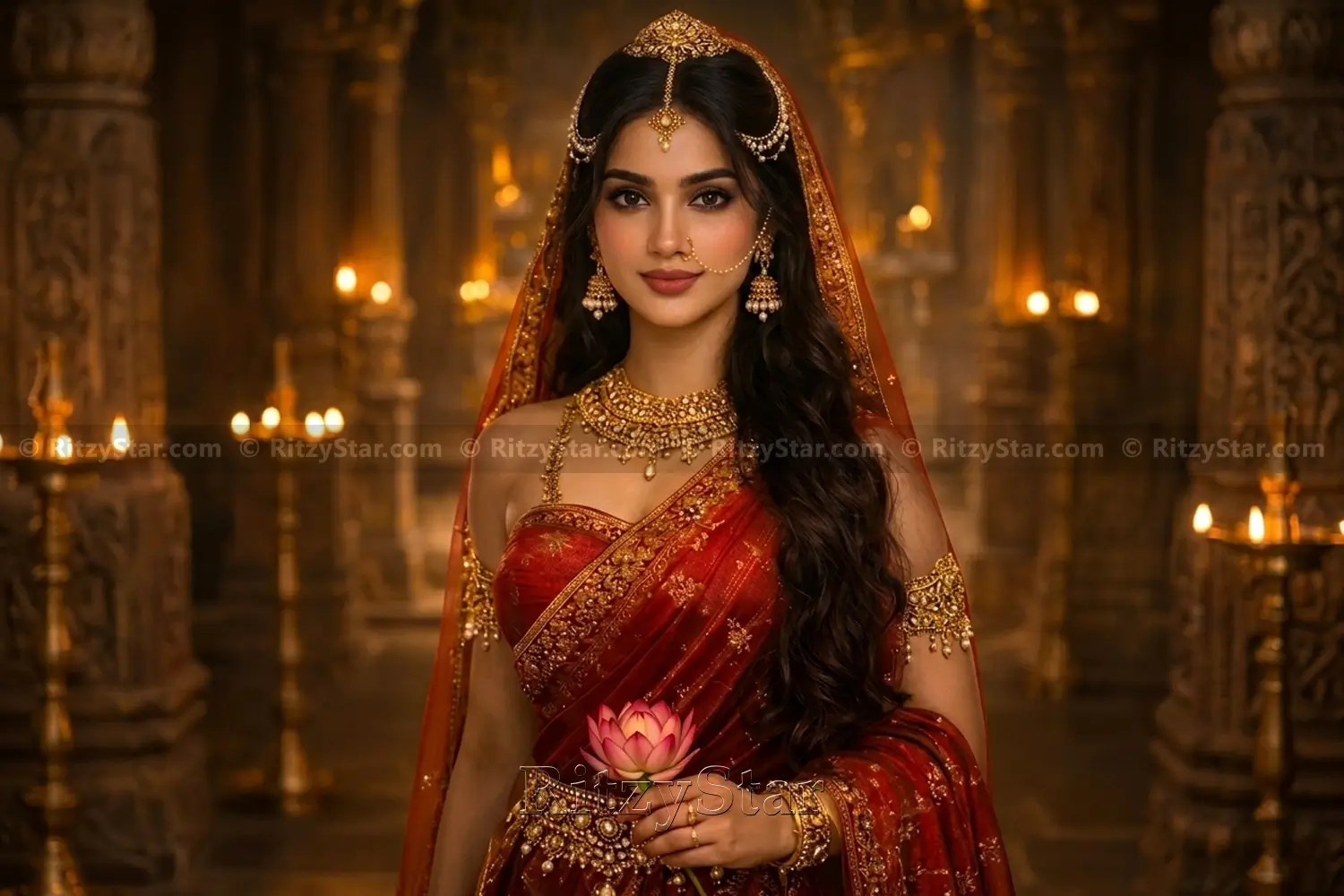
Who can capture in words the essence of this remarkable woman? She was born not from a mother’s womb but from the sacred flames of a yajna, fully grown and radiant, a divine gift to King Drupada. Dark-complexioned like the rain-laden cloud, with lotus-fragrant hair and eyes like petals of the blue lotus, she possessed a beauty that could enchant gods and men alike. But her true essence lay not in her physical form—it resided in her indomitable spirit, her sharp intellect, and her unwavering commitment to justice.
“कृष्णा या पाञ्चालराजस्य पुत्री।
पाण्डवानां प्रियधर्मिणी सती।
नमामि तस्यै प्रथमं महासती।
यया धर्मः समुद्धृतः कलौ युगे॥”
— Traditional Prayer
Meaning: To Krishna Draupadi, daughter of Panchala’s king, devoted wife of the Pandavas, I bow first to that great sati, through whom dharma was upheld in the darkest age.
The Many Names of Draupadi – A Reflection of Her Multifaceted Identity
“नामान्यस्याः पृथक् पृथक् लोकेषु परिकीर्तिता।
प्रत्येकं तेषु नाम्नां हि गुणानन्त्यं प्रकाशितम्॥”
— by Author
Meaning: Her various names are celebrated across different worlds, each name revealing the infinity of her virtues.
Just as the goddess is known by many names, each revealing a different aspect of her divine nature, Draupadi too is called by numerous names in the Mahabharata and Puranic literature. Each name carries its own significance, origin story, and reveals a facet of her extraordinary personality. The very multiplicity of her names speaks to the complexity of her character—she was not merely one thing but contained multitudes within herself.
| Name | Meaning | Origin & Significance |
|---|---|---|
| Draupadi | Daughter of Drupada | Her primary patronymic name, derived from her father King Drupada of Panchala. This name connects her to her royal lineage and the kingdom of Panchala. |
| Krishnaa | The dark-complexioned one | Derived from her dark skin colour, resembling the rain-laden clouds. This name appears frequently in the Mahabharata and emphasizes her unique beauty, as dark skin was considered exceptionally beautiful in ancient India. |
| Panchali | Princess of Panchala | Another name denoting her geographical origin, indicating she was the pride of the Panchala kingdom. |
| Yajnaseni | Born from the sacrificial fire | This profound name comes from “yajna” (sacrifice) and indicates her miraculous birth from the flames of Drupada’s sacrificial altar. It connects her eternally to fire—both her origin and her fiery temperament. |
| Drupadakanya | Daughter of Drupada | A simple patronymic, emphasizing her identity as the cherished daughter of the Panchala king. |
| Sairandhri | Lady-in-waiting | The name she adopted during the thirteenth year of exile while serving Queen Sudeshna in the kingdom of Virata. It represents her ability to adapt and maintain dignity even in servitude. |
| Parsati | Granddaughter of Prishata | A patronymic name connecting her to her grandfather, King Prishata of Panchala, emphasizing her royal ancestry. |
| Nityayuvani | Ever-youthful one | Some traditions describe Draupadi as eternally youthful, a divine quality befitting her miraculous birth. |
| Agnikanya | Daughter of Fire | Another name referencing her fiery birth, often used in devotional contexts, particularly in South Indian Draupadi Amman worship. |
| Mahabharati | Greatly fortunate one | A name signifying her immense good fortune in being married to the five Pandava brothers, despite the challenges it brought. |
| Panchabhartriki | Wife of five husbands | A descriptive name indicating her unique marital status as the wife of the five Pandavas. |
| Yajnaputri | Daughter of the sacrifice | Similar to Yajnaseni, this name emphasizes her sacred origin from the sacrificial ceremony. |
| Indraprasthaishvari | Queen of Indraprastha | Referring to her position as the queen of the magnificent city the Pandavas built and ruled. |
| Vedini | The learned one | Some texts mention her deep knowledge of scriptures and her skill in philosophical discourse. |
“कृष्णा द्रौपदी पाञ्चाली याज्ञसेनी च सैरन्ध्री।
नामभिः पञ्चभिः प्रोक्ता सा देवी परमेश्वरी॥”
— by Author
Meaning: Krishnaa, Draupadi, Panchali, Yajnaseni, and Sairandhri—with these five names is she addressed, that goddess, the supreme queen.
Thus, in her very names we find the story of her life—daughter of a king, born of sacred fire, dark and beautiful, queen of a magnificent city, servant in a foreign court, wife of five heroes, and ultimately, a goddess worshipped by millions. Each name is a thread in the rich tapestry of her existence, and together they weave the portrait of one of the most complex and compelling women in all of world literature.
The Miraculous Birth of the Fire Princess
“ततः समभवत् कन्या सुवर्णाभरणान्विता।
कृष्णा द्रौपदी नाम्ना सर्वलक्षणलक्षिता॥”
— Mahabharata, Adi Parva
Meaning: Then emerged a daughter, adorned with golden ornaments, dark-complexioned, known as Draupadi, possessing all auspicious marks.
The story of Draupadi’s birth is itself extraordinary. King Drupada of Panchala, humiliated and defeated in battle by Drona who had taken half his kingdom as guru-dakshina, performed a great sacrifice under the supervision of the sages Yaja and Upayaja. He sought a son who would slay Drona and a daughter who would become the instrument of destiny. From the centre of the sacrificial altar, as the flames rose high and the offerings were poured, emerged first a magnificent youth—Dhrishtadyumna, radiant as fire itself, destined to slay Drona. Then, to the amazement of all assembled, there arose from the fire itself a goddess-like maiden.
“नेत्राभ्यामुत्पलश्यामा रक्तोष्ठी तनुमध्यमा।
बभूव द्रौपदी रम्या देवी कमललोचना॥”
— by Author
Meaning: With eyes like dark lotuses, red lips, slender-waisted, arose the beautiful Draupadi, the goddess with lotus eyes.
She was dark-complexioned, hence her name Krishnaa. Her eyes were like freshly bloomed lotuses, her hair dark and fragrant, and she carried within her an aura of royalty and destiny that made all who beheld her pause in wonder. She emerged fully grown, already a young woman of surpassing beauty, adorned with celestial ornaments and fragrant with divine perfume. A celestial voice proclaimed from the heavens: “This dark-complexioned daughter of Drupada shall fulfill the purpose of the gods and become the cause of the destruction of countless Kshatriyas. She shall be the instrument through which the earth is relieved of its burden.”
Thus Draupadi entered the world—not as an ordinary princess, but as an instrument of destiny, born to reshape the very fabric of existence. Unlike ordinary mortals who grow and learn through experience, she came into being with full knowledge and awareness, carrying within her the memory of her divine purpose.
Draupadi’s Beauty and Virtues
“न भूतपूर्वा न भविष्यति क्वचित्।
स्त्री रूपसौभाग्यगुणैः सुशोभिता।
यथा द्रौपदी पाञ्चाली।
लोके विस्मयकारिणी॥”
— by Author
Meaning: Never before had there been, nor would there ever be, a woman so adorned with beauty, fortune, and virtues as Draupadi of Panchala, who filled the world with wonder.
The ancient texts describe Draupadi as unparalleled in her combination of qualities. She possessed not only extraordinary beauty but also sharp intelligence, unwavering courage, and profound knowledge of dharma. Unlike many women of her time confined to domestic spheres, Draupadi participated actively in political discussions, offered counsel to her husbands, and fearlessly questioned authority when she perceived injustice. Her voice was never silenced, her opinions never suppressed.
“सर्वशास्त्रार्थतत्त्वज्ञा वेदवेदाङ्गपारगा।
बुद्धिमती कुलीनाचारदक्षिणा धर्मचारिणी॥”
— by Author
Meaning: She knew the essence of all scriptures, mastered the Vedas and their branches, was intelligent, noble, skilled in conduct, and ever devoted to dharma.
Her beauty was not merely physical—it radiated from within, from the fire of her spirit and the clarity of her mind. When she walked, her anklets sang with the rhythm of grace. When she spoke, her words carried the weight of wisdom. When she was angry, her eyes blazed like coals, and even mighty warriors trembled before her gaze. She possessed that rare combination of femininity and ferocity, compassion and courage, devotion and defiance.
Draupadi was also renowned for her devotion to the divine, particularly to Lord Krishna, whom she regarded as her sakha (beloved friend). Their relationship transcended ordinary boundaries—she called him her companion, her refuge, and in moments of deepest crisis, it was Krishna who answered her desperate call. This bond between the fire-born princess and the lord of the universe remains one of the most touching relationships in all of sacred literature.
The Swayamvara – A Test of Valour
“मत्स्यो हि लक्ष्यः सूक्ष्मश्च चक्रं चोपरि संस्थितम्।
एतद्धनुरधिज्यं कृत्वा विध्येल्लक्ष्यं स पाण्डवः॥”
— Mahabharata, Adi Parva
Meaning: The fish is the target, high above, subtle, with a wheel rotating above it; stringing this bow and hitting the target—that is what the Pandava shall do.
The news of Draupadi’s swayamvara spread across the length and breadth of Aryavarta like wildfire. Kings and princes gathered in Kampilya, the capital of Panchala, each hoping to win the hand of the fire-born princess whose beauty and fame had reached every corner of the land. The city overflowed with visitors—mighty monarchs in their jewelled chariots, proud princes with their retinues, sages and scholars, merchants and craftsmen. The very earth seemed to tremble under the weight of the assembled warriors.
Drupada had devised an impossible test to ensure that only the greatest warrior of the age could win his daughter. In the centre of the arena hung a massive bow, so heavy that ordinary men could not even lift it. Above the target—a small fish—rotated a wheel with a hole in its centre. The archer had to string the bow, aim through the rotating wheel, and pierce the fish’s eye without looking directly at it, using only its reflection in a pool of water below. Only the archer who could accomplish this feat would win Draupadi.
“तस्मिन् राजसहस्रेषु समेतेषु महात्मनाम्।
द्रौपद्याः पाणिमगृह्णात् अर्जुनः किरीटमाली॥”
— by Author
Meaning: Among those thousands of assembled kings and great souls, it was Arjuna, the diadem-decorated, who accepted Draupadi’s hand.
The assembly hall buzzed with anticipation as prince after prince attempted and failed. Some could not even lift the bow. Others lifted it but could not string it. A few strung it but could not aim through the revolving wheel. The kings grew restless, their pride wounded by the impossible test.
Then Karna, the mighty warrior, rose from his seat and walked toward the bow with the confidence of a lion. He lifted the bow effortlessly, strung it in a moment, and took aim. The crowd held its breath—surely this was the one who would win the princess. But at that crucial moment, Draupadi stepped forward and spoke words that would echo through the ages: “I will not choose the son of a charioteer.” Whether these words were her own or spoken by her brother to exclude Karna, the moment left wounds that would fester into hatred and contribute to the great war to come. Karna, his face burning with humiliation, cast a glance at the sun and returned to his seat, vowing revenge.
Then came a Brahmana, seemingly poor and unknown, dressed in simple deerskin, his body bearing the marks of asceticism. The kings laughed at the audacity of this priest who dared to compete where mighty warriors had failed. But the Brahmana walked calmly to the bow, circled it in reverence, and then—to the astonishment of all—lifted it as if it were a child’s toy. He strung the mighty bow in an instant, aimed through the rotating wheel without a moment’s hesitation, and pierced the fish’s eye with unerring accuracy.
The assembly erupted in chaos. Who was this Brahmana who had accomplished what mighty kings could not? The kings, their pride wounded, prepared to attack, but the Pandava brothers—for it was Arjuna in disguise, accompanied by his brothers disguised as fellow Brahmanas—fought them off and escaped with Draupadi. Thus the fire-born princess came to be united with the man who would become her foremost husband.
The Divine Marriage – Five Husbands for One Queen
“एका पञ्चानां भार्या द्रौपदी धर्मचारिणी।
देवानामपि चित्रं हि मनुष्याणां किमुत प्रिये॥”
— Mahabharata, Adi Parva
Meaning: One wife to five husbands—Draupadi, devoted to dharma. This was astonishing even to the gods, what to speak of mortals.
When Arjuna returned to the potter’s hut where they were staying with the victorious Brahmana, Kunti, absorbed in her daily prayers, called out without turning around, “Whatever you have brought, share it equally among yourselves.” A mother’s word, once spoken, could not be violated, no matter the circumstance. Thus began one of the most extraordinary marriages in human history—Draupadi became the common wife of all five Pandava brothers.
“धर्मराजेन संयुक्ता भीमार्जुनसमन्विता।
नकुलसहदेवाभ्यां द्रौपदी परिचारिता॥”
— by Author
Meaning: United with Dharmaraja, accompanied by Bhima and Arjuna, attended by Nakula and Sahadeva—thus was Draupadi ever surrounded.
When the brothers arrived home and announced to their mother that Arjuna had received alms, Kunti, still absorbed in her work, replied without looking up, “Whatever it is, share it among yourselves.” The words were spoken—and though Kunti was horrified when she realized what she had said, the brothers were bound by her command. They consulted with each other and with the sages present, and it was decided that Draupadi would indeed become the wife of all five.
This unusual arrangement required its own code of conduct. The sage Vyasa appeared before them and revealed that Draupadi was actually the incarnation of a goddess who had prayed to Shiva for a husband with five qualities—and had been granted five separate husbands. He further revealed that the five brothers were themselves incarnations of Indra and other deities, destined to share a common wife. Thus the divine will was made clear.
The brothers agreed to a set of rules: no one should intrude if any brother was alone with Draupadi, the punishment being exile for twelve years. Each brother would have a year with her, during which time no other brother could enter their private chambers. Draupadi would spend one year with each brother in turn, and the cycle would repeat. This arrangement maintained harmony among the brothers and ensured that Draupadi’s relationships with each husband remained unique and meaningful.
Family of Draupadi
| Sl.No | Name | Relationship | Kids | Remarks |
|---|---|---|---|---|
| 1 | Yudhishthira – eldest Pandava, son of Kunti and Dharma | Husband | 1. Prativindhya – son with Draupadi; later participated in the Kurukshetra war. | Known for righteousness (Dharma); eldest of the Pandavas. |
| 2 | Bhima – second Pandava, son of Kunti and Vayu | Husband | 1. Sutasoma – son with Draupadi; skilled warrior in later accounts. | Famous for immense strength; central figure in many Mahabharata stories. |
| 3 | Arjuna – third Pandava, son of Kunti and Indra | Husband | 1. Shrutakarma – son with Draupadi. 2. Shatanika – son with Draupadi. | Hero of the Kurukshetra war; winner of Draupadi’s swayamvara; skilled archer. |
| 4 | Nakula – fourth Pandava, son of Madri and Ashwini twins | Husband | 1. Satanika – son with Draupadi (some regional texts vary the name). | Known for his beauty and skill with horses; sometimes less emphasized in genealogies. |
| 5 | Sahadeva – fifth Pandava, son of Madri and Ashwini twins | Husband | 1. Srutakarma – son with Draupadi (names sometimes overlap with Arjuna’s children in some versions). | Wise and astrologically skilled; youngest Pandava. |
Draupadi in the Palace of Indraprastha
“इन्द्रप्रस्थं समृद्धार्थं द्रौपद्या सह पाण्डवाः।
रेमिरे धर्मनिरताः पालयन्तो वसुंधराम्॥”
— by Author
Meaning: In prosperous Indraprastha, the Pandavas lived happily with Draupadi, devoted to dharma, ruling the earth.
After the division of the Kuru kingdom, the Pandavas established their capital at Indraprastha, transforming the barren Khandava forest into a magnificent city through their efforts and with the help of the divine architect Vishvakarma. The city rivalled even the heavens in its beauty and prosperity. Draupadi presided over this kingdom as its queen, managing household affairs with remarkable efficiency and grace.
The palace of Indraprastha became renowned throughout the world for its prosperity, justice, and cultural splendour. Kings and sages from distant lands came to visit and left in wonder. The Pandavas ruled with righteousness, and their subjects prospered under their protection. Draupadi, as the queen, was beloved by all—her generosity to the poor, her wisdom in counsel, and her dignity in all situations made her a model of ideal womanhood.
It was during this time that the Pandavas performed the Rajasuya sacrifice, establishing Yudhishthira as emperor of the world. Draupadi stood by his side throughout the elaborate ceremony, receiving honours from the assembled kings and sages. But this very prosperity and fame would attract the envy of their cousins in Hastinapura.
Duryodhana, visiting the palace of Indraprastha, found himself repeatedly confused by the illusions built into its architecture. Mistaking a pool of water for solid floor, he fell into it, soaking his royal garments. As he emerged dripping and humiliated, Draupadi’s laughter echoed through the crystal halls. She was heard to remark, “The son of the blind is blind indeed.” This seemingly innocent incident—her laughter and her words—planted seeds of vengeance in Duryodhana’s jealous heart, seeds that would grow into a mighty tree of hatred and ultimately bring destruction upon the world.
The Game of Dice – The Day That Changed Everything
“आनीयतां सभामध्ये द्रौपदी रङ्गिणी प्रिया।
यया सर्वानिमान् दासान् करिष्यामि न संशयः॥”
— Mahabharata, Sabha Parva
Meaning: Let Draupadi, the beloved queen, be brought to the assembly hall; through her I shall surely make all these men my slaves.
What happened next stands as one of the most infamous moments in all of literature, a moment so terrible that it has echoed through the ages as the ultimate example of adharma and the degradation of women. Duryodhana, unable to defeat the Pandavas in battle, conspired with his uncle Shakuni—a master of dice—to challenge Yudhishthira to a game of dice. Yudhishthira, despite his wisdom, had a weakness for gambling and could not refuse a challenge.
“निवर्तयिष्ये वस्त्राणि द्रौपद्याः पाण्डवान्तिके।
इति दुःशासनः क्रूरः कृष्णां वस्त्राण्यचीकरत्॥”
— Mahabharata, Sabha Parva
Meaning: “I will strip away the garments of Draupadi in the presence of the Pandavas,” said the cruel Dushasana, and began to pull at Krishnaa’s clothes.
In that fateful assembly, Yudhishthira lost everything—his kingdom, his wealth, his brothers, and finally himself. Then, in a move that defies all sense of dharma, Shakuni suggested that since Yudhishthira had lost himself, he was no longer a free man and could stake Draupadi as well. Thus Yudhishthira, now a slave, staked his wife—and lost her too.
When the news reached Draupadi, she sent a messenger to the assembly with a question that cut to the heart of dharma: “Did Yudhishthira lose himself first, or did he lose me afterward? If he lost himself first, then he was no longer a free man and had no right to stake me.” This question, brilliant in its legal and moral reasoning, was ignored by the assembly.
Dushasana dragged Draupadi into the assembly by her hair—hair that had been consecrated with the holy water of her husband’s coronation, hair that she had never allowed any man but her husbands to touch. In that hall filled with elders—Bhishma, the grandsire who had vowed to protect dharma; Drona, the teacher of all warriors; Dhritarashtra, the blind king who could see nothing; and countless others—not a single voice rose in her defence.
Then Dushasana ordered her disrobed. As he began to pull at her sari, Draupadi, in her moment of ultimate helplessness, raised her hands to the sky and cried out to the universe:
“कृष्ण कृष्ण महायोगिन् विश्वात्मन् विश्वभावन।
प्रपन्नां पाहि गोविन्द शरणागतवत्सल॥”
— Traditional Prayer
Meaning: Krishna, Krishna, great yogi, soul of the universe, creator of all—protect me, your surrendered one, O Govinda, lover of those who seek refuge.
And Krishna answered. As Dushasana pulled at her sari, it lengthened infinitely. Yard after yard, he pulled, until his arms ached and he collapsed in exhaustion—yet Draupadi remained fully clothed. The entire assembly watched in wonder as divine protection manifested before their eyes. The divine protection she received that day was not merely miraculous; it was a declaration that the cosmos itself would not tolerate such injustice.
Draupadi’s Vow – The Promise of Vengeance
“केशान् प्रगृह्य दुःशासनमाहवे हनिष्यामि।
रुधिरं पास्यामि भीमसेनो युधिष्ठिरः प्रमाणम्॥”
— Mahabharata, Sabha Parva
Meaning: Holding these tresses, Bhima declared: “I shall kill Dushasana in battle and drink his blood. Let Yudhishthira be my witness.”
As the assembly dissolved into chaos and the Kauravas mocked her, Draupadi stood alone with her hair dishevelled, her garments torn, her dignity violated. But even in this moment of utter degradation, her spirit remained unbroken. She turned to her husbands—bound in chains, helpless before their enemies—and her gaze burned with fire.
Then Bhima, the mighty Bhima, whose strength could shake mountains, broke his chains with a roar and thundered his vow: “Hear me, all assembled! I swear by all that is holy—I will tear open the chest of Dushasana and drink his blood. I will smash the thighs of Duryodhana who exposed them to our wife. Let Yudhishthira, my elder, be my witness. If I fail to fulfill this vow, may I never attain the realms of my ancestors!”
Draupadi then made her own vow, a vow that would become legendary: “This hair that Dushasana has touched with his polluted hands—this hair shall remain unbound, flowing free in its shame, until it is washed in the blood of Dushasana’s chest, until Bhima fulfills his word. Never shall I bind my hair until I see the blood of my tormentor.”
“न मे केशान् प्रमोक्ष्यामि यावन्नैव करोम्यहम्।
दुःशासनस्य वक्षस्तु भीमसेनेन पातितम्॥”
— by Author
Meaning: I shall not bind my hair until I see Dushasana’s chest ripped open by Bhimasena.
Thus Draupadi’s humiliation became the seed of the Kurukshetra war, the catastrophic conflict that would annihilate almost an entire generation of warriors. From that moment forward, the Pandavas lived only for revenge. Every arrow they would shoot, every enemy they would slay, would be in answer to that single cry for justice.
Draupadi in Exile – The Queen Becomes an Ascetic
“वनवासे महाघोरे द्रौपदी पाण्डवैः सह।
विचचार महाभागा धर्मार्थसहिता सती॥”
— by Author
Meaning: In the terrible exile, Draupadi wandered with the Pandavas, the blessed one, devoted to dharma and righteousness.
The dice game led to thirteen years of exile—twelve years in the forest and one year living incognito, with the additional condition that if they were discovered during the thirteenth year, they would have to repeat the entire cycle. For Draupadi, accustomed to the luxuries of a palace, the adoration of servants, and the comforts of wealth, this was a brutal descent into hardship.
She walked through forests filled with wild beasts, slept on the bare ground covered only with leaves, wore bark garments that chafed her delicate skin, and ate whatever roots and fruits her husbands could gather from the wilderness. Yet her spirit remained unbroken through all these trials.
“कस्य वा परिवेत्तासि यदि मां नाभिभाषसे।
दुःखितां त्रातुमर्हन्ति भर्तारो धर्मचारिणः॥”
— by Author
Meaning: Whose wife are you, if you do not speak to me? Husbands devoted to dharma should protect their suffering wife.
In the forest, she frequently questioned Yudhishthira’s patience and non-violence. Why should they suffer quietly when such injustice had been done to them? Why should dharma mean passive acceptance of evil while the wicked prospered? Her questions challenged not only her husband but the very foundations of conventional morality. She refused to accept that suffering was merely to be endured; she demanded that it be addressed, that justice be pursued.
Yet despite her anger and her questions, Draupadi remained devoted to her husbands. She accompanied them everywhere, shared their hardships without complaint, and supported them through their own moments of despair. When Arjuna went to the Himalayas to acquire celestial weapons, she waited faithfully. When Bhima fought with demons and protected the sages, she cheered his victories. When Nakula and Sahadeva returned from their adventures, she welcomed them with love.
Jayadratha’s Abduction – Draupadi’s Second Crisis
“जयद्रथः सैन्धवराट् दृष्ट्वा द्रौपदीं वने।
मुमोह कामबाणेन बलादाजहरे प्रियाम्॥”
— Mahabharata, Vana Parva
Meaning: Jayadratha, king of Sindhu, seeing Draupadi in the forest, was overcome by desire and forcibly abducted her.
During the exile, a second crisis befell Draupadi. Jayadratha, the king of Sindhu, passed through the forest while travelling to Salwa kingdom with his retinue. He saw Draupadi alone while the Pandavas were away hunting, and was immediately struck by her beauty—a beauty that even bark garments and the hardships of forest life could not diminish.
Approaching her with false humility, Jayadratha introduced himself and attempted to win her favour. When Draupadi, true to her nature, rejected his advances with contempt, his desire turned to rage. He seized her by force, dragging her onto his chariot despite her desperate struggles. Draupadi fought back with every ounce of her strength—she dragged on the ground, refusing to go willingly; she screamed curses at him; she tore at his face with her nails. But what could one woman do against an army?
As the chariot bore her away, Draupadi caught sight of Dhaumya, the family priest, performing his rituals. She cried out to him, and he ran after the chariot, but was quickly outpaced. In her despair, Draupadi prayed to the sun god, and her prayer was answered—the sun granted her power to summon the Pandavas mentally, and she used this power to alert them to her danger.
The Pandavas returned immediately, pursued Jayadratha’s army, and defeated them utterly. Bhima captured Jayadratha and dragged him before the assembly, intending to kill him. But Yudhishthira, at Draupadi’s own request, spared his life—though not before Bhima shaved his head in five places as a permanent mark of humiliation. This mercy would prove costly; Jayadratha later fought on the Kaurava side and nearly caused the defeat of the Pandavas before Arjuna killed him.
The Year of Incognito – Draupadi as Sairandhri
“सैरन्ध्री नाम विख्याता विराटस्य निवेशने।
द्रौपदी परिचर्याभिः प्रीणयन्ती जनं स्त्रियः॥”
— Mahabharata, Virata Parva
Meaning: Known as Sairandhri in Virata’s household, Draupadi served, pleasing the women with her attentions.
The thirteenth year of exile required absolute secrecy. If the Pandavas were discovered during this year, they would have to repeat the entire twelve-year exile once more. They chose the prosperous kingdom of Virata for their incognito year, each adopting a disguise appropriate to their nature and skills.
Draupadi became Sairandhri—a lady-in-waiting to Queen Sudeshna. She presented herself as the companion of a goddess, a woman of mysterious origin who had once served in celestial courts but now sought employment in the queen’s household. Her duties included serving as a hair-dresser and personal attendant to the queen, as well as entertaining the royal women with her knowledge of music, dance, and stories from distant lands.
“यत्र नार्यः सुपूज्यन्ते रमन्ते तत्र देवताः।
यत्रैतास्तु न पूज्यन्ते सर्वास्तत्राफलाः क्रियाः॥”
— Manusmriti, quoted in Mahabharata context
Meaning: Where women are honoured, there the gods rejoice; where they are not honoured, all actions remain fruitless.
For a year, the queen of Indraprastha served as a maid, her royal hands now performing menial tasks. She combed the hair of Queen Sudeshna, applied ointments to her feet, and attended to her every need. Yet even here, in this position of apparent servitude, her essential dignity remained intact. The queen and the women of the palace came to love and respect her, sensing in her something far greater than an ordinary servant.
But danger lurked even here. Kichaka, the queen’s powerful brother and commander of Virata’s armies, noticed Sairandhri’s beauty and was consumed by desire. He approached her with proposals, first gentle, then insistent, and finally threatening. When Draupadi refused him, he grew bolder, finally cornering her one night and attempting to force himself upon her.
Draupadi did not remain silent. She ran to the king’s court, throwing herself at his feet and demanding justice. But the king, fearing his powerful brother-in-law, looked away. Draupadi then sought Bhima’s help. In the darkness of night, Bhima disguised himself as Draupadi and met Kichaka in the dancing hall. There, the mighty Bhima crushed Kichaka into a ball of flesh—a brutal end for the would-be assailant. The incident nearly exposed their identity but demonstrated once again that Draupadi would never submit to violation without resistance.
The Kurukshetra War – Draupadi’s Revenge
“न हताः कौरवाः सर्वे यावन्नैव सुयोधनः।
न हतः शकुनिः सर्वे न हताः कौरवाः सर्वे॥”
— by Author
Meaning: The Kauravas are not truly slain until Duryodhana himself is killed, until Shakuni is killed, until all are killed.
The eighteen-day war that followed was, in many ways, Draupadi’s war. Every arrow shot by Arjuna, every mace swung by Bhima, carried the weight of her humiliation, the memory of her dishevelled hair, the echo of her cry for justice. She had waited thirteen years for this moment—thirteen years of exile, of hardship, of unanswered prayers.
Throughout the war, Draupadi remained in the camp, praying for her husbands’ victory, sending her blessings with every warrior who went to fight. But her presence was felt on the battlefield through the vows she had extracted from her husbands, particularly from Bhima, who remembered his promise with every blow he struck.
“यज्ञसेनसुता द्रौपदी हतपुत्रा हतबान्धवा।
हतराज्या हतैश्वर्या कथं शान्तिमवाप्स्यति॥”
— by Author
Meaning: Draupadi, daughter of Yajnasena, whose sons were killed, whose relatives were killed, whose kingdom was lost, whose wealth was gone—how could she find peace?
But the war, which was meant to bring justice, brought instead a harvest of sorrow. On the fifteenth day, when Bhima finally fulfilled his vow—tearing open Dushasana’s chest and drinking his blood before the horrified armies—Draupadi at last bound her hair, washing it in the blood of her tormentor as she had sworn to do thirteen years before. But the victory brought little joy.
The war cost Draupadi everything she loved. All five of her sons—the Upapandavas, young warriors of tremendous promise—were slaughtered in their sleep by Ashwatthama on the night after the war had ended. She lost her father Drupada, her brother Dhrishtadyumna, countless relatives, friends, and well-wishers. The victory she had so desperately sought tasted of ashes in her mouth.
When the survivors returned, Draupadi went to meet them, but her eyes searched in vain for her sons. When she learned of their fate, her grief was beyond measure. She demanded that Ashwatthama be punished, and Arjuna pursued and captured him. But even this could not bring her sons back to life.
Draupadi’s Questions – The Unanswered Queries
“कथं धर्मः सदा रक्ष्यो येन दुष्टा निपातिताः।
कथं स्त्रीधर्महन्तॄणां नाशो नैव भवेत् क्वचित्॥”
— by Author
Meaning: How is dharma always protected by which the wicked are destroyed? How is it that those who destroy women’s dharma are not always annihilated?
After the war, when the immediate frenzy of battle had subsided, Draupadi approached Bhishma, lying on his bed of arrows awaiting death, with questions that still echo through time. Why had he, the grandsire, the upholder of dharma, remained silent during her disrobing? Why did the elders not intervene when a woman was being violated in their presence? What is dharma when it fails to protect the innocent?
Bhishma, with his characteristic wisdom, attempted to answer, speaking of the complexities of duty, the conflict between different dharmas, the power of fate. But his answers, however profound, could not fully satisfy the questions of a woman who had suffered as she had suffered. The questions remained, hanging in the air like smoke after a fire.
These questions have no easy answers. They challenge every generation to examine the nature of justice, the responsibility of power, the condition of women in society, and the meaning of righteousness itself. They ask us: In the assembly of the world, when injustice is done before our eyes, do we speak or remain silent? Do we act or look away? And if we look away, what dharma can save us?
Draupadi’s Final Journey
“पञ्चभिर्भर्तृभिः सार्धं द्रौपदी धर्मचारिणी।
हिमवन्तं समासाद्य देहत्यागमरोचयत्॥”
— Mahabharata, Mahaprasthanika Parva
Meaning: With her five husbands, Draupadi, devoted to dharma, reached the Himalayas and chose to relinquish her body.
At the end of their reign, after ruling for thirty-six years, the Pandavas saw the approach of the Kali Yuga. They renounced everything—the kingdom, the wealth, the very world itself—and began their final journey toward the Himalayas, hoping to reach heaven in their mortal bodies. Draupadi walked with them, the only woman worthy of accompanying them on this ultimate pilgrimage. Behind them walked a dog who would not leave their side.
The journey was terrible and sublime. Through forests and mountains, across rivers and valleys, they walked, their bodies gradually weakening with age and exertion. One by one, they fell.
Draupadi was the first to fall.
When Bhima, his heart heavy with grief, asked Yudhishthira why Draupadi had fallen before any of them, Yudhishthira answered: “She was partial to Arjuna. Though we were all her husbands, her heart leaned toward him in ways it did not lean toward the rest of us. That partiality, that inequality in her love, has caused her fall. She was also the one who laughed at Duryodhana in the palace of illusions, and that laughter planted seeds of destruction. Thus, by the law of karma, she has fallen first.”
Thus ended the earthly journey of the fire-born princess—not with grandeur, but with the simple, inexorable law of cause and effect. The woman who had burned so brightly, who had suffered so deeply, who had loved so fiercely, lay still upon the slopes of the great mountain, her journey complete.
The Legacy of Draupadi
“नारीणां च यथा द्रौपदी सदा स्मृता।
धर्मरक्षणशीलानां पतिव्रतपरायणा॥”
— by Author
Meaning: Among women, Draupadi is always remembered—she who protected dharma, who was devoted to her husbands.
Draupadi lives on—not merely as a character in an ancient epic, but as a living presence in the consciousness of millions. For women facing injustice, she is a symbol of resistance and dignity. For those questioning authority, she is a voice of courage and truth. For all who suffer and refuse to be silenced, she is an eternal sister, a companion in struggle.
“या स्मर्यते सदा भक्त्या द्रौपदी पापनाशिनी।
तस्याः स्मरणमात्रेण दुःखदारिद्र्यनाशनम्॥”
— Traditional Verse
Meaning: She who is always remembered with devotion, Draupadi, destroyer of sins—by merely remembering her, sorrow and poverty are destroyed.
In temples across India, particularly in the south, Draupadi is worshipped as a goddess. The Draupadi Amman cult celebrates her as a fierce deity, protector of her devotees, destroyer of evil. Fire-walking ceremonies commemorate her emergence from fire and her triumph over humiliation. Devotees walk across burning coals, recreating her birth from the flames and demonstrating their faith in her protection.
Her story is told and retold in countless forms—in classical dance, in folk theatre, in television serials, in novels, in feminist scholarship. Each generation finds new meaning in her tale, new relevance in her questions, new inspiration in her courage.
Conclusion – The Eternal Flame
“अग्निकन्ये महाभागे द्रौपदि त्राहि मां सदा।
त्वमेव जननी साक्षात् त्वमेव च परा गतिः॥”
— by Author
Meaning: O Fire-daughter, blessed Draupadi, protect me always. You are indeed the mother herself, you are the supreme refuge.
Draupadi was not merely a queen or a wife—she was a force of nature, an instrument of destiny, a question mark against easy definitions of dharma. Born of fire, she carried fire within her always. When the world failed her, she did not break—she burned brighter.
Her story transcends the boundaries of the Mahabharata. It speaks to every age, every society, every woman who has ever been wronged and refused to be silenced. It asks us: What would you have done in her place? What will you do when faced with injustice? Will you remain silent in the assembly, or will you raise your voice?
“धर्मो रक्षति रक्षितः।
इति सत्यं वचः पुरा।
द्रौपद्याश्चरितं पुण्यं।
पठतां शृण्वतां सदा॥”
— by Author
Meaning: Dharma protects those who protect it—this ancient truth is proven by Draupadi’s sacred story, for those who read and hear it always.
In the end, Draupadi remains what she always was—the daughter of fire, the queen of dharma, the eternal question, and the undying flame. Her hair flows free through eternity, waiting for justice. Her voice echoes through the ages, demanding answers. Her fire burns still, illuminating the darkness, warming the cold, consuming the unjust.
“नमः पाञ्चाल्यै कृष्णायै द्रौपद्यै धर्मचारिण्यै।
नमः सत्यव्रतायै च नित्यं शान्तिप्रदायिन्यै॥”
— by Author
Meaning: Salutations to the Panchala princess, to Krishna Draupadi, devoted to dharma; salutations to her whose vow is truth, who ever bestows peace.
Thus ends the tale of Draupadi—but her story never truly ends. As long as there is injustice in the world, as long as women are wronged, as long as the powerful prey upon the weak, Draupadi will be born again in every woman who refuses to submit, who raises her voice, who demands justice. The fire-born princess lives on in the fire that burns in every human heart that refuses to be extinguished.
Discover more from RitzyStar
Subscribe to get the latest posts sent to your email.