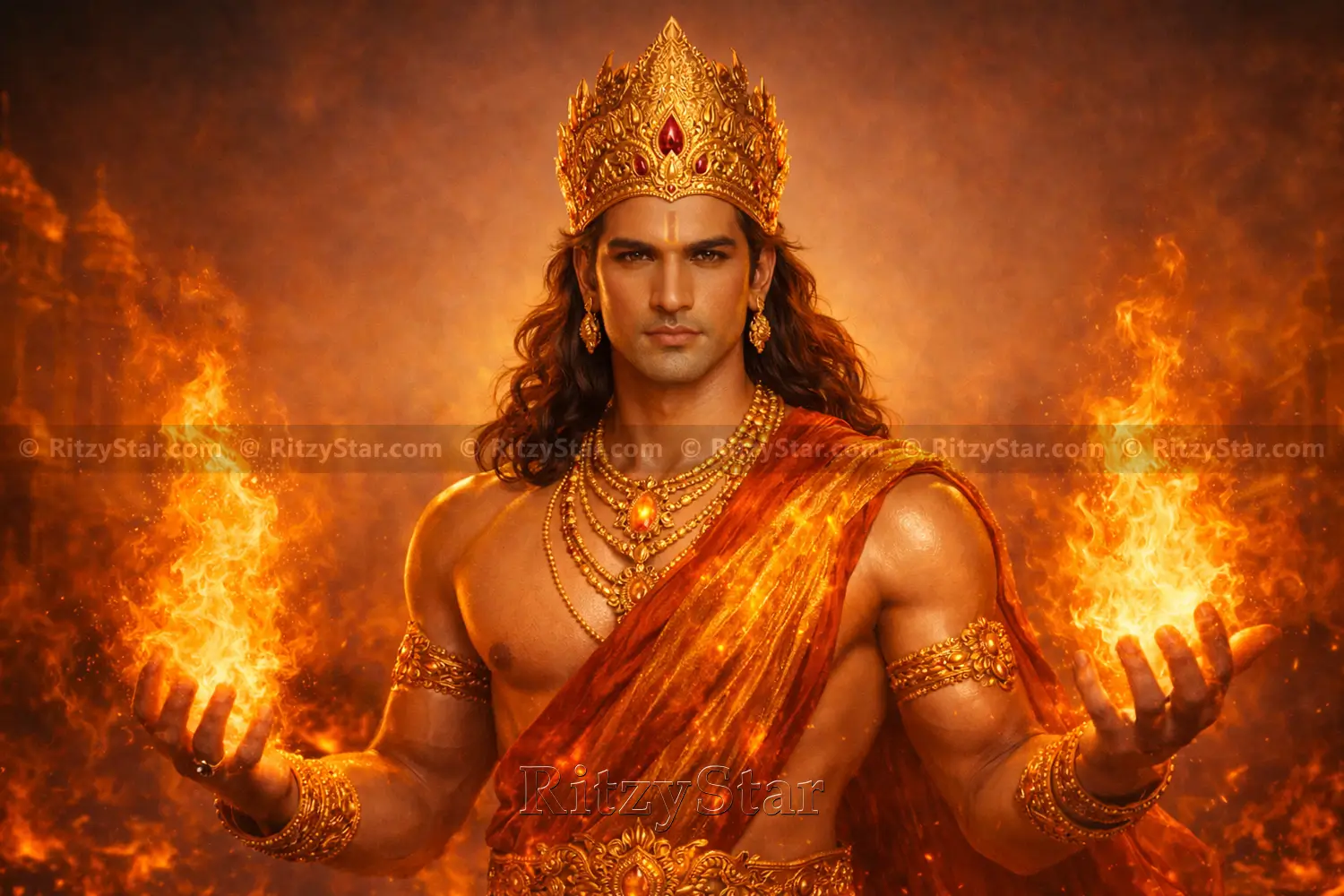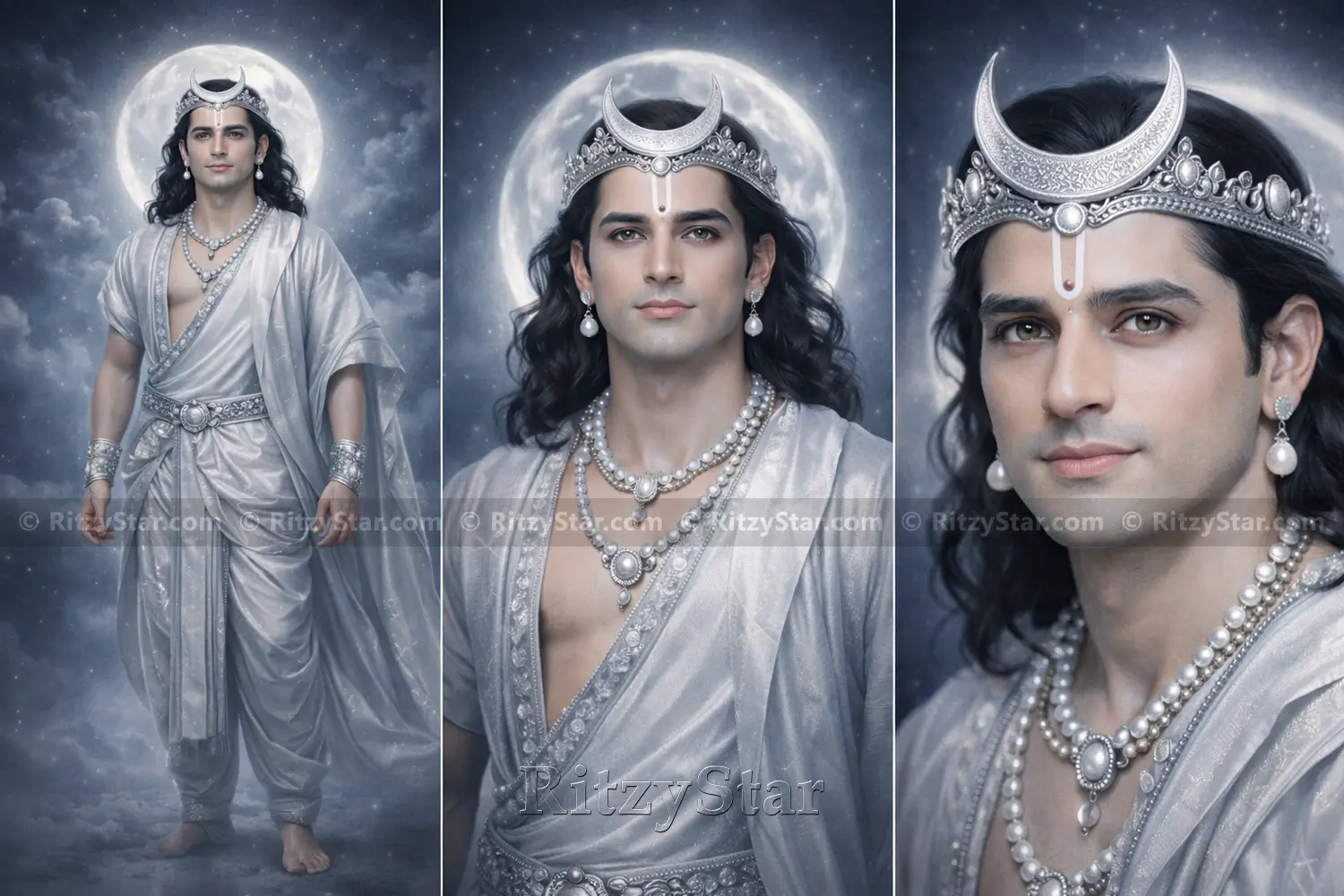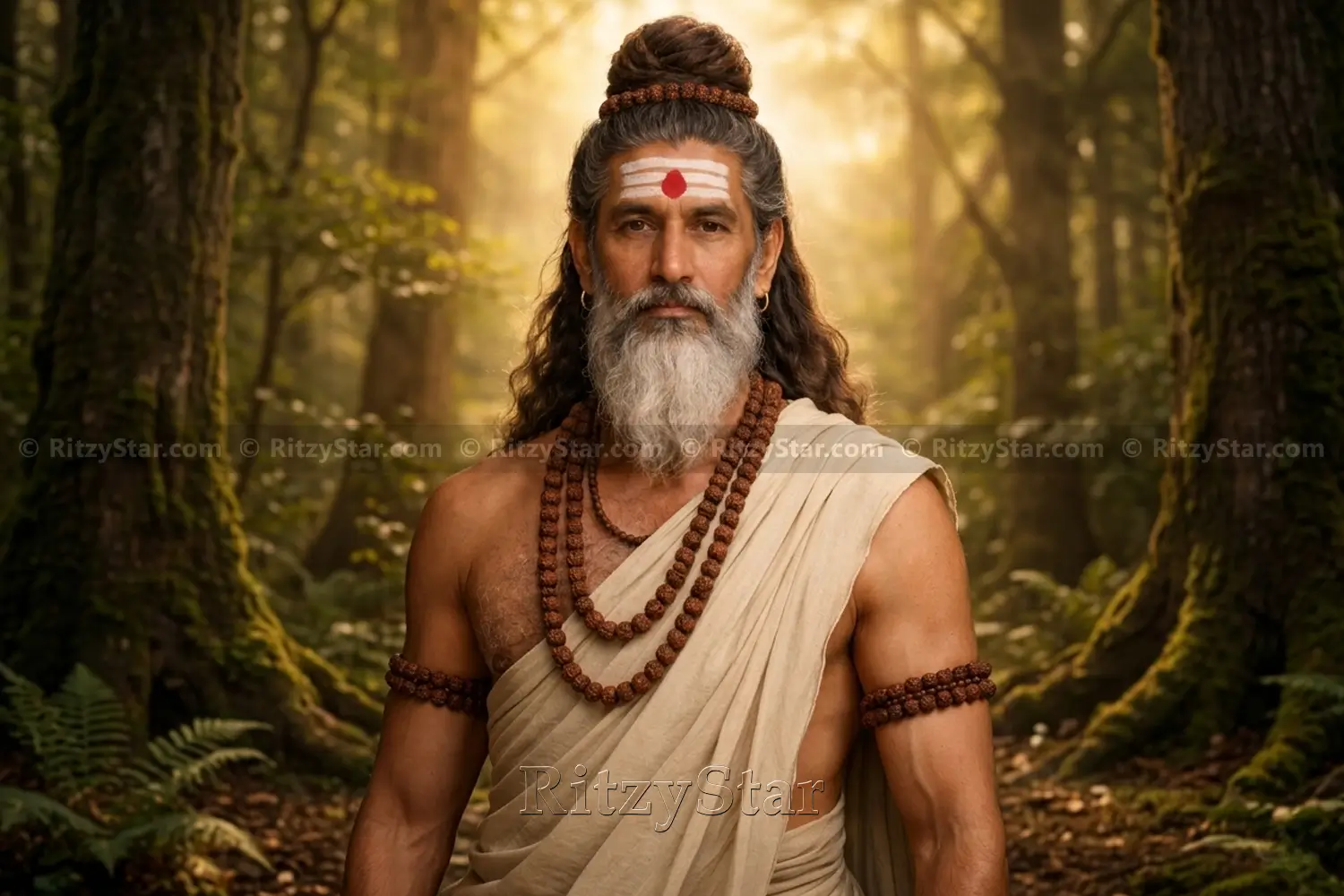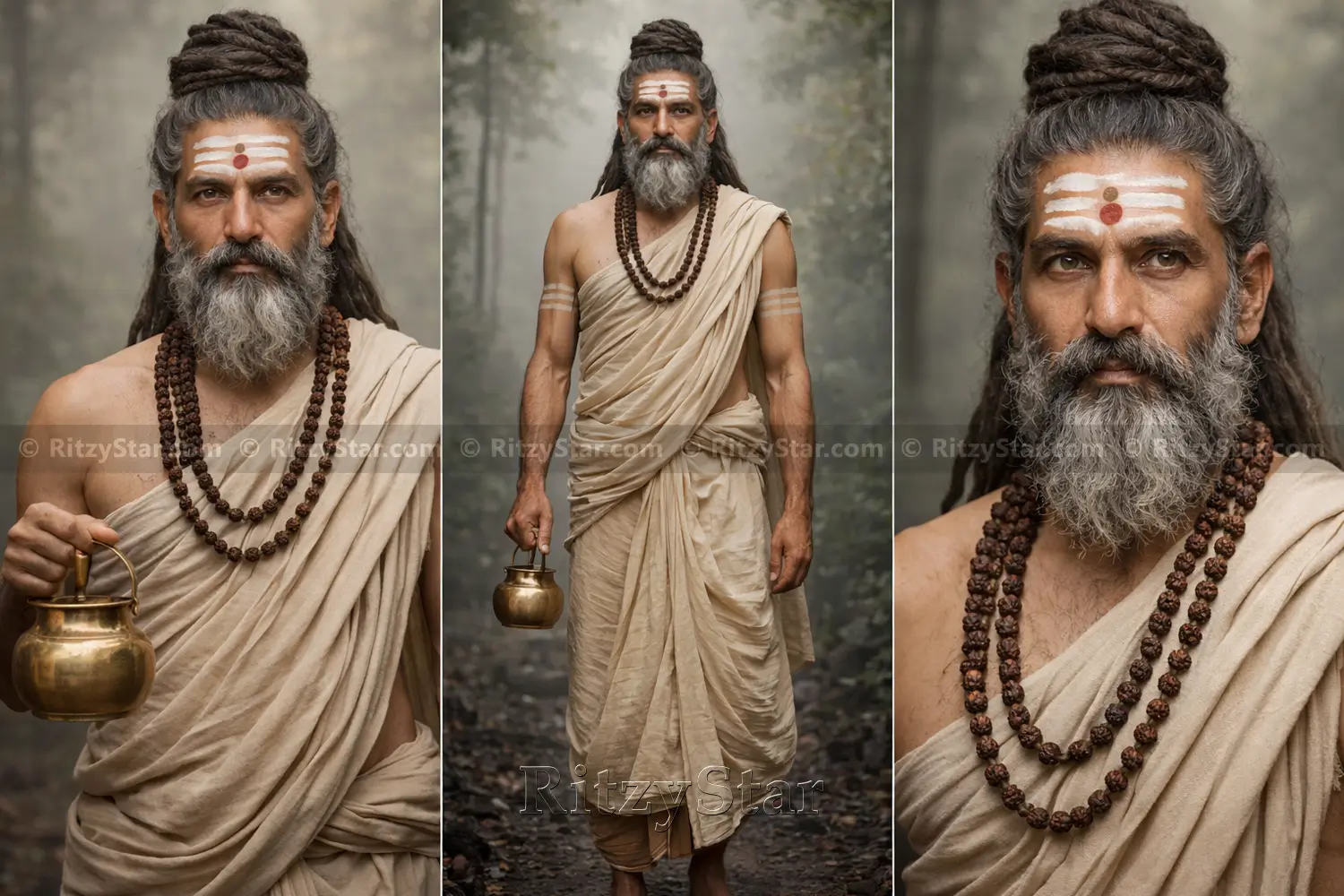

The Enchantress of Heaven, The Woman for Whom Dynasties Rose and Fell
“उर्वशी सुरनारीणां मुकुटमणिरुज्ज्वला।
यस्याः स्मरणमात्रेण मोहयेत् त्रिभुवनं नृणाम्॥”
— Ancient Verse
Meaning: Urvashi, the radiant jewel among celestial women, by whose mere remembrance mortals are enchanted across the three worlds.
💃 Introduction: The Woman Born from the Thigh of a Sage
She was not born of a mother’s womb. She emerged, fully formed and impossibly beautiful, from the thigh of a great sage. Her very name—Urvashi—means “she who dwells in the heart,” for she captivated all who beheld her. Gods desired her, kings sacrificed their kingdoms for her, and even the heavens trembled at her beauty.
This is the story of Urvashi.
Not merely an apsara—a celestial dancer—but the apsara, the most beautiful, the most desirable, the most sought-after woman in all of Hindu mythology. Her story spans the heavens and the earth, touching the lives of gods like Indra, sages like Narayana and Nara, kings like Pururavas, and heroes like Arjuna. She was desired, possessed, cursed, and liberated. She was both muse and destroyer, enchantress and ascetic, mother and eternal maiden.
“न जाता गर्भशयने न पीतं जननीस्तनम्।
ऊरुभ्यां सम्भवाद् देवी उर्वशीति प्रकीर्तिता॥”
— by Author
Meaning: Neither born in a womb nor did she drink a mother’s milk; emerging from the thigh, the goddess is called Urvashi.
In the vast tapestry of Indian mythology, Urvashi stands apart. She is not a goddess in the traditional sense, yet she moves freely among gods. She is not mortal, yet she loves mortals. She is the embodiment of beauty, yet her story is filled with loss, longing, and transformation. Hers is a tale that asks profound questions: What is the nature of desire? Can true love exist between a mortal and a celestial? And when beauty itself becomes a curse, what remains?
🌟 Who Was Urvashi? The Crown Jewel of the Apsaras
Urvashi was the foremost of the apsaras—the celestial dancers who graced the court of Indra, the king of the gods. The apsaras were created to entertain the gods and to test the resolve of ascetics performing severe penances. Among them, Urvashi was supreme. Her beauty was legendary, her dancing unmatched, her very presence capable of turning the heads of the most disciplined beings in the cosmos.
“अप्सरसां वरिष्ठा सा उर्वशी रूपसंपदा।
इन्द्रसभामणिर्दिव्यो देवानामपि मोहिनी॥”
— by Author
Meaning: Foremost among apsaras, Urvashi in her beauty was the divine jewel of Indra’s court, enchanting even the gods.
Unlike other apsaras who were born from the churning of the ocean (Samudra Manthan), Urvashi’s origin was more mysterious. She was not created for entertainment alone—she emerged from a profound spiritual event, carrying within her the essence of divine will and cosmic purpose.
The Many Names of Urvashi
Urvashi is known by several names across different texts, each revealing a facet of her complex identity:
| Name | Meaning | Origin & Significance |
|---|---|---|
| Urvashi | She Who Dwells in the Heart | Derived from “uru” (heart/wide) and “vash” (to dwell). Represents her ability to captivate and reside in the hearts of all who behold her. |
| Apsara-varā | Best Among Apsaras | A descriptive title indicating her supreme position among celestial dancers. |
| Indra-sabhā-maṇi | Jewel of Indra’s Court | Highlights her role as the most prized performer in the celestial assembly. |
| Nārāyaṇa-sodarī | Sister of Narayana | A reference to her origin from the thigh of Sage Narayana, making her a spiritual sibling to the great sage. |
| Rambhā-sahodarī | Sister of Rambha | Some texts refer to her as the sister of Rambha, another prominent apsara. |
| Purūravas-priyā | Beloved of Pururavas | A name acknowledging her famous mortal lover, King Pururavas, founder of the Lunar Dynasty. |
| Ayuḥ-jananī | Mother of Ayu | Her role as the mother of Ayu, the son who continued the Lunar Dynasty. |
| Vasumitrā | Friend of the Vasus | Her association with the eight Vasus in some narratives. |
| Svarga-loka-sundarī | Beauty of Heaven | Emphasizes her role as the most beautiful being in the celestial realms. |
“उर्वशी बहुधा नाम्ना ज्ञायते त्रिषु लोकेषु।
प्रत्येकं तेषु नाम्नां हि गुणानन्त्यं प्रकाशितम्॥”
— by Author
Meaning: Urvashi is known by many names across the three worlds, each name revealing the infinity of her virtues.
🌄 The Mysterious Birth – From the Thigh of Sage Narayana
The origins of Urvashi are unlike any other. She was not born of woman, nor created from cosmic churning like her apsara sisters. Her birth was the result of a divine test—a moment when the boundary between asceticism and desire, between the spiritual and the sensual, was deliberately blurred.
The Penance of Narayana and Nara
The story begins with the twin sages Nara and Narayana—the two aspects of the divine being, incarnated as sages to perform severe austerities in the holy land of Badrikashrama (modern Badrinath in the Himalayas). Their penance was so intense, their spiritual power so immense, that it threatened the balance of the cosmos.
“नरनारायणावृषी बदर्याश्रमवासिनौ।
घोरं तपस्तप्यमानौ देवानामपि दुर्जयौ॥”
— by Author
Meaning: The sages Nara and Narayana, dwelling in the Badari hermitage, performed severe austerities that were invincible even to the gods.
Indra, the king of the gods, grew concerned. He feared that the sages’ growing power might eventually challenge his own position. More than that, he worried that their penance was so intense that it might disrupt the cosmic order. He decided to test their resolve—to see if they could be distracted from their spiritual path by the most potent force known to the cosmos: desire.
The Creation of Urvashi
Indra summoned the apsaras, the celestial dancers, and commanded them to go to Badrikashrama and seduce the sages. But the apsaras were afraid—the power of Nara and Narayana was too great. They refused, trembling at the thought of provoking the sages’ wrath.
“इन्द्राज्ञया समायाता अप्सरसो भयाकुलाः।
न शेकुः साधयितुं कार्यं तपोवीर्यभयार्दिताः॥”
— by Author
Meaning: Brought by Indra’s command, the apsaras, overcome with fear, could not accomplish the task, terrified of the sages’ spiritual power.
Then, something extraordinary happened. The sage Narayana, perceiving Indra’s intention and the fear of the apsaras, decided to create a being who could not be refused—a woman of such extraordinary beauty that even he, in his human form, might be tempted. From his thigh (uru), he created a woman of incomparable beauty.
“नारायणस्य ऊरुभ्यां सृष्टा दिव्या मनोहरा।
उर्वशी नाम तेनासीदप्सराणां वरा सती॥”
— by Author
Meaning: From the thigh of Narayana was created a divine, enchanting woman. Called Urvashi for this reason, she became the foremost of apsaras.
Thus, Urvashi was born—not from desire, but from the very act of testing desire. She was created by a sage to test himself, to prove that even the most beautiful woman could not distract him from his spiritual path. And she succeeded beyond anyone’s expectations: the sages remained unmoved, their penance undisturbed, while the woman they created became the most celebrated beauty in all the three worlds.
👑 Urvashi in the Court of Indra – The Jewel of Heaven
After her creation, Urvashi took her place in the celestial court of Indra, the king of the gods. She became the foremost performer, the jewel of his assembly, the dancer whose performances could bring joy to the gods and longing to the demons.
The Role of the Apsaras
The apsaras served multiple purposes in the celestial hierarchy:
1. Entertainers of the Gods: They performed dance and music in Indra’s court, providing pleasure to the gods after their battles with the demons.
2. Testers of Ascetics: When sages performed severe penances that threatened the cosmic balance, apsaras were sent to test their resolve. Any sage who succumbed to desire would lose the power he had accumulated.
3. Rewards for Heroes: Great warriors and righteous kings were sometimes rewarded with the company of apsaras in heaven after death.
4. Mothers of Dynasties: Apsaras often bore children to mortal kings, producing heroes who shaped the destiny of humanity.
In all these roles, Urvashi was preeminent. She was the apsara sent on the most important missions, the one whose beauty was considered irresistible, the standard against which all others were measured.
“उर्वशी प्रमदा श्रेष्ठा रूपेणाप्रतिमा भुवि।
इन्द्रस्य सभायां नित्यं रञ्जयन्ती दिवौकसः॥”
— by Author
Meaning: Urvashi, the foremost among women, matchless in beauty on earth, forever delights the celestial beings in Indra’s court.
💔 The Curse of Urvashi – The Separation from Her Mortal Lover
The most famous chapter in Urvashi’s story is her love affair with King Pururavas, the first great king of the Lunar Dynasty (Chandravansha). Their story is one of the earliest and most poignant love stories in Indian literature, immortalized in Kalidasa’s play Vikramorvashiyam (Urvashi Won by Valor) and in the Rigveda itself.
The Meeting – Pururavas and Urvashi
Pururavas was a mortal king of extraordinary power. He was the son of Budha (the planet Mercury) and Ila, and the grandson of the moon god Chandra (Soma) and the apsara-like figure Tara. As the founder of the Lunar Dynasty, he was destined to be one of the most celebrated kings in Indian mythology.
“पुरूरवा नाम राजर्षिरिन्द्रसखो महाबलः।
चन्द्रवंशप्रवर्तको यस्य कीर्तिरनन्तगा॥”
— by Author
Meaning: Pururavas, the royal sage of great power and friend of Indra, was the founder of the Lunar Dynasty, whose fame was limitless.
Pururavas was visiting heaven—a privilege granted to him due to his friendship with Indra—when he first saw Urvashi dancing in the celestial court. The moment was transformative. The king, who had conquered kingdoms and defeated enemies, was conquered himself by the apsara’s beauty. And Urvashi, for her part, was equally captivated by the mortal king.
“दृष्ट्वा पुरूरवसं राजा उर्वशी काममोहिता।
परस्परं समाकृष्टौ दम्पती प्रेमपाशतः॥”
— by Author
Meaning: Beholding King Pururavas, Urvashi was overcome with desire; they were drawn to each other, bound by the cords of love.
The Union and the Condition
Urvashi agreed to live with Pururavas on earth, but she imposed conditions—conditions that reflected her celestial nature and her fear of mortality:
- She would never see him naked except during lovemaking.
- Her pet sheep (or rams) must always be protected—she would leave if they were harmed.
- She would only eat ghee (clarified butter).
- They would never quarrel.
“मम मेषद्वयं राजन् सदा रक्ष्यं त्वया भृशम्।
नग्नं मां न विलोक्यास्तु रहस्यपि कदाचन॥”
— by Author
Meaning: “My two sheep, O King, must always be carefully protected by you. Never see me naked, even in private.”
Pururavas accepted these conditions, and for a time, they lived together in bliss. Urvashi bore him sons, and their love seemed to transcend the boundary between mortal and immortal.
The Breaking of the Vow
The Gandharvas—celestial musicians who were also enamored of Urvashi—grew jealous of her union with a mortal. They conspired to break the couple apart.
One night, they stole the two sheep that Urvashi cherished. Pururavas, hearing the cries of the animals, leapt up to protect them. In his haste, he forgot to cover himself. And in that moment, a lightning flash—sent by the Gandharvas—illuminated the king in his nakedness.
“गन्धर्वास्तस्य मेषौ तौ जह्रुर्विद्याधरोत्तमाः।
विद्युता च सहसा राज्ञो नग्नता समदर्शयन्॥”
— by Author
Meaning: The Gandharvas stole his two sheep; with lightning they suddenly revealed the king’s nakedness.
Urvashi, seeing her condition violated, vanished instantly. Her vow was broken, and with it, their life together. She returned to the celestial realms, leaving Pururavas alone and devastated.
The Search and the Reunion
Pururavas searched everywhere for his lost love. He wandered through forests, crossed rivers, climbed mountains, driven mad by grief and longing. The Rigveda (X.95) contains a poignant dialogue between the lovers during this time of separation.
“पुरूरवा विलपति वनेषु त्वां विना प्रिये।
वियोगाग्निर्दहत्यङ्गं यथा वह्निर्वनस्पतिम्॥”
— by Author
Meaning: Pururavas laments in the forests without you, my beloved; the fire of separation burns his limbs like a wildfire consumes a tree.
Eventually, Urvashi took pity on him. She appeared to him, and they met at a sacred lake where she bathed each year. She revealed that she was pregnant with his son and promised that he could come to claim the child. She also revealed that their separation was necessary—a mortal and an apsara could not live together permanently.
“न शक्यं मर्त्यलोके मे स्थातुं राजन् सदा त्वया।
ऋतुकाले च संयोगः स्थानेऽस्मिन् भविता मम॥”
— by Author
Meaning: “I cannot dwell always with you in the mortal world, O King. But in this place, at the proper season, we may meet.”
From this union, Pururavas and Urvashi had several sons, most notably Ayu, who would continue the Lunar Dynasty. Through Ayu, Urvashi became the ancestor of the Kauravas and Pandavas, of Lord Krishna, and of countless kings who ruled India for millennia.
🔥 The Apsara Who Burned a Sage – The Curse of Agastya
Urvashi’s beauty was not always a source of joy. Sometimes, it brought disaster—not to her, but to those who succumbed to it in the wrong way.
The Sage’s Wrath
According to one legend, the great sage Agastya—one of the most revered rishis in Hindu tradition—once saw Urvashi and was overcome by desire. He approached her, but Urvashi, knowing the power of a sage’s anger, tried to evade him. However, Agastya persisted, and in frustration, Urvashi cursed him to be born as a fish in his next life.
“उर्वश्या शप्त आगस्त्यो मत्स्ययोनौ बभूव ह।
तपोवीर्याद् दग्धदेहः पुनः सिद्धिं गतः स्वयम्॥”
— by Author
Meaning: Cursed by Urvashi, Agastya was born in a fish’s form. Though his body was burned, he regained his spiritual powers.
Agastya, realizing his folly, accepted the curse and was later liberated. This story serves as a reminder that even the greatest sages could be unsettled by Urvashi’s beauty.
The Burning of Kandu
Another famous story involves the sage Kandu, who performed intense penance for ten thousand years. Indra, fearing the sage’s growing power, sent Urvashi to distract him. She succeeded beyond expectation: Kandu lived with her for 957 years, completely lost in pleasure, forgetting his spiritual practice entirely.
“कण्डुर्मुनिः सहस्राणि दश तप्त्वा महत्तपः।
उर्वशीसंगमे राजन् न्यवसद् वर्षसप्ततिम्॥”
— by Author
Meaning: The sage Kandu, having performed ten thousand years of great penance, lived with Urvashi for 957 years.
When Kandu finally emerged from his delusion, he was horrified at the time he had wasted. He cursed Urvashi to leave him, and she returned to heaven. But the incident became a cautionary tale about the power of desire to undermine even the most dedicated spiritual practice.
🏹 Urvashi and Arjuna – The Rejected Love
One of the most fascinating episodes in Urvashi’s story involves her encounter with the Pandava prince Arjuna, the greatest archer of his age.
The Curse of the Apsara
According to the Mahabharata, Arjuna was spending time in Indra’s court, learning celestial weapons and enjoying the hospitality of the king of the gods. Urvashi, seeing the handsome and heroic prince, was overcome with desire. She approached him and declared her love.
“उर्वश्यर्जुनमापृच्छत् कामार्ता काममोहिता।
सेवस्व मामिति प्राह राजपुत्रं यशस्विनम्॥”
— by Author
Meaning: Urvashi, tormented by desire, approached Arjuna and said, “Enjoy me, O prince of glory.”
But Arjuna refused. He addressed her with respect, calling her “mother” because she had once been the beloved of his ancestor Pururavas, the founder of his dynasty.
“त्वं मातृकल्पा गुरुपत्नीति मे मतिः।
न शक्नोमि प्रसादं ते कर्तुं देवि कथञ्चन॥”
— by Author
Meaning: “You are like a mother to me, like the wife of a guru. I cannot fulfill your desire, O goddess, in any way.”
The Curse and Its Modification
Urvashi, rejected and enraged, cursed Arjuna to lose his manhood—to become a eunuch. Indra later modified the curse, allowing Arjuna to choose the time of his impotence. This curse later proved useful during the Pandavas’ exile, when Arjuna spent a year as the eunuch Brihannala in King Virata’s court, teaching dance and music to the princess Uttara.
“इन्द्रस्तु कृपया राजन् शापं तस्याश्च मार्दवम्।
यदा यदिच्छसि तदा भविता त्वं नपुंसकः॥”
— by Author
Meaning: Indra, out of compassion, modified her curse: “Whenever you wish, you shall become a eunuch.”
This episode reveals another dimension of Urvashi—her pride, her refusal to accept rejection, and her capacity for both passion and vengeance.
🧘♀️ The Ascetic Urvashi – The Woman Who Sought Liberation
Despite her life of pleasure in Indra’s court, Urvashi was not immune to the spiritual yearnings that moved all beings in Hindu cosmology. In some traditions, she is portrayed as an ascetic who sought liberation through discipline.
The Penance of Urvashi
According to some Puranic accounts, Urvashi once decided to renounce the pleasures of heaven and perform severe penance. She went to the Himalayas, stood on one leg, and meditated on Lord Vishnu for thousands of years.
“उर्वशी हिमवत्पार्श्वे तपस्तप्तुं समुद्यता।
एकपादेन संस्थाप्य ध्यायन्ती पुरुषोत्तमम्॥”
— by Author
Meaning: Urvashi, determined to perform penance in the Himalayas, stood on one leg, meditating on the Supreme Being.
Lord Vishnu, pleased with her devotion, granted her a boon. Urvashi asked that she remain eternally beautiful and that her name never be forgotten by mortals. The boon was granted, and Urvashi returned to heaven with renewed spiritual stature.
This ascetic dimension of Urvashi complicates her portrayal as merely a seductress. She was, like all beings, engaged in the cosmic play of desire and renunciation, attachment and liberation.
👨👩👦 The Family of Urvashi
Unlike many celestial beings who have extensive genealogies, Urvashi’s direct relationships are focused primarily on her unions with Pururavas and the sons that resulted from that union.
| Sl.No | Name | Relationship | Children | Remarks |
|---|---|---|---|---|
| 1 | King Pururavas (Founder of the Lunar Dynasty) | Primary Consort / Lover | 1. Ayu – The principal son who continued the Lunar Dynasty. Became a great king and father of Nahusha, who later became Indra. Through Ayu, Urvashi is the ancestress of the Chandravansha (Lunar Dynasty), including the Kauravas, Pandavas, and Lord Krishna. 2. Amavasu – Another son who founded his own dynasty, the Amavasu lineage. 3. Vishvayu – Also called Vishvavasu; another son of Pururavas and Urvashi. 4. Shrutayu – One of Urvashi’s sons; sometimes counted among the five sons of Pururavas. 5. Ayatayu – Another son; the Mahabharata lists five sons of Pururavas and Urvashi. | Pururavas was a mortal king, the son of Budha (Mercury) and Ila, and grandson of Chandra (the Moon). He met Urvashi in Indra’s court, and their love story is one of the most celebrated in Hindu mythology. Their union was conditional and ultimately led to separation, but their sons founded the most important dynasty in Indian mythology. |
| 2 | Indra (King of the Gods) | Celestial Patron (not a consort) | None | While not a consort in the romantic sense, Indra was Urvashi’s patron and lord. She performed in his court and was often sent by him on missions to test sages. Some later folk traditions suggest a closer relationship, but canonical texts do not list Indra as her consort or father of her children. |
| 3 | Various Sages (Kandu, Agastya, etc.) | Temporary Encounters | None | Urvashi was sent by Indra to distract several sages, including Kandu, with whom she lived for 957 years. However, these encounters did not produce children. The curse of Agastya and the burning of Kandu are separate episodes in her mythology. |
Important Notes on Urvashi’s Family:
- Pururavas Was Her Only Significant Union – Unlike other celestial figures who had multiple consorts, Urvashi’s primary relationship was with King Pururavas. Her encounters with sages were assignments from Indra, not personal unions.
- The Five Sons – The Mahabharata (Adi Parva) mentions that Pururavas and Urvashi had five sons: Ayu, Amavasu, Vishvayu, Shrutayu, and Ayatayu. Ayu was the eldest and most important, as he continued the main line of the Lunar Dynasty.
- Ayu’s Importance – Through Ayu, Urvashi became the ancestress of the Chandravansha. Ayu’s son Nahusha became Indra, and Nahusha’s son Yayati was the father of Madhavi. Thus, Urvashi is directly connected to the story of Madhavi discussed earlier.
- No Other Consorts – Unlike Pururavas, who had other wives (including Ila, who was both his mother and wife in some versions), Urvashi had no other significant consorts. She remained in the celestial realms after her separation from Pururavas.
- Celestial vs. Mortal Nature – Urvashi’s children with Pururavas were mortal, but they carried within them the divine essence of their celestial mother. This mixed heritage—part divine, part mortal—characterized the Lunar Dynasty, making them both powerful and vulnerable, glorious and tragic.
- Descendants Through Ayu – The Lunar Dynasty produced some of the most celebrated figures in Indian mythology:
- Nahusha (Ayu’s son) – Became Indra.
- Yayati (Nahusha’s son) – The great emperor who exchanged his old age for youth.
- Madhavi (Yayati’s daughter) – The princess who was bartered for horses.
- Kuru (descendant) – Founder of the Kuru dynasty.
- Pandavas and Kauravas – Heroes of the Mahabharata.
- Lord Krishna – The avatar of Vishnu, born in the Yadava branch of the Lunar Dynasty.
🎭 The Legacy of Urvashi – From the Rigveda to Kalidasa
Urvashi’s influence extends across millennia of Indian literature and culture. She appears in the oldest text of Hinduism—the Rigveda—and continues to inspire poets and dramatists to this day.
Urvashi in the Rigveda
The Rigveda (X.95) contains the earliest version of the Urvashi-Pururavas story. This hymn is a dialogue between the two lovers after their separation. Urvashi speaks of her love for Pururavas but also explains why they cannot be together:
“उर्वशी पुरूरवं प्रत्युवाच यथाकामं कुरु राजन् प्रजानन्।
मा मां रक्षो घ्नन्तु मा ते अहं प्रदाने मा मे मृत्योः पदमा विशः॥”
— Rigveda X.95.4
Meaning: Urvashi said to Pururavas: “Do as you wish, O king, knowing this. Do not let the demons harm me. I do not give myself to you; do not let me enter the abode of death.”
This ancient hymn captures the tension between mortal love and immortal nature—a theme that would echo through centuries of literature.
Kalidasa’s Vikramorvashiyam
The greatest literary treatment of Urvashi’s story is Kalidasa’s play Vikramorvashiyam (Urvashi Won by Valor). The play adds new elements to the story:
- Pururavas must rescue Urvashi from a demon who has abducted her.
- After their separation, Pururavas wanders mad with grief.
- Urvashi, cursed to become a vine, is eventually restored.
- The play ends happily, with Urvashi permanently united with Pururavas through the intervention of the gods.
“उर्वशी विक्रमेणैव प्राप्ता राज्ञा पुरूरवा।
कालिदासेन काव्यं तदमरत्वमुपागतम्॥”
— by Author
Meaning: Urvashi was won by the valor of King Pururavas; that play by Kalidasa achieved immortality.
Urvashi in Art and Dance
Urvashi has been a favorite subject of Indian art for millennia. She appears in:
- Sculpture – Temple carvings across India depict Urvashi in graceful poses.
- Painting – Rajput and Mughal miniatures often illustrate scenes from her story.
- Dance – Bharatanatyam, Odissi, and Kathakali have pieces dedicated to Urvashi.
- Literature – Beyond Kalidasa, numerous poets have written about her.
📜 The Deeper Meanings – Allegories and Interpretations
The story of Urvashi, like all great myths, operates on multiple levels. Beneath the surface of romance and tragedy lie profound philosophical insights.
The Allegory of the Soul and the World
Some interpreters see Urvashi as representing the soul (purusha) and Pururavas as representing the mind or the ego. Their separation represents the soul’s entanglement with worldly desires, and their reunion represents the soul’s eventual liberation.
“उर्वशी आत्मरूपा स्यात् पुरूरवा मनः स्मृतम्।
तयोः संगमयोगेन संसारस्य प्रवर्तनम्॥”
— by Author
Meaning: Urvashi is the soul; Pururavas is the mind. Through their union, the cycle of worldly existence continues.
In this reading, the conditions Urvashi imposes represent the soul’s requirement for purity. When the mind fails to maintain these conditions—when it succumbs to base impulses symbolized by the Gandharvas—the soul departs. The search that follows is the mind’s longing for spiritual fulfillment, and the seasonal meetings represent the moments of spiritual insight that sustain the seeker.
The Feminist Reading – Agency and Constraint
From a contemporary perspective, Urvashi’s story raises complex questions about female agency. On one hand, she possesses immense power—her beauty can topple kings and distract sages. She refuses Pururavas’s initial advances (in some versions), imposes conditions on their relationship, and leaves when those conditions are violated.
“न दासी न च भार्या सा न कामक्रोधवश्या सती।
उर्वशी स्वेच्छया याता पुरूरवसमागमम्॥”
— by Author
Meaning: Neither a slave nor a wife, not controlled by desire or anger, Urvashi came to Pururavas of her own free will.
Yet her freedom is circumscribed by her role. She is sent by Indra on missions, used as a tool to test sages, and ultimately cannot remain with the man she loves because of the cosmic order that separates mortal from immortal. Her story reflects the tension between individual desire and social role—a tension that resonates across cultures and eras.
The Aesthetic Interpretation – Rasa and Bhava
In the framework of Indian aesthetics, Urvashi’s story is a masterclass in the shringara rasa—the erotic sentiment. The longing of Pururavas, the beauty of Urvashi, the pain of separation, and the joy of reunion—all these evoke the deepest emotions in the audience.
“विप्रलम्भः संयोगश्च शृङ्गारस्य द्विधा मतः।
उर्वशीपुरूरवसोः काव्यं तद्दर्शनं महत्॥”
— by Author
Meaning: Separation and union are the two aspects of the erotic sentiment. The story of Urvashi and Pururavas is a great demonstration of this.
🌌 Urvashi in Buddhist and Jain Traditions
Urvashi’s fame extended beyond Hinduism. She appears in Buddhist and Jain texts as well, though often in transformed roles.
In Buddhist Literature
In some Buddhist Jataka tales, Urvashi appears as a celestial being who tests the resolve of the Bodhisattva. Her role is similar to that in Hindu texts—an enchanting woman who distracts spiritual seekers from their path.
In Jain Cosmology
Jain texts mention Urvashi as one of the principal apsaras in the celestial realms. She is described in Jain cosmography as residing in the upper heavens, where she serves the gods with her dance and music.
🏛️ Worship and Veneration – The Apsara Who Became a Goddess
While Urvashi is not primarily worshipped as a goddess in mainstream Hinduism, she is venerated in certain traditions:
In South Indian Temple Art
Many temples in South India, particularly those dedicated to Shiva and Vishnu, feature images of Urvashi among the celestial dancers depicted on the walls. The Brihadeeswarar Temple in Thanjavur, the Meenakshi Temple in Madurai, and the Hoysala temples of Karnataka all contain depictions of Urvashi.
In Folk Traditions
In some regions of India, particularly in Kerala and Karnataka, folk traditions celebrate Urvashi as a protective deity. She is sometimes invoked in rituals related to dance and performing arts.
In the Tantric Tradition
Some Tantric texts mention Urvashi as one of the 64 yoginis or as a figure associated with particular rituals of beauty and attraction. However, these traditions are esoteric and not widely practiced.
🌟 The Eternal Enchantress – Urvashi’s Enduring Legacy
Urvashi remains one of the most compelling figures in Indian mythology. She is beauty incarnate, yet her beauty brings her as much sorrow as joy. She is desired by gods and mortals alike, yet her deepest love is with a mortal king she cannot permanently possess. She is a celestial being, yet her story touches the most human of emotions—love, loss, longing, and reconciliation.
“उर्वशी स्मृतिमात्रेण रूपलावण्यदायिनी।
तस्याः स्मरणमात्रेण हृदयानन्दमाप्नुयात्॥”
— by Author
Meaning: Urvashi, by mere remembrance, bestows beauty and grace; by her mere remembrance, the heart attains joy.
Her story continues to resonate because it speaks to something universal—the tension between desire and duty, between the mortal and the eternal, between the love we want and the life we are given. In her, we see the beauty that transcends time and the tragedy that comes with being desired too much, too intensely, by too many.
Discover more from RitzyStar
Subscribe to get the latest posts sent to your email.