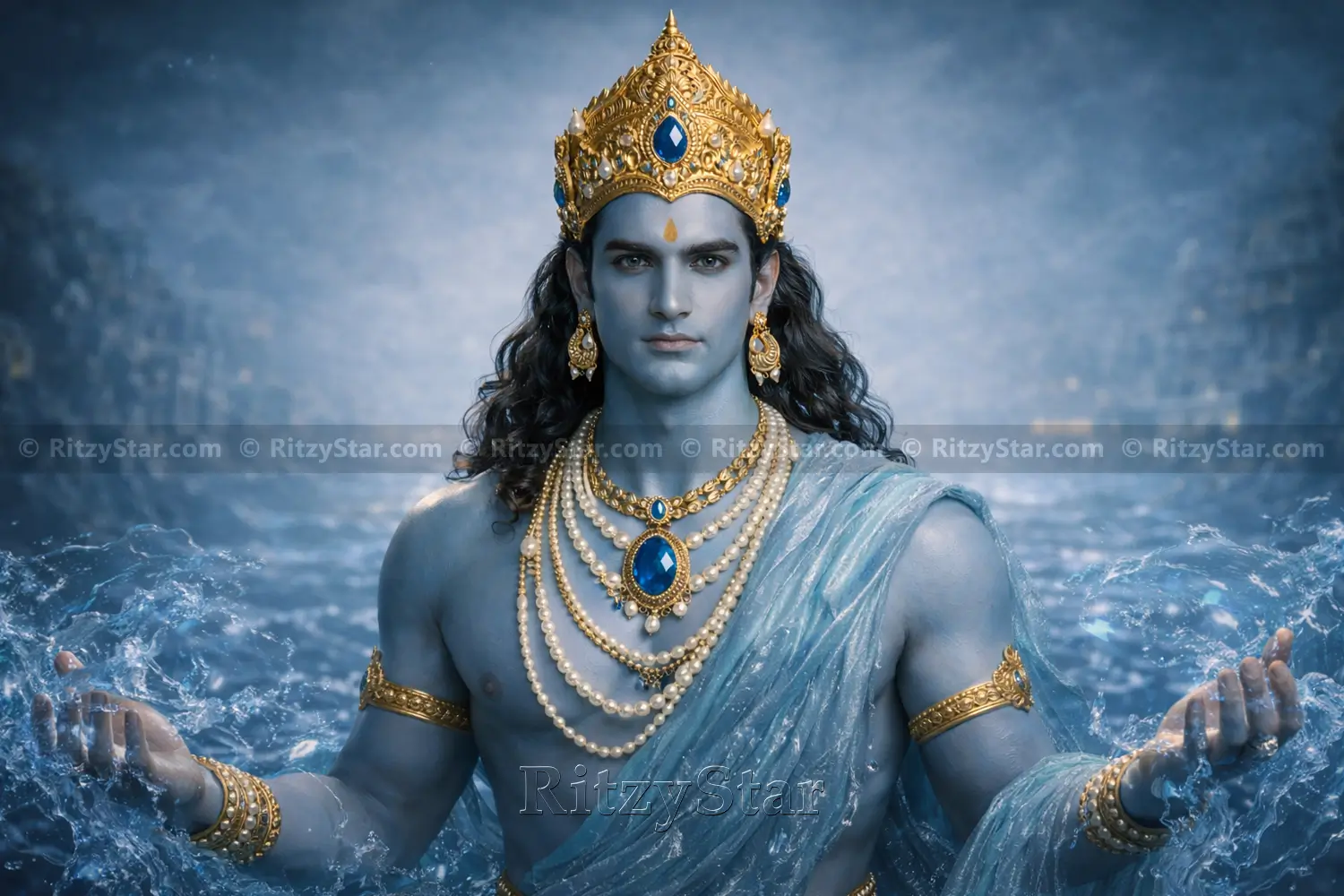

“जमदग्निः महाभागः सप्तर्षीणां प्रकीर्तितः।
भृगुवंशसमुद्भूतो ब्रह्मतेजोभिवर्धितः॥”
— Ancient Verse
Meaning: Jamadagni, the illustrious one, is proclaimed among the Saptarishis; born in the lineage of Bhrigu, he was magnified by the radiance of Brahman.
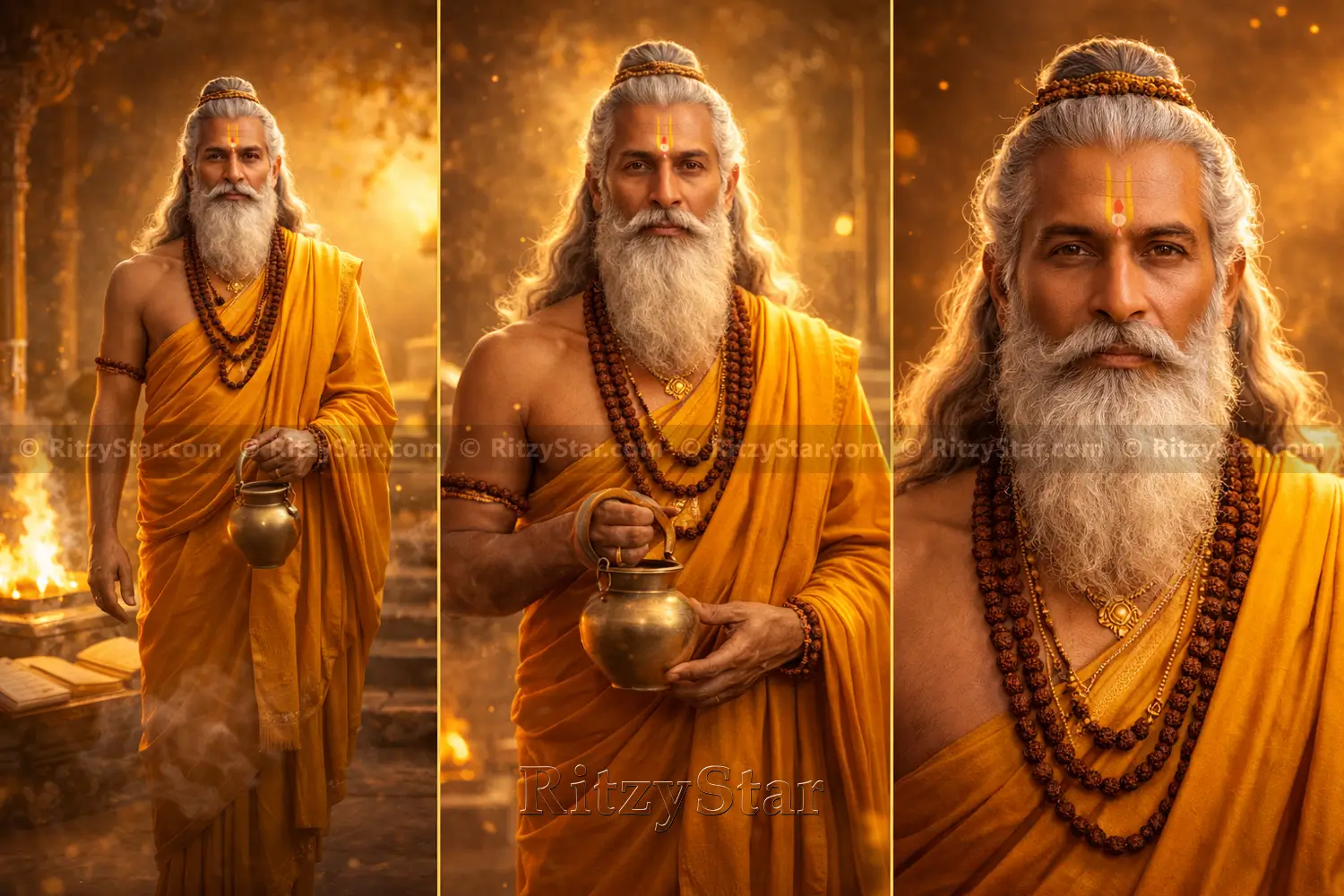
Oh, what intensity and mystery surround the life of this formidable sage! Among the luminous stars that adorn the firmament of India’s spiritual heritage, few shine with such fierce brilliance as Rishi Jamadagni. He was not merely a sage but a phenomenon—a man whose tapasya could shake the heavens, whose anger could annihilate armies, and whose blessings could bring the dead back to life. As one of the Saptarishis (Seven Great Sages) of the current Manvantara, Jamadagni occupies an exalted position in Hindu cosmology, yet his story remains largely unknown to the modern world .
Who Was Rishi Jamadagni, the Fire-Colossus of the Bhrigu Dynasty?
“यस्य क्रोधाग्निना दग्धाः क्षत्रिया निःशतं कृताः।
तस्य पुत्रः परशुरामो जमदग्नेर्महात्मनः॥”
— by Author
Meaning: He by whose fire of anger the Kshatriyas were burnt and rendered hundreds, whose son was Parashurama—that great soul is Jamadagni.
Can there be a sage more paradoxical than this? He was a Brahmarshi of unparalleled Vedic scholarship, yet he wielded weapons with the prowess of a warrior. He was a devoted husband who ordered his own wife’s beheading. He was a peaceful hermit whose death triggered the most extensive genocidal campaign in mythological history. Jamadagni defies easy categorization—he was, in every sense, a colossus who bestrode the boundaries between asceticism and violence, between compassion and rage.
“भृगोर्वंशे समुत्पन्नो जमदग्निर्महातपाः।
रेणुकायां समुत्पन्नः परशुरामः प्रतापवान्॥”
— by Author
Meaning: Born in the lineage of Bhrigu, Jamadagni of great austerities; from Renuka was born the valorous Parashurama.
Jamadagni’s significance in Hindu mythology cannot be overstated. He was the father of Parashurama, the sixth avatar of Lord Vishnu, who incarnated specifically to rid the earth of tyrannical Kshatriya rulers. Thus, through his son, Jamadagni became instrumental in one of the most dramatic divine interventions in cosmic history. He was also the recipient of the celestial bow Sharanga from his father, a weapon of such power that it would later be wielded by Lord Rama himself .
The Miraculous Birth of Jamadagni – A Tale of Switched Portions
“ऋचीकस्य सुतः प्राज्ञः सत्यवत्यां महातपाः।
जमदग्निरिति ख्यातो भृगुवंशविवर्धनः॥”
— by Author
Meaning: The wise and great ascetic son of Richika from Satyavati, known as Jamadagni, increased the glory of Bhrigu’s lineage.
The circumstances of Jamadagni’s birth are as extraordinary as his life, involving a divine intervention that would determine the destiny of generations. His father was Sage Richika, a descendant of the primordial sage Bhrigu, who was himself one of the mind-born sons of Brahma. Richika sought to marry Satyavati, the daughter of King Gadhi. The king, unwilling to part with his daughter easily, demanded an impossible bride price—a thousand white horses with one black ear each. Through the grace of Varuna, Richika procured these horses, and the marriage was solemnized .
“सत्यवत्यां समुत्पन्नो जमदग्निर्महायशाः।
गाधिस्तु जनयामास विश्वामित्रं महाबलम्॥”
— by Author
Meaning: From Satyavati was born the renowned Jamadagni; while Gadhi fathered the mighty Vishvamitra.
After the marriage, both Satyavati and her mother approached Richika with a boon—they desired sons. The sage prepared two portions of consecrated rice: one infused with the Brahmana mantra (to produce a serene, scholarly son) for Satyavati, and another with the Kshatra mantra (to produce a powerful, warrior son) for his mother-in-law. He instructed them to consume their respective portions and departed for his ablutions .
However, fate intervened. Satyavati’s mother, perhaps desiring a more powerful grandson, convinced her daughter to exchange their portions. When Richika returned and discovered the swap, his face darkened. He revealed the terrible truth: the son born to his mother-in-law would indeed be a great Brahmana, but Satyavati’s son—his own son—would be born with Kshatriya tendencies, an aggressive warrior who would bring bloodshed to the world .
“ब्रह्मक्षत्रसमायोगाज्जमदग्निरजायत।
स चापि जनयामास परशुरामं महाबलम्॥”
— by Author
Meaning: From the union of Brahmana and Kshatriya elements was Jamadagni born; and he fathered the mighty Parashurama.
Terrified, Satyavati fell at her husband’s feet and begged for a remedy. Moved by her devotion, Richika modified the curse: her son Jamadagni would be born a serene Brahmana, but her grandson—Jamadagni’s son—would possess the fierce, aggressive nature originally intended for his father. Thus, the stage was set for the birth of Parashurama, the Brahmana warrior who would terrorize the Kshatriya race .
Meanwhile, Satyavati’s mother gave birth to a son with full Kshatriya traits—Kaushika, who would later become the legendary Sage Vishvamitra, the king who transformed himself into a Brahmarshi through unimaginable austerities. Thus, in a single generation, this divine intervention produced two of the most famous sages in Hindu history—Jamadagni and Vishvamitra—cousins whose destinies would run parallel but never intersect .
The Many Names and Identities of Rishi Jamadagni
“नामानि तस्य दिव्यानि लोकेषु परिकीर्तिताः।
प्रत्येकं तेषु नाम्नां हि महिमा परिपूरितः॥”
— by Author
Meaning: His divine names are proclaimed across the worlds; each of those names is filled with great significance.
Like all great figures in Hindu tradition, Jamadagni is known by multiple names, each revealing a different facet of his complex personality. These names are not mere labels but windows into his identity, lineage, and spiritual accomplishments.
“जमदग्निर्भृगुश्रेष्ठः सप्तर्षिः परिकीर्तितः।
भार्गवश्चेति विख्यातो लोकेषु प्रथितो यशः॥”
— by Author
Meaning: Jamadagni, foremost of Bhrigu’s lineage, proclaimed among the Saptarishis, and known as Bhargava—his fame is spread throughout the worlds.
Thus, in his very names, we trace the arc of his existence—from his divine lineage through his birth, his marriage, his spiritual accomplishments, and his role as the father of an avatar. Each name adds a layer to our understanding of this complex sage, revealing a man who contained within himself the full spectrum of human and divine possibilities.
Jamadagni’s Early Life and Spiritual Attainments
“बाल्यादेव महातेजा वेदाभ्यासरतः सदा।
धनुर्वेदे च निष्णातः पितुरेव कृपालवः॥”
— by Author
Meaning: From childhood itself, the greatly radiant one was always devoted to Vedic study; he also became proficient in the science of weapons through his father’s grace.
From his earliest years, Jamadagni displayed an extraordinary aptitude for both spiritual and martial knowledge. He mastered the Vedas with a depth of understanding that astonished even his teachers. But unlike most Brahmana boys who confined themselves to scriptural study, Jamadagni also acquired the science of weapons—the Dhanurveda—without any formal instruction. His father Richika, himself a master of celestial weaponry, guided him in these arts, ensuring that the young Jamadagni could wield divine weapons with the same ease as he recited Vedic mantras .
“ऋषीणां यज्ञकर्तॄणां जमदग्निः प्रधानकः।
होमधेनुप्रदानेन विश्वं पुष्णाति नित्यशः॥”
— by Author
Meaning: Among sages who perform sacrifices, Jamadagni was foremost; through the gifts of his homa-dhenu, he nourished the world daily.
The sage’s spiritual powers grew with each passing year. He composed hymns, performed elaborate sacrifices, and engaged in severe austerities along the banks of the sacred Narmada river. His ashrama became a center of learning and spiritual practice, attracting disciples from far and wide. But what made his hermitage truly extraordinary was the presence of Kamadhenu—the divine cow of plenty, gifted to him by the gods or inherited through his spiritual merits .
Kamadhenu possessed the miraculous ability to provide whatever her owner desired—food, wealth, precious objects, or entire armies. With her help, Jamadagni could host thousands of guests, feed entire armies, and perform sacrifices of unparalleled grandeur. The fame of Kamadhenu spread across the earth, eventually reaching the ears of those who would covet her—a development that would seal Jamadagni’s tragic fate .
The Marriage to Renuka – A Union of Austerity and Devotion
“प्रसेनजितः सुतां रेणुकां नाम रूपयौवनान्विताम्।
जमदग्निरुपयेमे धर्मपत्नीं महायशाः॥”
— Mahabharata, Vana Parva
Meaning: The renowned Jamadagni married Renuka, the daughter of Prasenajit, endowed with beauty and youth, as his lawful wife.
When Jamadagni had established himself as a sage of great renown, he journeyed to the court of King Prasenajit of the Solar dynasty. There, he beheld the princess Renuka and was immediately captivated by her beauty, grace, and devotion. He requested her hand in marriage, and the king, recognizing the honor of having his daughter wed to such an illustrious sage, gladly consented .
“रेणुका पतिव्रता साध्वी पतिदेवपरायणा।
सेवते स्म पतिं भक्त्या देवी देवमिव प्रिया॥”
— by Author
Meaning: Renuka, the devoted and virtuous wife, devoted herself to her husband with devotion, like a goddess serving her beloved lord.
Renuka proved to be the ideal companion for a sage engaged in severe austerities. She tended to the ashrama, served her husband with unwavering devotion, and raised their five sons with patience and love. The couple’s life in their forest hermitage was one of simple contentment—until the day when a moment’s distraction shattered their peace forever .
Family of Jamadagni
| Sl.No | Name | Relationship | Kids | Remarks |
|---|---|---|---|---|
| 1 | Renuka – Daughter of King Prasenajit of the Solar Dynasty (Suryavansha). | Wife | 1. Ṛumaṇvān – The eldest son, who along with his brothers, was cursed to stone by Jamadagni for refusing to kill their mother. He was later revived by Parashurama. 2. Suhotra – The second son; also turned to stone and later revived. 3. Vasu – The third son; similarly cursed and revived. 4. Viśvāvasu – The fourth son; also faced the same fate before being restored to life. 5. Parashurama (Rama) – The youngest son and an avatar of Vishnu. He beheaded his mother on his father’s command, later requested her revival, and is renowned for ridding the world of Kshatriyas twenty-one times. | Renuka was a paragon of chastity (pativratā). Her momentary lapse of attention while watching a Gandharva king led to her beheading by Parashurama, who later revived her. She is venerated as a goddess, particularly in parts of South India. |
The Beheading of Renuka – Obedience Beyond Comprehension
“एकदा रेणुका स्नातुं नदीं गच्छति सत्वरा।
चित्ररथं गन्धर्वेन्द्रं ददर्श क्रीडितं जले॥”
— by Author
Meaning: One day, Renuka went quickly to the river to bathe; there she beheld Chitraratha, the king of Gandharvas, sporting in the water.
The incident that followed is one of the most controversial and psychologically complex episodes in all of Hindu mythology. One day, Renuka went to the river to fetch water for her husband’s rituals. As she approached the riverbank, she saw Chitraratha, the Gandharva king, sporting in the water with his wives, his body adorned with lotus garlands, his form magnificent in its beauty .
For just a moment—a single, fleeting moment—Renuka’s mind wavered. She felt a flicker of attraction, a momentary envy of the Gandharva queens sporting so freely with their lord. It was not an act, not a conscious transgression, but a momentary lapse in the absolute mental purity expected of a yogi’s wife. She collected herself, filled her water pot, and returned to the ashrama .
“जलकुम्भं परित्यज्य रेणुका भयविह्वला।
आश्रमं प्रविवेशाथ स्खलन्ती पदपद्मया॥”
— by Author
Meaning: Abandoning her water pot, Renuka, overcome with fear, entered the ashrama, stumbling with every lotus-like step.
But Jamadagni, through his yogic powers, had perceived everything. When he saw his wife entering the ashrama, her spiritual lustre dimmed, her aura tainted by that momentary lapse, his rage erupted like a forest fire. This was not mere jealousy—it was the fury of a yogi who perceived a crack in the vessel of his spiritual partner’s purity, a flaw that could potentially undermine the entire edifice of their shared tapasya .
“जमदग्निः सुतानाह रेणुकां हन्तुमच्युताः।
रुमण्वान् सुषेणश्च वसुश्चैव विश्वावसुस्तथा॥”
— Mahabharata, Vana Parva
Meaning: Jamadagni addressed his sons: “O immortals, kill Renuka.” Rumanvan, Sushena, Vasu, and Viswavasu—all four he commanded.
One by one, Jamadagni called his four elder sons—Rumanvan, Sushena, Vasu, and Viswavasu—and commanded each to kill their mother. One by one, they refused, horrified by the very thought. They stood mute, unable to speak, their minds clouded by confusion and grief. In his fury, Jamadagni cursed them, and instantly they lost their senses, becoming like inanimate objects, comparable in conduct to beasts and birds .
Then came the youngest son—Rama, later known as Parashurama. He had been away gathering fruits and returned to find his father in a state of uncontrollable rage. When Jamadagni issued the same command to him, Parashurama did not hesitate. He took up his axe and, with a single blow, severed his mother’s head .
“पितुर्वाक्यं समाकर्ण्य रामः परशुधारकः।
मातरं छादयामास क्रूरकर्मा महामनाः॥”
— by Author
Meaning: Hearing his father’s words, Rama, the wielder of the axe, beheaded his mother—he of great mind performed this cruel deed.
The moment the deed was done, Jamadagni’s rage subsided as suddenly as it had arisen. Seeing his beloved wife lying dead, seeing his youngest son standing with bloodied axe, his heart melted. He was filled with compassion and pride—compassion for Renuka, and pride in a son whose obedience to his father transcended even the bond between mother and child .
“प्रसन्नस्तु महातेजा जमदग्निर्महामुनिः।
वरान् ददौ सुतायाथ परशुरामाय धीमते॥”
— Mahabharata, Vana Parva
Meaning: Pleased, the great radiant Jamadagni, the mighty sage, then granted boons to his wise son Parashurama.
Jamadagni, now filled with paternal affection, offered Parashurama any boons he desired. And Parashurama, in a display of wisdom that belied his years, asked not for wealth or power or immortality. He asked that his mother be restored to life, that she remember nothing of her death, that his brothers regain their former state, that he himself be free from the sin of matricide, and that he become invincible in battle and obtain long life .
Jamadagni granted every wish. Through his spiritual powers, he brought Renuka back to life, reattached her head, and restored her memory—or rather, erased the memory of her death. He lifted the curse from his elder sons, returning them to their normal state. And he blessed Parashurama with the boons he had requested .
“माता जीवतु सद्भावा भ्रातरश्च स्वस्थताम्।
स्मृतिर्नास्ति वधस्येति वरदानमयाचत॥”
— by Author
Meaning: “Let mother live with loving disposition, let brothers regain health, let there be no memory of the killing”—thus he prayed for boons.
Thus, what seemed like an act of unspeakable violence was transformed into a testament of filial devotion and divine grace. The episode remains controversial to this day, interpreted variously as allegory, as literal history, or as a profound exploration of the nature of obedience, dharma, and the terrifying demands of spiritual life.
Dharma’s Test – The Sage Who Conquered Anger
“क्रोधरूपधरो धर्मो जमदग्नेः समीपगः।
दुग्धं पीत्वापि तं दृष्ट्वा क्रोधहीनं महामुनिम्॥”
— by Author
Meaning: Dharma, taking the form of Anger, approached Jamadagni; even after drinking the milk, he saw the great sage free from anger.
The Mahabharata records another fascinating episode from Jamadagni’s life—a divine test that reveals his spiritual maturity. One day, Dharma (the god of righteousness) decided to test the sage. Taking the form of Anger, he entered Jamadagni’s ashrama and slipped into a pot of milk that the sage had just milked from Kamadhenu .
Jamadagni drank the milk, fully aware that it contained the essence of Anger itself. Yet his mind remained perfectly calm, undisturbed by even a flicker of irritation. Seeing this, Dharma revealed himself in the form of a Brahmana and blessed the sage: “You have conquered anger itself. By this victory, you shall always remain righteous and never deviate from dharma, no matter what provocations arise” .
This episode stands in interesting contrast to the Renuka incident. Perhaps it occurred after that event, suggesting that Jamadagni’s confrontation with his own rage—and the tragic consequences it produced—had transformed him, burning away the last vestiges of uncontrolled anger from his consciousness.
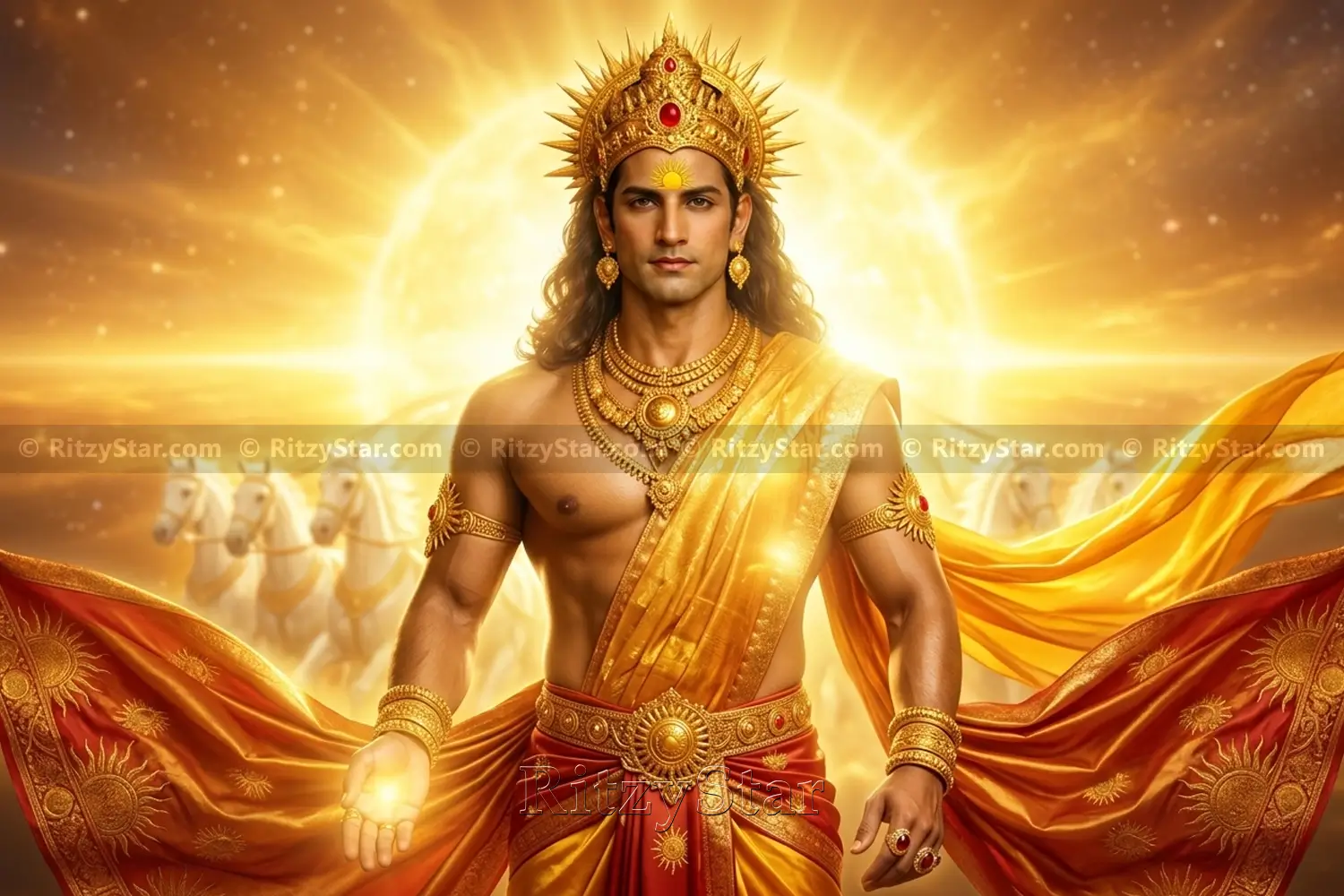
The Boon from Surya – Sandals and Umbrella
“सूर्यस्य तापमसहन् जमदग्निः प्रतापवान्।
बाणान् संधाय चिक्षेप दिवि सूर्यस्य रूपिणः॥”
— by Author
Meaning: Unable to bear Surya’s heat, the valorous Jamadagni aimed and shot arrows into the sky toward the sun’s form.
Another intriguing episode reveals Jamadagni’s assertive—even aggressive—approach to the divine. The sage once became annoyed with Surya, the sun god, for generating too much heat. In a display of his warrior-like nature, Jamadagni took up his bow and shot several arrows into the sky, directly at the sun .
Terrified by the sage’s audacity and power, Surya appeared before him in the form of a Brahmana. Rather than retaliate, the sun god offered Jamadagni two gifts that would help humanity cope with his heat—sandals to protect the feet from burning ground, and an umbrella to shield the head from scorching rays. According to tradition, this is how these two essential items were introduced to human civilization .
The Curse of Kartavirya Arjuna – The Theft of Kamadhenu
“कार्तवीर्यः सहस्रार्जुनो नाम राजा बलान्वितः।
जमदग्नेराश्रमं प्राप कामधेनुं दिदृक्षया॥”
— by Author
Meaning: Kartavirya Arjuna, the king with a thousand arms, powerful and mighty, came to Jamadagni’s ashrama desiring to see Kamadhenu.
The tragic climax of Jamadagni’s life began with a royal visit. Kartavirya Arjuna, the mighty Haihaya king, possessed a thousand arms and had received numerous boons through his devotion to the sage Dattatreya. Arrogant and powerful, he roamed the earth with his army, subjugating all who crossed his path .
During one such expedition, Kartavirya arrived at Jamadagni’s ashrama. The sage, following the ancient tradition of hospitality, received the king and his vast retinue with full honors. Using Kamadhenu’s divine powers, he arranged a feast of unimaginable grandeur—delicious foods, precious gifts, and every comfort for the king and his thousands of soldiers .
“कामधेनुं समालोक्य विस्मितः स नराधिपः।
याचते तां नृपः सर्वां जमदग्निं महामुनिम्॥”
— by Author
Meaning: Beholding Kamadhenu, the king was filled with wonder; he begged Jamadagni, the great sage, for that wish-fulfilling cow.
Kartavirya was astonished by Kamadhenu’s powers. Coveting the divine cow, he first offered to purchase her with vast wealth—ten million cows, half his kingdom, anything Jamadagni desired. But the sage refused; Kamadhenu was not merely a possession but a divine trust, essential for his sacrifices and his duties as a householder .
Enraged by the refusal, the thousand-armed king ordered his men to seize the cow by force. They dragged Kamadhenu away, ignoring her pitiful lowing and Jamadagni’s protests. The sage, despite his spiritual powers, was physically helpless against the armed soldiers. He could only watch as his beloved cow was stolen .
“ह्रियमाणां तु कामधेनुं दृष्ट्वा जमदग्निः क्रोधात्।
अनुजगाम तं राजन् याचमानः पुनः पुनः॥”
— by Author
Meaning: Seeing Kamadhenu being taken away, Jamadagni, though angered, followed the king, begging again and again for her return.
According to some versions, Jamadagni followed the king’s procession, repeatedly begging for Kamadhenu’s return. Infuriated by his persistence, one of the king’s ministers struck down the sage, leaving him for dead on the forest path. There Jamadagni lay, surrounded by a pool of his own blood, his life slowly ebbing away .
The Death of Jamadagni – A Martyr’s End
“रेणुका चिरमालोक्य पतिं नागतमाश्रमात्।
चिन्तयन्ती भयार्ता सा मार्गमन्वगमद्वनम्॥”
— by Author
Meaning: Renuka, seeing her husband not returning to the ashrama for a long time, anxious and fearful, followed the path into the forest.
When Jamadagni did not return to the ashrama, Renuka grew anxious. She followed his trail through the forest until she came upon the horrific sight—her husband lying in a pool of blood, barely alive, his life fading with each passing moment. She fainted at the sight, and when she regained consciousness, she began to wail piteously .
Her cries reached Parashurama, who was away in the forest. He rushed to the spot and found his dying father and grieving mother. As Renuka beat her breast in mourning—twenty-one times, according to tradition—Parashurama’s grief transformed into burning rage. He vowed that he would travel the earth twenty-one times and annihilate every Kshatriya king he could find, avenging his father’s murder .
“रेणुकायाः स्तनाघातैरेकविंशतिसंख्यया।
प्रतिजज्ञे महाबाहुः क्षत्रियान् हन्तुमव्ययः॥”
— by Author
Meaning: By the twenty-one beats of Renuka’s breast, the mighty-armed one vowed to destroy the Kshatriyas forever.
But Jamadagni was not yet dead. At that moment, the sage Shukra (or according to some versions, Jamadagni’s own spiritual powers) arrived and revived the dying sage using the Mritasanjivani mantra—the sacred formula that could bring the dead back to life. Jamadagni was restored, and Parashurama, now armed with his father’s blessings, set out for Mahishmati, Kartavirya’s capital .
At the gates of the city, Parashurama confronted Kartavirya Arjuna. In the battle that followed, the young avatar used his celestial weapons to sever the king’s thousand arms and finally kill him. He retrieved Kamadhenu and returned triumphantly to the ashrama, restoring the divine cow to his father .
But the tragedy was not yet complete. While Parashurama was away performing penance to atone for his violence, the sons of Kartavirya Arjuna descended upon the ashrama seeking revenge. They found Jamadagni alone, engaged in meditation, defenseless. In a brutal act of vengeance, they beheaded the sage—and this time, to prevent any possibility of resurrection, they carried his head away with them .
“शूरसेनादयः क्रूराः पितृहन्तारमागतम्।
जमदग्निं शिरश्छित्त्वा जह्रुस्ते तच्छिरः स्वयम्॥”
— by Author
Meaning: Shurasena and other cruel ones, seeking the killer of their father, beheaded Jamadagni and took his head themselves.
When Parashurama returned, he found his mother Renuka performing sati on his father’s funeral pyre. The grief and rage that consumed him then would fuel the most extensive campaign of annihilation in mythological history—twenty-one times Parashurama would traverse the earth, each time slaughtering every Kshatriya he could find, filling five lakes with their blood, and finally performing a grand sacrifice to purify himself of the sin of killing .
The Legacy of Jamadagni – Contributions to Human Knowledge
“गोरक्षायै ऋग्वेदे षोडश मन्त्रान् ससर्ज ह।
गवां पालनपोषाद्यैः कृतज्ञो जमदग्निकः॥”
— by Author
Meaning: For the protection of cows, he composed sixteen hymns in the Rigveda; grateful Jamadagni taught the care and nourishment of cattle.
Beyond his mythological exploits, Jamadagni left a lasting legacy of knowledge. He composed sixteen hymns in the Rigveda dedicated to the protection and veneration of cows—a testament to his love for Kamadhenu and his understanding of the sacred relationship between humanity and cattle. These hymns provide detailed instructions on the care, nourishment, and protection of cows, reflecting a deep practical wisdom combined with spiritual insight .
“आयुर्वेदे चिकित्सायां निष्णातो जमदग्निकः।
मन्त्रौषधिभिरुन्नेता रेणुकायाः पुनर्भवः॥”
— by Author
Meaning: In Ayurveda and medicine, Jamadagni was an expert; through mantras and herbs, he effected Renuka’s return to life.
According to the Kedarkhand, Jamadagni was also a master of Ayurveda and medical science. His ability to restore Renuka to life after her beheading—whether through mantras, herbs, or a combination of both—demonstrates his profound knowledge of the healing arts. He stands in the tradition of rishi-physicians who understood the subtle connections between body, mind, and spirit .
The Living Presence – Jamadagni in Modern Times
“हिमाचले मलनाग्रामे जमदग्निः सदा स्थितः।
शास्ति तं ग्राममखिलं देवरूपेण नित्यशः॥”
— by Author
Meaning: In the village of Malana in the Himalayas, Jamadagni ever resides; in divine form, he governs that entire village eternally.
Remarkably, Jamadagni is not merely a figure of ancient mythology. In the remote village of Malana, nestled in the Kullu district of Himachal Pradesh at an altitude of 10,000 feet, Jamadagni is worshipped as the presiding deity. The village, often called “Little Greece” for its unique culture and democratic system, is governed entirely by the decrees of Jamadagni Rishi, delivered through an oracle .
The villagers of Malana believe themselves to be descendants of Jamadagni and followers of his laws. No outsider can own property in the village. Marriages outside the community are forbidden. The village functions as an independent republic, with its own judicial system based on the sage’s supposed commands. Even the government of India respects the village’s autonomy, refraining from interference in its internal affairs .
“जमदग्नेराज्ञया सर्वं चलते मलनाजने।
नृपतेरपि तत्रैव न प्रवेशो न चाज्ञया॥”
— by Author
Meaning: By Jamadagni’s command, everything functions in Malana; even kings cannot enter there nor impose their rule.
The main cash crop of Malana is cannabis, which grows abundantly in the region. Despite repeated attempts by the Narcotics Bureau to eradicate these crops, the village has resisted all outside interference, with locals attributing their protection to Jamadagni’s grace. The deity’s presence is so strongly felt that the village has become a living testament to the continuing power of this ancient sage .
The Spiritual Significance of Jamadagni
“क्रोधश्चैव दया चैव तपश्चैव पराक्रमः।
जमदग्नौ समस्तानि दृश्यन्ते ब्रह्मवादिनि॥”
— by Author
Meaning: Both anger and compassion, both austerity and valor—all these are seen together in Jamadagni, the proclaimer of Brahman.
Jamadagni represents a unique archetype in Hindu spirituality—the sage who embodies apparent contradictions. He was a Brahmana who mastered the science of weapons. He was a peaceful ascetic whose rage could burn like fire. He was a devoted husband who ordered his wife’s execution. He was a victim of violence who inspired the most violent campaign in mythology.
Yet perhaps these contradictions are not contradictions at all, but rather the full spectrum of human and divine possibility. Jamadagni teaches us that spiritual attainment does not mean the absence of strong emotion, but its transformation and appropriate application. His anger, when uncontrolled, led to tragedy. His anger, when channeled through his son, led to the restoration of cosmic balance.
“जमदग्नेः कथा पुण्या श्रोतव्या सततं बुधैः।
धर्मस्य गहनां मार्गं दर्शयन्ती मुहुर्मुहुः॥”
— by Author
Meaning: The sacred story of Jamadagni should ever be heard by the wise; it reveals the profound path of dharma again and again.
Jamadagni’s life also illustrates the complex interplay between free will and destiny. Born under a curse that should have made him a warrior, he became instead a serene sage—but that warrior nature manifested in his son. His wife’s momentary distraction, born of innocent human frailty, triggered a chain of events that would ultimately lead to his own death and his son’s world-purifying campaign.
Conclusion – The Eternal Fire
“अग्नितुल्यो जमदग्निः क्षमया पृथिवीसमः।
दया कल्पलतेवासीत् क्रोधे रुद्रः प्रतापवान्॥”
— by Author
Meaning: Jamadagni was like fire in radiance, like the earth in forgiveness; in compassion, he was like a wish-fulfilling vine; in anger, like the powerful Rudra.
Jamadagni remains one of the most fascinating and complex figures in Hindu mythology. He is not a simple moral lesson or a one-dimensional character. He is a living presence—worshipped in remote Himalayan villages, remembered in Vedic hymns, and contemplated by seekers who grapple with the profound questions his life raises.
What is the nature of dharma when it demands the unthinkable? What is the relationship between spiritual power and human emotion? How do we reconcile the apparent cruelty of some mythological episodes with the underlying philosophy of compassion and non-violence? These questions have no easy answers, and perhaps that is the point. Jamadagni’s story, like all great myths, does not provide answers—it forces us to ask better questions.
“जमदग्नेः स्मरणमात्रेण पापानि विलयं व्रजान्।
धर्मस्य मार्गं दुर्गं च प्रकाशयति मुक्तिदम्॥”
— by Author
Meaning: By merely remembering Jamadagni, sins are destroyed; he illuminates the difficult path of dharma that leads to liberation.
In the end, Rishi Jamadagni stands as a testament to the complexity of the human—and divine—condition. He was a sage, a warrior, a husband, a father, a victim, and an inspiration. He contained multitudes, as do we all. And his story, told and retold across millennia, continues to challenge, inspire, and illuminate the eternal dance between dharma and destiny.
“नमो जमदग्नये तस्मै भृगुवंशविवर्धनाय।
परशुरामप्रियतमाय नित्यं शान्तिप्रदायिने॥”
— by Author
Meaning: Salutations to that Jamadagni, increaser of Bhrigu’s lineage, most beloved of Parashurama, ever bestower of peace.
Discover more from RitzyStar
Subscribe to get the latest posts sent to your email.