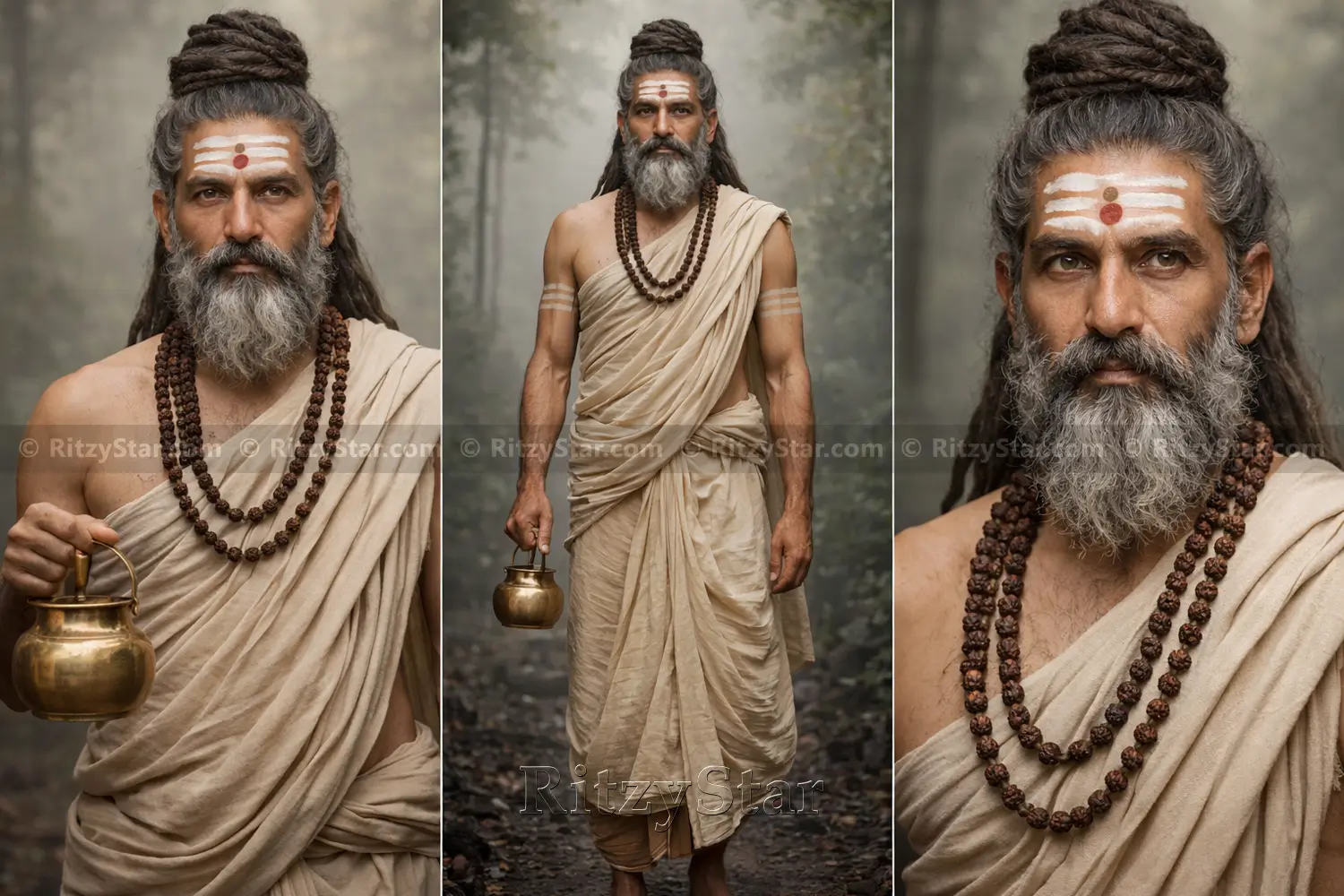

Disciple of Vishwamitra, Seeker of the Impossible, The Reluctant Dealer
“गालवो नाम विप्रर्षिर्विश्वामित्रसखः पुरा।
हयार्थं माधवीं प्राप्तो यस्य कीर्तिस्त्रिषु स्थिता॥”
— Ancient Verse
Meaning: Galava, the renowned brahmin sage, friend of Vishwamitra of old, who obtained Madhavi for the sake of horses—his fame stands in the three worlds.
🌿 Introduction: The Sage Caught Between Duty and Despair
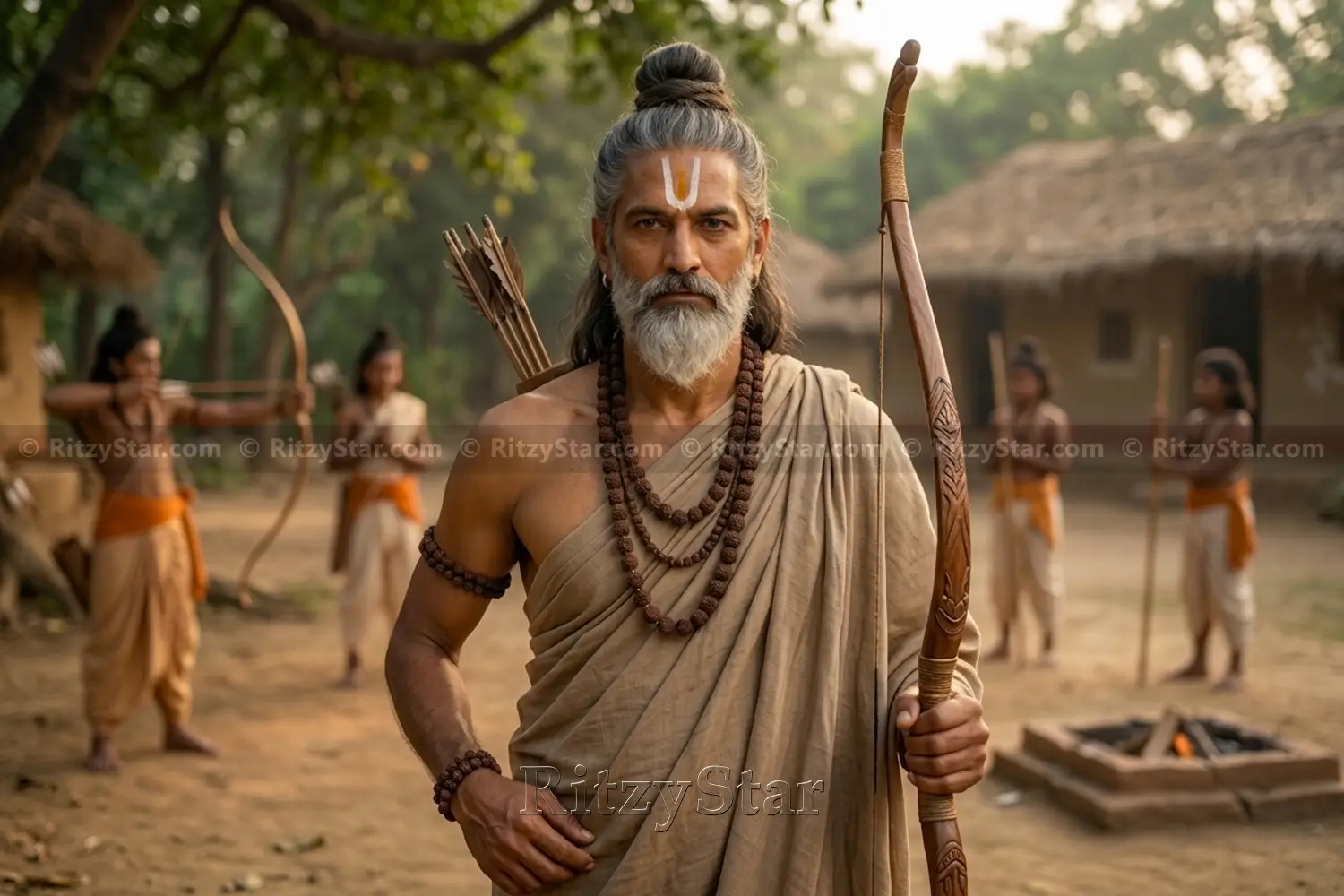
He was a disciple of one of the greatest sages who ever lived. He was devoted, sincere, and hungry for spiritual knowledge. But when his guru demanded the impossible as guru-dakshina, Galava found himself thrust into a journey that would test every principle he held dear.
This is the story of Rishi Galava.
Not the story of a triumphant hero who overcomes all obstacles, but of a man who discovers that the path of dharma is rarely straight. Not the tale of a sage who remains pure and untouched by worldly dealings, but of a spiritual seeker who must barter, negotiate, and—in his darkest moment—consider selling a woman to fulfill his obligation.
“विश्वामित्राद्वरं लब्ध्वा गालवः प्रययौ मुनिः।
अश्वानामष्टशतान्येककर्णानि सितानि च॥”
— by Author
Meaning: Having received the command from Vishwamitra, the sage Galava set forth in search of eight hundred white horses with one black ear each.
Galava’s story is woven into the same narrative as Madhavi’s—two sides of the same coin, two perspectives on the same journey. Where Madhavi’s tale is one of sacrifice and endurance, Galava’s is one of obligation and moral complexity. Together, they form a complete picture of one of the most unusual episodes in Hindu mythology—an episode that raises profound questions about duty, desire, and the price of spiritual attainment.
📜 Who Was Galava? The Disciple of the Great Vishwamitra
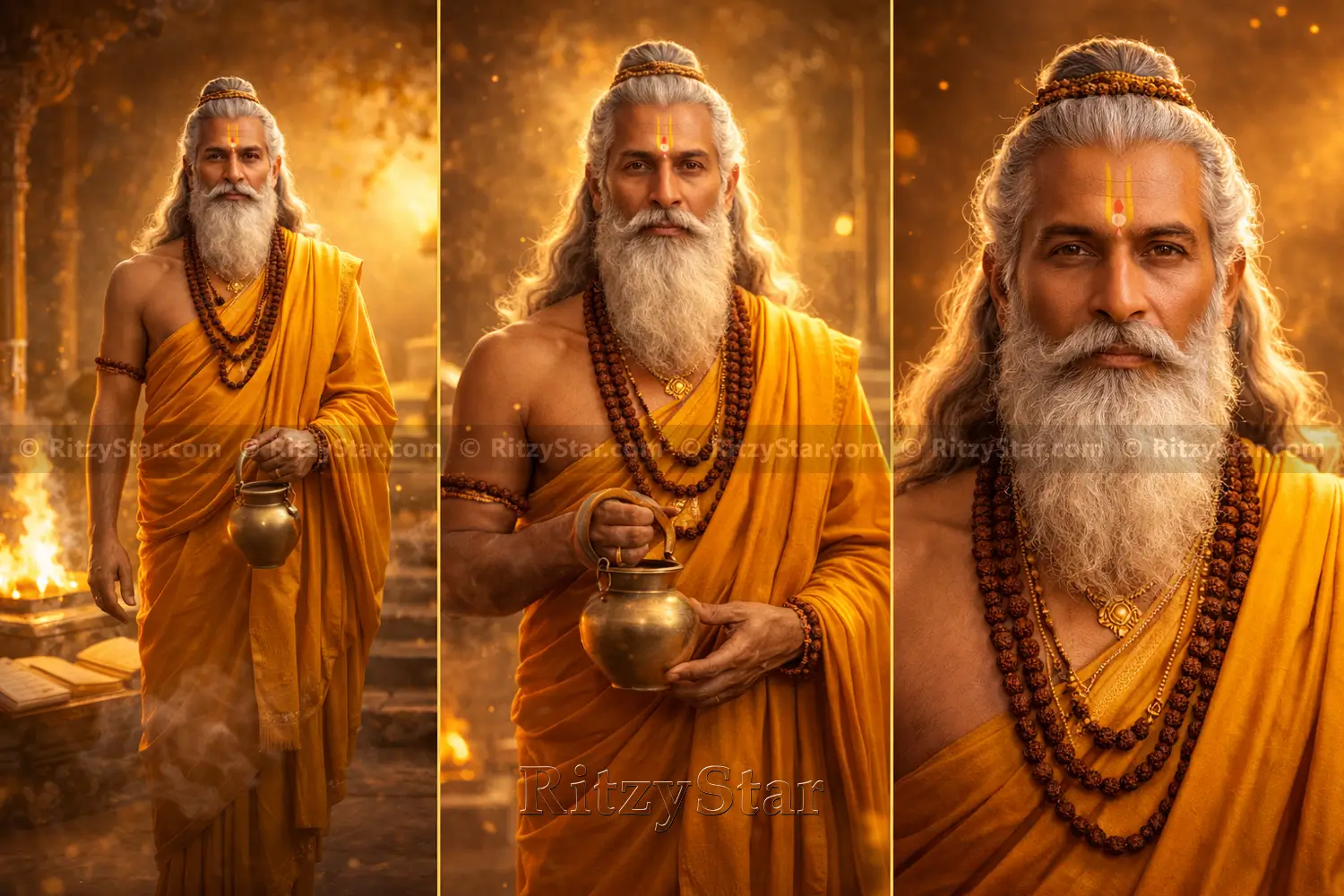
Galava was a brahmin sage of considerable learning and spiritual accomplishment. He was a disciple of Vishwamitra, one of the most revered and complex figures in Hindu tradition—a king who transformed himself into a brahmarshi through sheer force of will and austerity.
“गालवो विप्रशार्दूलो विश्वामित्रसखः प्रियः।
वेदवेदाङ्गतत्त्वज्ञः सर्वशास्त्रविशारदः॥”
— by Author
Meaning: Galava, the tiger among brahmins, the beloved companion of Vishwamitra, knower of the Vedas and Vedangas, expert in all scriptures.
The relationship between Galava and Vishwamitra was not merely that of teacher and student—it was something deeper. Galava was Vishwamitra’s sakha—his friend, his companion. This suggests a bond of extraordinary intimacy and trust. Vishwamitra had taken this young brahmin under his wing, taught him the deepest mysteries of the Vedas, and prepared him for a life of spiritual purpose.
But with such intimacy came extraordinary expectations. When the time came for Galava to offer his guru-dakshina—the traditional gift given to a teacher upon completion of studies—Vishwamitra did not ask for gold or cattle or land. He asked for something that would push his disciple to the very limits of his capabilities.
💎 The Guru-Dakshina – When a Sage Demanded the Impossible
The tradition of guru-dakshina is one of the most sacred institutions in Hindu culture. It is not merely payment for services rendered—it is an expression of gratitude, a recognition of the immense debt a student owes to his teacher. The guru has the right to ask for anything, and the student has the duty to provide it.
But Vishwamitra’s demand went beyond anything Galava could have imagined.
“अष्टौ शतानि राजेन्द्र हयानां चन्द्रभास्करान्।
एककर्णाः सिता राजन् गुरुदक्षिणया ददौ॥”
— by Author
Meaning: Eight hundred horses, O king, white as the moon’s rays, each with one black ear—this was the guru-dakshina demanded.
Eight hundred white horses. Each with one black ear.
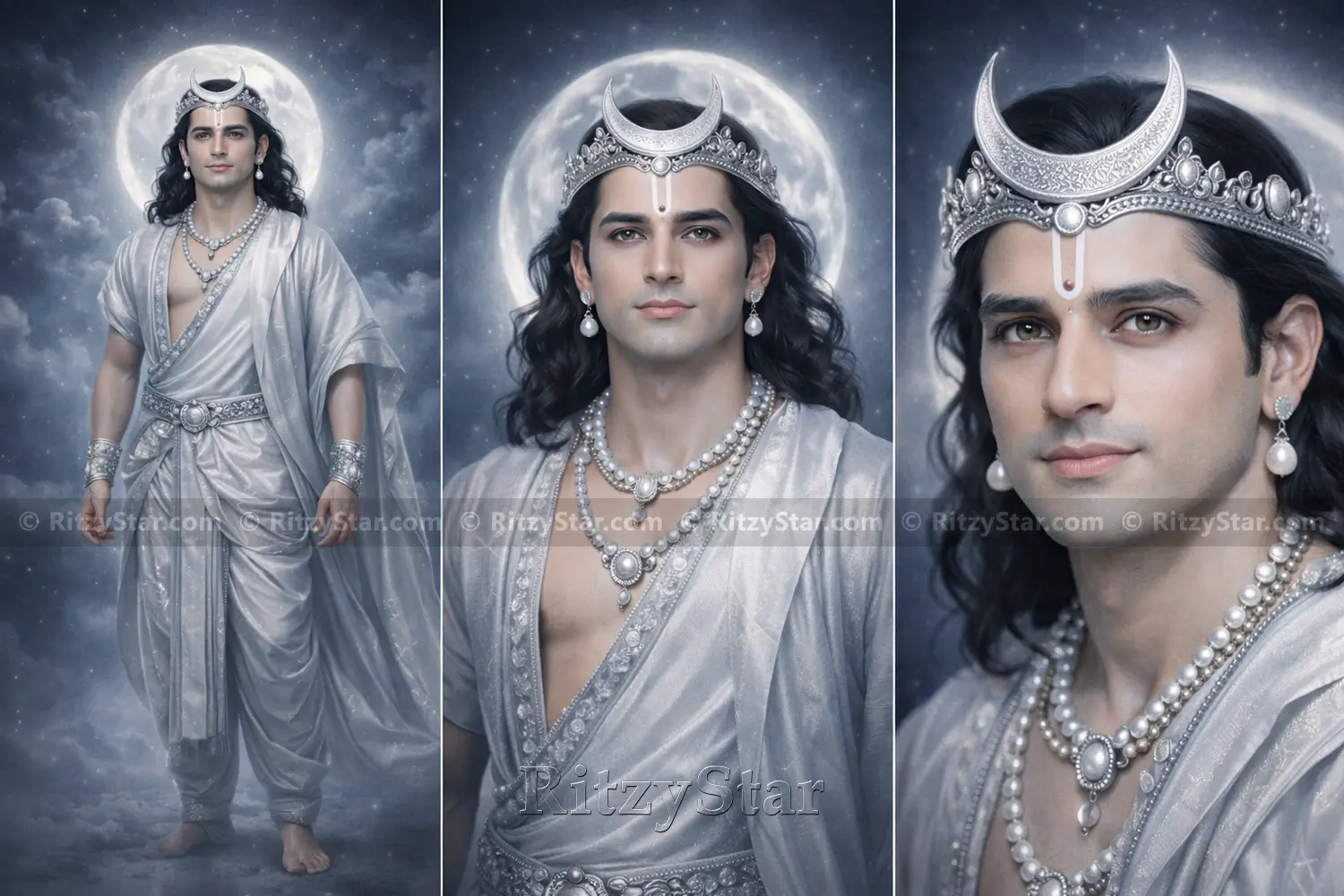
Such horses did not exist in any earthly stable. They were celestial creatures—divyashva—born of the gods themselves. White as moonlight, their purity symbolized perfection, yet each bore a single black ear—a mark of imperfection that made them unique, rare, and virtually impossible to obtain.
“न भूमौ विद्यते राजन्नश्वास्ते मुनिपुङ्गव।
दिव्याः सुरगणैर्भोग्या नरैर्द्रष्टुं सुदुर्लभाः॥”
— by Author
Meaning: Such horses do not exist on earth, O king, best of sages. They are celestial, enjoyed by the gods, and extremely rare for mortals to even see.
Why did Vishwamitra demand such an impossible gift? Some say it was a test—a final examination of his disciple’s devotion and resourcefulness. Others suggest it was a teaching tool—a way of demonstrating that the path of dharma often requires extraordinary effort. Still others whisper that Vishwamitra, with his divine vision, foresaw the dynasties that would be born from this quest and demanded the horses knowing they would never be obtained—because what he truly wanted was something else entirely.
Whatever the reason, Galava now faced a seemingly impossible task.
🛤️ The Journey Begins – Galava’s Search Across the Earth
Galava did not hesitate. He bowed to his guru’s command and set forth across the earth, determined to fulfill his obligation or die trying.
“गालवः प्रययौ राजन् दिशो विदिश एव च।
हयानां परिमार्गार्थं तपसा च समन्वितः॥”
— by Author
Meaning: Galava set forth, O King, to all directions and intermediate directions, searching for the horses, accompanied by his spiritual power.
He traveled across the length and breadth of ancient India—from the snow-capped Himalayas to the sun-baked plains of the south, from the forests of the east to the deserts of the west. He approached kings, emperors, and chieftains. He offered wealth, blessings, and spiritual merit in exchange for the horses.
But no one had them. No one had even seen them.
“राजानो बहवस्तेन याचिताः सर्वतो दिशम्।
न चाश्वान्दातुमीशा वै नापि जानन्ति तान्नृपाः॥”
— by Author
Meaning: Many kings were asked by him in all directions, but they were unable to give the horses, nor did they even know of them, O King.
Years passed. Galava grew weary, his resources depleted, his hope fading. He had traveled to every kingdom, spoken to every ruler, exhausted every possibility. The horses simply did not exist—at least not in the world of mortals.
And then, in his darkest hour, he came to the court of Emperor Yayati.
👑 The Meeting with Yayati – A Father’s Unthinkable Offer
Emperor Yayati of the Lunar Dynasty was one of the most powerful rulers of his age. His kingdom stretched across the land, his wealth was legendary, and his wisdom was celebrated by sages and kings alike. If anyone could help Galava, surely Yayati could.
“ययातिं राजशार्दूलं गालवो याचते हयान्।
न चाश्वान्दातुं शक्तो राजा सत्यमब्रवीत्॥”
— by Author
Meaning: Galava asked Yayati, the tiger among kings, for the horses. The king, unable to give them, spoke the truth.
Yayati listened to Galava’s story with compassion. He understood the weight of the guru-dakshina, the depth of the disciple’s obligation. But he, too, could not provide the eight hundred celestial horses. Such creatures were beyond even his vast resources.
But Yayati had something else to offer.
“इमां माधवीं राजन् ब्रह्मन् प्रतिगृह्यताम्।
अनेय राजानो याचितव्यास्तुरंगमाः॥”
— by Author
Meaning: “O Brahmin, accept this Madhavi. Through her, you can request the horses from kings.”
He presented his daughter Madhavi—a princess of extraordinary beauty and a divine boon that made her more valuable than any horse. She could restore youth to any king who married her, and her sons were destined for greatness. Surely, Yayati argued, there would be kings who, though unable to provide eight hundred horses, would be willing to give two hundred each in exchange for youth and an heir.
The Moment of Decision
Galava faced an impossible choice. Accepting Madhavi meant entering into a transaction that was deeply uncomfortable—using a woman as currency, treating a princess as a commodity. Refusing her meant abandoning his guru-dakshina, failing his teacher, and accepting that he could never fulfill his sacred obligation.
“गालवः किंकरोमीति विचार्य बहुधा मुनिः।
प्रतिजग्राह तां कन्यां ययातेः पुत्रिमां शुभाम्॥”
— by Author
Meaning: Galava, the sage, thinking deeply “What am I to do?” accepted that maiden, the virtuous daughter of Yayati.
He accepted Madhavi.
It was not an easy decision. The text hints at his inner turmoil—the bahudha vicharya (thinking in many ways) before he finally agrees. He was not a merchant; he was a brahmin sage. He had never traded in human lives. But his duty to his guru, his obligation to fulfill the dakshina, weighed heavier than his personal discomfort.
And so began the most unusual chapter in Galava’s life—one that would take him across the kingdoms of India, negotiating with kings, arranging unions, and collecting horses, all while a silent princess accompanied him as both his burden and his means.
🏛️ The First Transaction – King Haryashva of Ayodhya
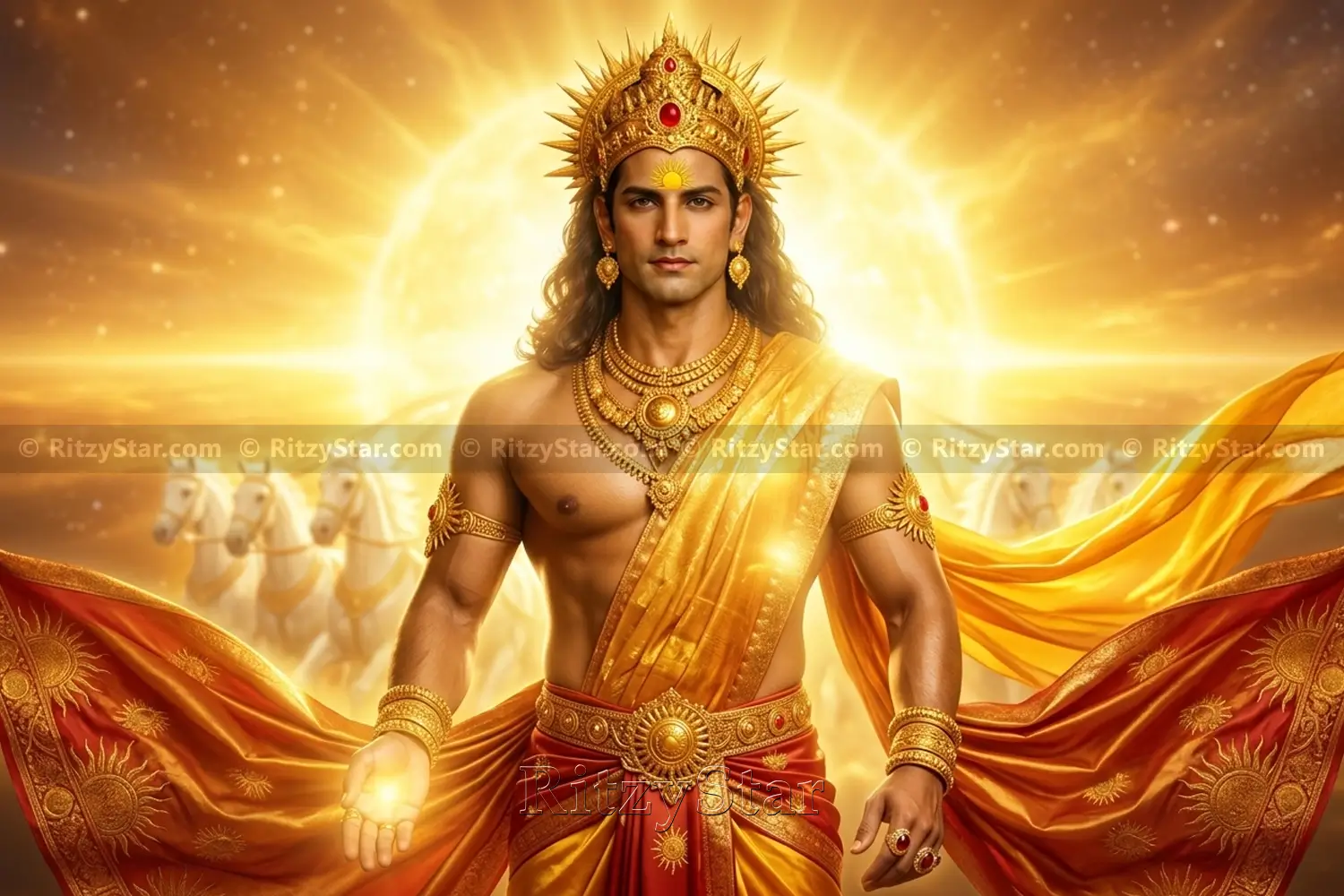
Galava’s first destination with Madhavi was Ayodhya, the ancient capital of the Ikshvaku dynasty—the Solar Line of kings. Here ruled King Haryashva, a monarch of great power but greater sorrow.
The King’s Dilemma
Haryashva was childless. His dynasty, which traced its lineage to the sun god himself, faced extinction. He had reached an age where hope of producing an heir had faded, and he was preparing to renounce his kingdom and retire to the forest.
“हर्यश्वो राजशार्दूलः पुत्रहीनो महीपतिः।
वनं गन्तुं मनश्चक्रे राज्यं त्यक्त्वा सुदुःखितः॥”
— by Author
Meaning: Haryashva, the tiger among kings, was without a son. He decided to go to the forest, abandoning his kingdom, greatly sorrowful.
When Galava arrived with Madhavi and explained her divine qualities—her boon of eternal youth, her power to restore youth to her husband, her destiny to bear sons who would become kings—Haryashva saw a ray of hope.
The Negotiation
Haryashva could not provide eight hundred horses. No one could. But he could provide two hundred. And in exchange, he asked for a son—an heir to continue his lineage, a child who would sit on the throne of Ayodhya after him.
“राज्यं त्यक्त्वा गमिष्यामि तपसे धर्मसंश्रयात्।
माधवी मे सुतं दद्याद् यो मे वंशधरो भवेत्॥”
— by Author
Meaning: “I am ready to renounce my kingdom and go to the forest for penance. Let Madhavi give me a son who will be my heir and continue my dynasty.”
Galava agreed. The arrangement was made: Madhavi would stay with Haryashva until she bore him a son. In return, Haryashva would provide two hundred of the rare white horses with one black ear each. After the birth, Madhavi would return to Galava, her youth restored by her divine boon, ready for the next transaction.
The Birth of Vasumanas
In due time, Madhavi gave birth to a son—Vasumanas, also known as Harita, the founder of the Harita dynasty within the Ikshvaku lineage. Haryashva, overjoyed, kept his word. He provided two hundred horses to Galava.
“दत्त्वा पुत्रं हर्यश्वो हयान् द्विशतमुत्तमान्।
गालवाय ददौ राजन् कृतकृत्यो नृपोत्तमः॥”
— by Author
Meaning: Having received a son, Haryashva gave two hundred excellent horses to Galava, O King; the best of kings had accomplished his purpose.
Galava now had two hundred horses. He needed six hundred more.
🏔️ The Second Transaction – King Divodasa of Kashi
Galava and Madhavi next traveled to Kashi—Varanasi, the city of light, the seat of learning and liberation. Here ruled King Divodasa, a monarch of immense power and piety.
The King’s Ambition
Divodasa was not childless like Haryashva. He had sons, he had heirs. But he was ambitious. He wanted a son who would be extraordinary—one who would surpass all others in valor and wisdom. When he heard of Madhavi’s boon—that her sons were destined for greatness—he saw an opportunity.
“दिवोदासो महातेजा माधवीं प्रतिगृह्य सः।
तस्यां पुत्रमजनयद् यः प्रतर्दन उच्यते॥”
— by Author
Meaning: The greatly radiant Divodasa, accepting Madhavi, begot upon her a son who was called Pratardana.
The Agreement
Divodasa, like Haryashva, could not provide eight hundred horses. But he could provide two hundred. In exchange, he would receive a son from Madhavi—a son who would bring glory to Kashi and establish its dominance among the kingdoms.
Galava agreed. Madhavi stayed with Divodasa, bore him a son named Pratardana, and then returned to Galava with her youth restored. Divodasa provided two hundred horses.
“प्रतर्दनं सुतं दत्त्वा दिवोदासाय धीमते।
माधवी गालवेनाथ पुनरेव समागता॥”
— by Author
Meaning: Having given the son Pratardana to the wise Divodasa, Madhavi again came back to Galava.
Galava now had four hundred horses. He needed four hundred more.
⚖️ The Third Transaction – King Shibi of the Ushinara Kingdom
Galava’s third destination was the kingdom of King Shibi, son of Ushinara—a ruler whose name was synonymous with righteousness and sacrifice. The famous story of Shibi offering his own flesh to save a dove had already made him a legend.
The Righteous King
When Galava approached Shibi with Madhavi, the king faced a dilemma. He wanted to help the brahmin—it was his dharma to do so. But he also could not provide eight hundred horses. What he could provide was two hundred, and in exchange, he would receive a son from Madhavi.
“शिबिरौशीनरो राजा धर्मात्मा सत्यविक्रमः।
माधवीं प्रतिजग्राह गालवाद्धयलिप्सया॥”
— by Author
Meaning: Shibi, son of Ushinara, the righteous king of true valor, accepted Madhavi from Galava, desiring horses.
But Shibi added his own condition, one that reveals his character:
“न केवलं हयार्थं वै माधवीं प्रतिगृह्णते।
पुत्रार्थं च महाभागां धर्मार्थं च विशेषतः॥”
— by Author
Meaning: “Not only for the sake of horses do I accept Madhavi, but for the sake of a son, and especially for the sake of dharma.”
For Shibi, this was not merely a transaction. It was an act of dharma—helping a brahmin in need, ensuring the continuation of his lineage, and participating in a divine plan.
The Birth of Varshina
Madhavi bore Shibi a son named Varshina (or Varshneya), who would become the founder of the Varshina dynasty within the larger Shibi clan. Shibi provided two hundred horses, and Madhavi returned to Galava.
“वर्षिणं तनयं दत्त्वा शिबये धर्मचारिणे।
पुनर्गालवमभ्यागात् माधवी हयलिप्सया॥”
— by Author
Meaning: Having given her son Varshina to Shibi, the follower of dharma, Madhavi again returned to Galava, still desiring horses.
Galava now had six hundred horses. He needed two hundred more.
🧘 The Final Crisis – When Galava Considered the Unthinkable
With six hundred horses, Galava returned to his guru Vishwamitra, hoping that the great sage would accept the partial payment and release him from his obligation. Surely, after all this effort, all this journeying, all these transactions, his teacher would show mercy.
Vishwamitra’s Refusal
But Vishwamitra was not satisfied. Perhaps he was testing his disciple’s perseverance. Perhaps he had foreseen that the final two hundred horses would never be obtained because something else was meant to happen. Whatever his reason, he insisted on the full eight hundred—no less.
“अष्टौ शतानि सम्पूर्णान्यानयस्व ममाज्ञया।
न न्यूनानि ग्रहीष्यामि गुरुदक्षिणया तव॥”
— by Author
Meaning: “Bring the full eight hundred by my command. I will not accept less as your guru-dakshina.”
Galava was devastated. He had traveled the earth for years. He had approached countless kings. He had used Madhavi—a princess, a human being—as a bargaining chip in three transactions. He had obtained six hundred of the rarest horses imaginable. And still it was not enough.
The Desperate Thought
In his despair, Galava considered the unthinkable.
“गालवो माधवीं विक्रेतुं मनश्चक्रे महामुनिः।
दुःखितः शोकसंतप्तो निर्वेदं परमं गतः॥”
— by Author
Meaning: The great sage Galava thought of selling Madhavi; distressed, tormented by sorrow, he reached the height of despair.
Selling a woman—especially a princess, especially one who had been entrusted to him by her father—was unthinkable. It violated every principle of dharma. Brahmins were not merchants. Sages did not trade in human lives. But Galava saw no other way. He had exhausted all options. Madhavi was his only remaining asset.
This moment is perhaps the most poignant in Galava’s story. It reveals his humanity—his desperation, his moral struggle, his recognition that he was failing not only his guru but also himself. The text does not glamorize his decision; it presents it as a moment of supreme moral crisis, a point at which the pressures of duty push a good man to the brink of a terrible act.
🌟 The Intervention of Vishwamitra – A Guru’s True Purpose
But the cosmos had other plans. Vishwamitra, through his divine vision, perceived his disciple’s desperate intention. And he intervened.
“विश्वामित्रस्तदा ज्ञात्वा स्वयमेव समागमत्।
मा विक्रेतुं कृथा राज्ञीं माधवीं पापमुत्तमम्॥”
— by Author
Meaning: Vishwamitra, understanding this, himself came forward. “Do not sell the queen Madhavi—that would be the greatest sin.”
Vishwamitra’s intervention reveals the true nature of the guru-dakshina. It was never really about the horses.
The Sage’s Solution
Vishwamitra proposed an alternative. He himself would accept Madhavi. Not as a wife in the traditional sense, but to produce a son. And with that son’s birth, Galava’s obligation would be considered fulfilled—the remaining two hundred horses would no longer be required.
“माधवी मम पुत्रं त्वं जनयस्व महामुने।
तेन तुष्टो भविष्यामि गुरुदक्षिणया तव॥”
— by Author
Meaning: “O great sage, let Madhavi bear me a son. With that, I will be satisfied, and your guru-dakshina will be fulfilled.”
The Deeper Lesson
The irony is profound. Vishwamitra, who had demanded eight hundred impossible horses, was now satisfied with a son born from the very woman who had been used to obtain them. The horses were no longer necessary. All of Galava’s struggles, all of Madhavi’s sacrifices, could have been avoided if Vishwamitra had simply stated his true desire from the beginning.
But that was the point. Vishwamitra’s demand was never really about the horses. It was a test—a cosmic lesson about attachment, desire, and the true meaning of guru-dakshina.
“नाश्वैर्गुरुः प्रीयते राजन् भक्त्या प्रीयते गुरुः।
गालवस्य परीक्षार्थं विश्वामित्रः समादिशत्॥”
— by Author
Meaning: The guru is not pleased by horses, O King; the guru is pleased by devotion. Vishwamitra commanded this to test Galava.
What did Vishwamitra want? Not horses. Not wealth. He wanted to see how far his disciple would go to fulfill his duty. He wanted to push Galava to his limits and then, at the moment of greatest crisis, reveal that the true dakshina was not material at all—it was the transformation that occurred within the disciple through the journey itself.
Galava had learned lessons that no amount of Vedic study could teach. He had learned humility in the courts of kings. He had learned persistence in the face of repeated failure. He had learned the limits of material solutions. And he had learned, in his darkest moment, that dharma requires drawing lines that cannot be crossed—even when the pressure to cross them is overwhelming.
👨👦 The Fourth Union – Madhavi and Vishwamitra
The union between Madhavi and Vishwamitra produced a son—Sushruta, also known as Ashtaka. This child combined within himself the royal blood of the Lunar Dynasty and the spiritual power of one of the greatest sages who ever lived.
“अष्टको नाम तेजस्वी माधव्यां जनयत् प्रभुः।
विश्वामित्रो महातेजा राजर्षिर्ब्रह्मर्षितां गतः॥”
— by Author
Meaning: The lord Vishwamitra of great splendor, who went from royal sage to Brahmin sage, begot the radiant Ashtaka upon Madhavi.
With this birth, Galava’s obligation was finally fulfilled. Vishwamitra declared himself satisfied, and Galava was released from his guru-dakshina.
The Return
Galava, his mission complete, returned Madhavi to her father Yayati. The princess who had been given to him as a tool for obtaining horses was now returned—still young, still beautiful, still carrying the divine boon—but forever changed by the journey.
“गालवो माधवीं राजन् ययाते प्रत्यपादयत्।
कृतकृत्यस्तदा राजन् धर्मराजमुवाच ह॥”
— by Author
Meaning: Galava, O King, returned Madhavi to Yayati. Having accomplished his purpose, he spoke to the king of dharma.
🙏 The Aftermath – Galava’s Transformation
What became of Galava after his long journey? The text does not say explicitly, but we can infer. He had returned to his guru, fulfilled his obligation, and been released from his bond. But he was not the same man who had set forth years earlier.
The Lessons Learned
Galava’s journey taught him lessons that no hermitage could provide:
- The Limits of Material Solutions – He had spent years chasing horses, believing that fulfilling his guru’s demand required obtaining specific material objects. In the end, the horses were irrelevant. What mattered was his devotion and his willingness to endure.
- The Complexity of Dharma – He had entered into transactions that pushed the boundaries of dharma—using a woman as currency, treating a princess as a commodity. He had considered selling her in his desperation. These moral compromises haunted him, but they also taught him that the path of righteousness is rarely straight.
- The True Nature of Guru-Dakshina – Vishwamitra’s demand was a teaching tool. The real dakshina was the journey itself—the transformation of the disciple through the crucible of impossible demands.
“गुरुदक्षिणया प्रीतो विश्वामित्रो महामुनिः।
गालवं परमं प्रेम्णा शिष्यं प्रेम्णा व्यसर्जयत्॥”
— by Author
Meaning: Pleased with the guru-dakshina, the great sage Vishwamitra, with supreme affection, lovingly dismissed his disciple Galava.
👨👩👦 The Family of Rishi Galava
| Sl.No | Name | Relationship | Details |
|---|---|---|---|
| 1 | No partners recorded | Unlike Madhavi’s story where she had multiple unions, Galava’s story does not record any marital unions of his own. His role in the narrative is that of a disciple seeking to fulfill his guru’s demand, not as a householder with a family. |
📜 The Deeper Meaning – What Galava’s Story Teaches Us
The Allegory of Spiritual Seeking
In the allegorical interpretation, Galava represents the spiritual seeker. Vishwamitra represents the guru who demands the impossible—not because the impossible is required, but because the journey toward the impossible transforms the seeker.
The eight hundred horses represent complete mastery over the senses. White horses symbolize pure sense faculties; the single black ear represents the one remaining attachment, the final imperfection that keeps the seeker bound to samsara.
“अश्वाः प्राणा इति प्रोक्ताः श्वेताः शुद्धस्वरूपिणः।
एककर्णास्तु संसारचिह्नं विद्याद्विचक्षणः॥”
— by Author
Meaning: Horses are said to be the life-forces; white ones represent pure nature. The single black ear should be known by the wise as the mark of worldly existence.
Galava’s journey to obtain these horses represents the seeker’s efforts to achieve complete purification—efforts that ultimately prove impossible in the realm of ordinary action. The horses cannot be obtained because complete mastery is not achievable through external means. Something else is required.
Madhavi, in this reading, represents divine grace or spiritual wisdom. She cannot be obtained through effort alone—she must be given. And when the seeker reaches the limits of his own efforts, the guru intervenes and reveals that what was sought all along was not the external goal (the horses) but the transformation of the seeker himself.
The Moral Complexity of Duty
On a more literal level, Galava’s story raises uncomfortable questions about the nature of duty. Was he right to accept Madhavi? Was he right to give her to kings in exchange for horses? Was he right to consider selling her in his desperation?
The text does not provide easy answers. Galava is not presented as a hero or a villain—he is presented as a man caught in an impossible situation, doing his best to fulfill what he believes is his duty, making compromises that weigh on his conscience, and ultimately being saved from his worst impulses by the intervention of his guru.
“धर्मः सूक्ष्मतरो राजन् गालवस्य चरितं शृणु।
यत्र संशयमापन्नो विश्वामित्रेण रक्षितः॥”
— by Author
Meaning: Dharma is very subtle, O King. Hear the story of Galava, where he fell into doubt and was protected by Vishwamitra.
This subtlety is the heart of the story. Dharma is not always clear. The path of righteousness is not always straight. Sometimes, even the most sincere seeker finds himself in situations where every choice seems compromised, every option carries a cost, and the only way forward is through the grace of a teacher who sees what the student cannot.
🕉️ Galava in Later Tradition
Unlike some figures from the Puranas, Galava does not become a widely worshipped sage or the founder of a major lineage. His importance lies in his story—the extraordinary journey he undertook, the moral questions his story raises, and the glimpse it provides into the complex world of ancient India, where brahmins and kings, sages and princesses, were bound together in a web of obligation, duty, and dharma.
In the Mahabharata
Galava’s story is told in the Udyoga Parva (Book of Effort) of the Mahabharata, where the sage Narada narrates it to King Dhritarashtra. The context is significant—Narada tells this story to illustrate the complexities of dharma, the importance of perseverance, and the subtle ways in which the cosmos operates.
In Regional Traditions
In some regional traditions, particularly in South India, Galava is remembered as a figure of devotion and perseverance. Temples dedicated to Vishwamitra often include images or narratives of Galava, and his story is sometimes recited as an example of the student’s devotion to the guru.
🌅 Conclusion – The Sage Who Journeyed to the Edge
The story of Rishi Galava is not one of triumphant success or dramatic heroism. It is a story of struggle—of a man pushed to his limits, forced to make choices that challenged his principles, and ultimately saved from the consequences of his desperation by the very guru whose demand had set him on his path.
“गालवो मुनिशार्दूलो यस्य कीर्तिरनन्तगा।
धर्मेण चार्थकामैश्च सिद्धिमाप सुदुर्लभाम्॥”
— by Author
Meaning: Galava, the tiger among sages, whose fame is endless, through dharma, artha, and kama, attained that rare perfection.
Galava’s journey teaches us that:
- The path of dharma is rarely straight. Even the most sincere seeker can find himself in situations where every choice seems compromised.
- The guru’s demands often have hidden purposes. What seems like an impossible requirement may be a teaching tool, designed to transform rather than to be literally fulfilled.
- Desperation can push even good people to consider terrible acts. Galava’s consideration of selling Madhavi is not presented as admirable—it is presented as the low point of his journey, the moment from which he needed to be rescued.
- Grace intervenes when we reach our limits. At the moment when Galava was about to commit the greatest sin, Vishwamitra intervened. This suggests that the universe provides a way out when we are truly at the end of our resources—if we have remained faithful to our essential principles.
- The journey is the dakshina. The horses were never the point. The transformation that occurred within Galava through his long journey—his perseverance, his humility, his willingness to endure—that was the true gift to his guru.
“नाश्वैर्गुरुः प्रीयते राजन् न राज्येन न वित्ततः।
भक्त्या प्रीयते गुरुः शिष्यात् तस्माद् भक्तिं समाचरेत्॥”
— by Author
Meaning: The guru is not pleased by horses, O King, nor by kingdoms nor by wealth. The guru is pleased by the disciple’s devotion; therefore, one should cultivate devotion.
In the end, Galava stands as a testament to the complexity of human existence—a reminder that even those on the spiritual path face moral dilemmas, that duty can sometimes conflict with compassion, and that the grace of a true teacher can save us from our own worst impulses.
Discover more from RitzyStar
Subscribe to get the latest posts sent to your email.