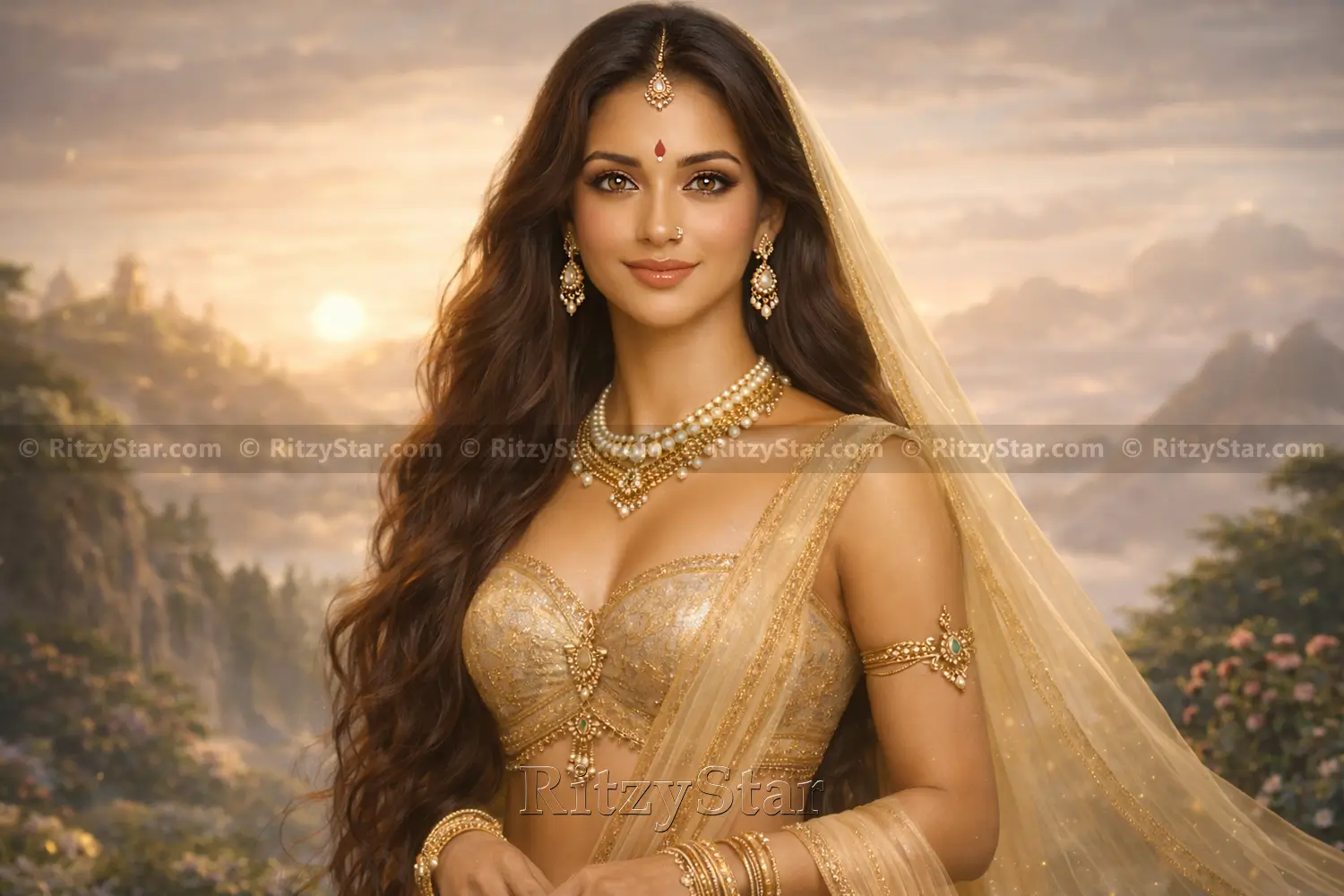
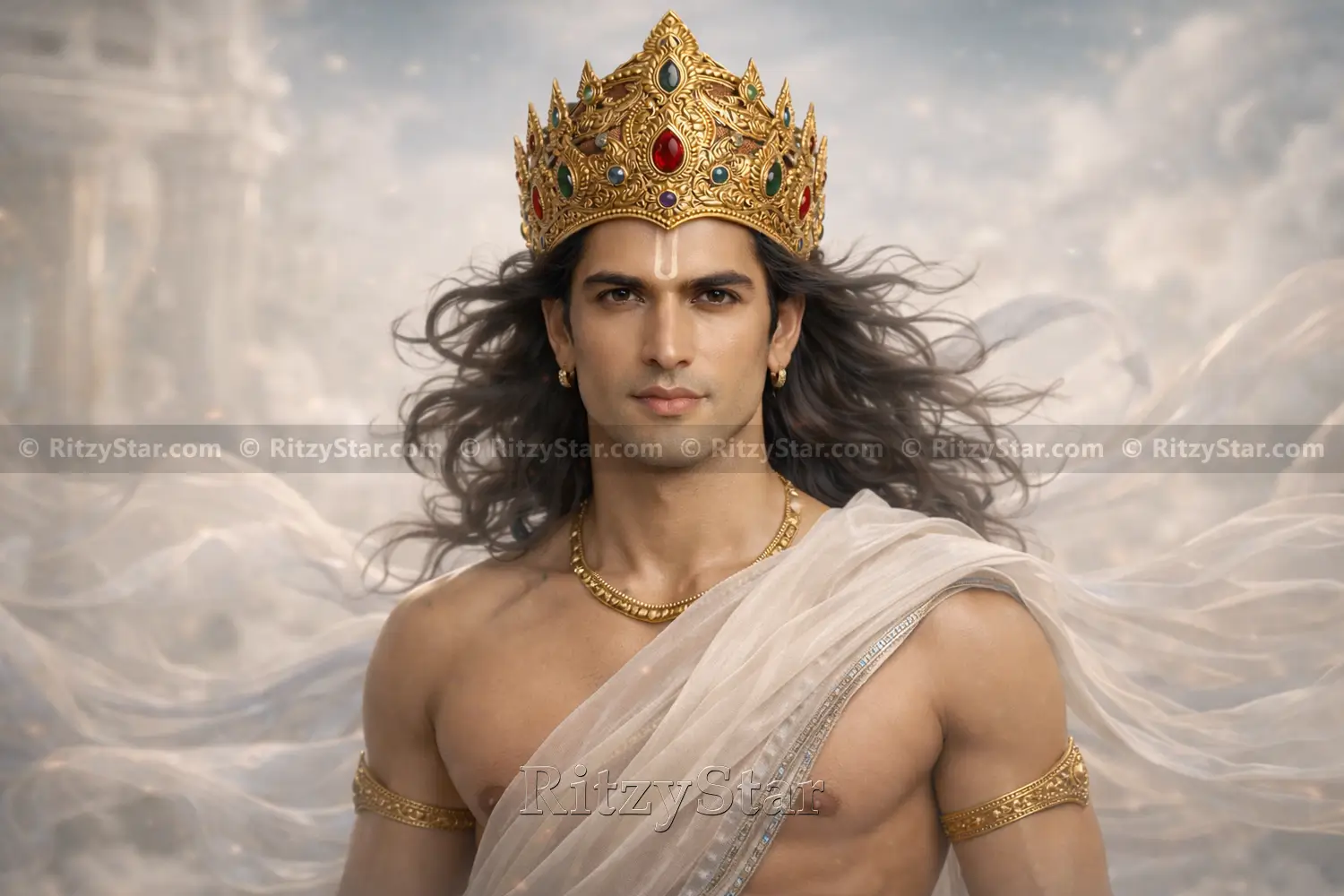
Lord of the Winds, Guardian of the Northwest, Father of Legends
“वायुः साक्षात् प्राणो देवानां प्रथमः सदा।
यस्य श्वासेन वर्तन्ते लोकाः सर्वे चराचराः॥”
— Ancient Verse
Meaning: Vayu is indeed the breath of the gods, always the foremost. By his breathing, all the worlds—moving and unmoving—exist.
🌬️ Introduction: The Unseen Force That Moves All Things
He cannot be seen, yet nothing moves without him. He cannot be held, yet he holds the very breath in every living being. He is the first to receive the sacred offering, the swiftest among the gods, the warrior who rides a chariot drawn by a thousand horses.
This is Vayu—the Lord of the Winds.
“वायुर्वै खलु साक्षाद् ब्रह्म प्रत्यक्षं देवता।
यमात्मानं प्राणमभिमन्यन्ते स वायुः॥”
— by Author
Meaning: Vayu is indeed the visible Brahman, the manifest deity. That which they consider as the self, as breath—that is Vayu.
In the vast pantheon of Hindu mythology, where gods wield weapons of unimaginable power and demons shake the very foundations of the cosmos, Vayu occupies a unique position. He is not merely one god among many—he is the life force itself, the prana that animates all existence. Without him, the gods cannot function. Without him, the cosmos collapses into stillness.
His story is not one of dramatic battles for supremacy—though he fights many—but of quiet, constant, indispensable presence. He is the breath you take without thinking, the wind that moves the clouds, the force that carries the scent of flowers and the roar of storms. He is everywhere and nowhere, felt but never seen.
“न देवा नर्षयो नान्ये जानन्ति पवनं यथा।
स वायुः सर्वभूतानामन्तरात्मा व्यवस्थितः॥”
— by Author
Meaning: Neither gods nor sages nor others know Vayu as he truly is. That Vayu dwells within all beings as the innermost self.
💨 Who Is Vayu? The God Who Is Everywhere and Nowhere
Vayu is the Hindu god of wind and air, one of the five classical elements (Pancha Bhuta) that constitute the material universe. His name derives from the Sanskrit root “va”—to blow, to move, to flow. He is the force that makes movement possible, the invisible hand that stirs the universe into action.
But Vayu is more than just the physical wind. In the Vedas and Upanishads, he is identified with Prana—the vital breath, the life force that sustains all living beings. He is the first among the gods in the ritual, the first to receive the offering of Soma. He is the messenger who carries the prayers of mortals to the heavens and the commands of the gods to the earth.
“वायो भूतानां प्रथमं त्वां हुवे सोमप्रियं।
स त्वं नः प्राणदेहि चिरायुत्वाय चेतसा॥”
— by Author
Meaning: O Vayu, first among beings, I invoke you, lover of Soma. May you, with your awareness, grant us life-breath and longevity.
The Many Names of Vayu – A Reflection of His Multifaceted Nature
Like the wind that takes the shape of whatever it moves through, Vayu is known by many names in Hindu tradition. Each name reveals a different facet of this complex deity—from the purifier to the life-giver, from the swift messenger to the cosmic breath.
| Name | Meaning | Origin & Significance |
|---|---|---|
| Vāta | The Blower | From the Sanskrit root “va” (to blow). Represents Vayu as the physical wind, the atmospheric air that moves clouds, trees, and waves. |
| Pavana | The Purifier | Represents Vayu’s role in purifying the atmosphere and the body. The wind carries away impurities, both physical and spiritual. |
| Prāṇa | Life Breath | The most profound identification—Vayu as the vital force that animates all living beings. Not just air, but the energy that distinguishes the living from the dead. |
| Mukhya Prāṇa | Chief Life Force | Emphasizes Vayu’s supremacy among the bodily faculties. The other senses function only because Prana empowers them. |
| Anila | The Unceasing One | Represents the constant, never-ending movement of air. Vayu never rests; he is perpetually in motion. |
| Mātariśvan | Growing in the Mother | A Vedic epithet connecting Vayu to the atmosphere (the “mother” space). He who grows and expands within the cosmic womb. |
| Marut | The Shining One | Related to the storm deities, the Maruts, who are often described as Vayu’s companions or children. Represents his fierce, destructive aspect. |
| Dikpāla | Guardian of the Direction | As one of the eight guardians of the directions (Astadikpalas), Vayu presides over the northwest (Vayavya). |
| Sadāgati | Ever-Moving | Highlights his perpetual motion. Unlike other elements, air cannot be contained; it always flows. |
| Bhīma | The Terrible | The fierce aspect of Vayu, reflected in his son Bhima of the Mahabharata. Represents his destructive, unstoppable power. |
“वातो वा एष योऽयं पवते स वायुः।
अनिलः प्राण इत्याहुस्तं देवा उपासते॥”
— by Author
Meaning: That which blows is Vata; that is Vayu. Anila and Prana are his names—the gods worship him.
Each name is a thread in the tapestry of Vayu’s identity. He is the gentle breeze that cools a feverish brow and the hurricane that uproots forests. He is the breath that sustains life for a century and the final exhalation that marks death. He is the purifier, the mover, the unseen force without which nothing can exist.
🌍 The Origins of Vayu – Born from the Breath of the Purusha
The origins of Vayu are as ancient as the cosmos itself. In the Vedic creation hymns, he is not born in the usual sense—he emerges from the very act of creation.
The Rigvedic Account: First Among Gods
In the Rigveda, the oldest of the sacred scriptures, Vayu appears as one of the primary deities. According to the Purusha Sukta, the cosmic being (Purusha) who is sacrificed to create the universe—from his breath, Vayu is born.
“पुरुषस्य प्राणाद् वायुरजायत।
चक्षुषो अग्निर्मुखादिन्द्रश्च प्राणतः॥”
— Rigveda
Meaning: From the breath of the Purusha, Vayu was born. From his eye, Agni; from his mouth, Indra; from his life-force, Vayu.
This account establishes Vayu’s fundamental nature: he is not merely a god of wind but the very breath of the cosmic being. He is the exhalation of the universe, the force that gives life to all that exists.
The Puranic Account: Son of Vishnu and Lakshmi
In later Puranic literature, a different origin emerges. Some texts describe Vayu as the son of Vishnu and Lakshmi, born from the divine couple to serve as the chief of the life forces.
“विष्णोः प्रसादाद् वायुर्जातो लक्ष्म्याः सुतो महान्।
ब्रह्मणश्च गुरुः श्रेष्ठो देवानां प्राणदायकः॥”
— by Author
Meaning: By Vishnu’s grace, Vayu was born as the great son of Lakshmi. He is the guru of Brahma and the giver of life to the gods.
This genealogy connects Vayu intimately with the supreme deity Vishnu. In the Vaishnava tradition, particularly in the Dvaita philosophy of Madhvacharya, Vayu is considered the foremost of Vishnu’s devotees, the model for all souls seeking liberation.
The Upanishadic Account: The Supreme Deity
The Upanishads elevate Vayu to an even higher status. The Brihadaranyaka Upanishad tells a famous story: the gods, the senses, and the life-forces once argued about who was the greatest. One by one, each deity left the human body—speech fell silent, sight went blind, hearing grew deaf. But the body continued to live. Then, when Mukhya Prana (Chief Life Force)—Vayu—prepared to leave, all the other deities were pulled from their places, unable to resist.
“तद्यथा महाराजे प्रयाति सर्वे अनुप्रयान्ति।
एवं प्राणे प्रयाति सर्वे अनुप्रयान्ति॥”
— Brihadaranyaka Upanishad
Meaning: Just as when a great king departs, all follow him; so when Prana departs, all follow.
The message is clear: Vayu is the foundation upon which all other faculties depend. Without breath, there is no life. Without Vayu, the gods themselves are powerless.
👑 The Celestial Household – Vayu as Husband and Father
Vayu’s family is as multifaceted as his nature. He is both a devoted husband and the spiritual father of two of the most beloved figures in Indian mythology—Hanuman and Bhima.
The Consort: Bharati or Svasti
Vayu’s consort is Bharati (also known as Svasti in some traditions). She is the goddess of speech and eloquence, often identified with Saraswati. The union of Vayu (breath) and Bharati (speech) is profoundly symbolic—without breath, speech is impossible. Every word spoken, every mantra chanted, every song sung depends on Vayu’s sustaining power.
“भारती वागधिष्ठात्री वायोः प्राणस्य वल्लभा।
तयोः समागमाज्जाताः प्राणवाचः सुरेश्वराः॥”
— by Author
Meaning: Bharati, the goddess of speech, is the beloved of Vayu, the lord of breath. From their union arise the lords of speech, the divine powers.
The Divine Children
According to some Puranic accounts, Vayu and Bharati had multiple offspring—eight sons named Makanaka, Gandhavayu, Mahabhra, Kuvara, Setubandha, Pavana Gopa, Ruchi, and Yajavraka. These lesser-known sons represent various aspects of wind and air—the gentle breeze, the storm, the purifying wind, the breath of ritual.
But Vayu’s most famous “children” are not born from his consort in the usual sense. They are spiritual sons, born through divine intervention to fulfill cosmic purposes.
👨👦 The Family of Vayu
| Sl.No | Name | Relationship | Children | Remarks |
|---|---|---|---|---|
| 1 | Bharati (Svasti) – Goddess of Speech, also known as a form of Saraswati | Consort / Wife | 1. Makanaka – One of the eight sons of Vayu; represents specific aspects of wind and atmosphere. 2. Gandhavayu – Represents the wind that carries fragrance. 3. Mahabhra – Represents the great cloud-bearing wind. 4. Kuvara – Represents the wind of the quarters. 5. Setubandha – Represents the wind that binds and connects. 6. Pavana Gopa – Represents the purifying wind. 7. Ruchi – Represents the brilliant wind. 8. Yajavraka – Represents the wind of sacrifice. | Bharati is the embodiment of speech and eloquence. Her union with Vayu symbolizes that speech is impossible without breath. She is worshipped as the power behind mantras and sacred utterances. |
| 2 | Anjana (Punjikastala) – Apsara turned Vanara princess, wife of Kesari | Spiritual Union (Mother of Hanuman) | 1. Hanuman – The mighty Vanara god, devotee of Rama, known as Pavanaputra (son of Pavana). He is the first avatar of Vayu. | Anjana was an apsara cursed to be born as a Vanara. She and her husband Kesari prayed to Vayu for a son. Pleased with their devotion, Vayu granted the boon and became the spiritual father of Hanuman. The sacred pudding that fell from a celestial sacrifice was delivered by Vayu to Anjana’s hands. |
| 3 | Kunti (Pritha) – Mother of the Pandavas, first wife of King Pandu | Spiritual Union (Mother of Bhima) | 1. Bhima – The second Pandava, mightiest warrior of his age, master of the mace. He is the second avatar of Vayu. | Kunti possessed a boon from Sage Durvasa to invoke any god and bear a child. She invoked Vayu, who blessed her with Bhima. Bhima inherited his father’s immense strength, fury, and unwavering loyalty to dharma. He was known to have the strength of ten thousand elephants. |
Important Notes on Vayu’s Family:
- The Concept of Spiritual Fatherhood – Hanuman and Bhima are not biological sons of Vayu in the ordinary sense. They were born to mortal mothers but conceived through Vayu’s divine intervention. This spiritual fatherhood is considered as significant as biological paternity in Hindu tradition.
- The Three Avatars – According to Madhva’s Dvaita philosophy, Vayu incarnates on earth whenever Vishnu incarnates, to assist in the restoration of dharma:
- First Avatar: Hanuman – Assisted Rama in the Treta Yuga
- Second Avatar: Bhima – Assisted Krishna in the Dvapara Yuga
- Third Avatar: Madhvacharya – The 13th-century philosopher who founded Dvaita Vedanta, considered an incarnation of Vayu in the Kali Yuga
- The Eight Sons – The eight sons born to Vayu and Bharati are mentioned in some Puranic genealogies, though their individual stories are not extensively developed. They represent the various manifestations of wind—from gentle breeze to destructive storm.
- Connection to the Maruts – The Maruts, the storm deities who accompany Indra, are sometimes described as Vayu’s children or his companions. They are forty-nine in number and represent the many forms of wind.
- No Daughters – Unlike some deities who have both sons and daughters, Vayu’s direct children are primarily sons, reflecting his masculine, forceful nature.
🌪️ The Divine Attributes – Vayu’s Appearance and Symbols
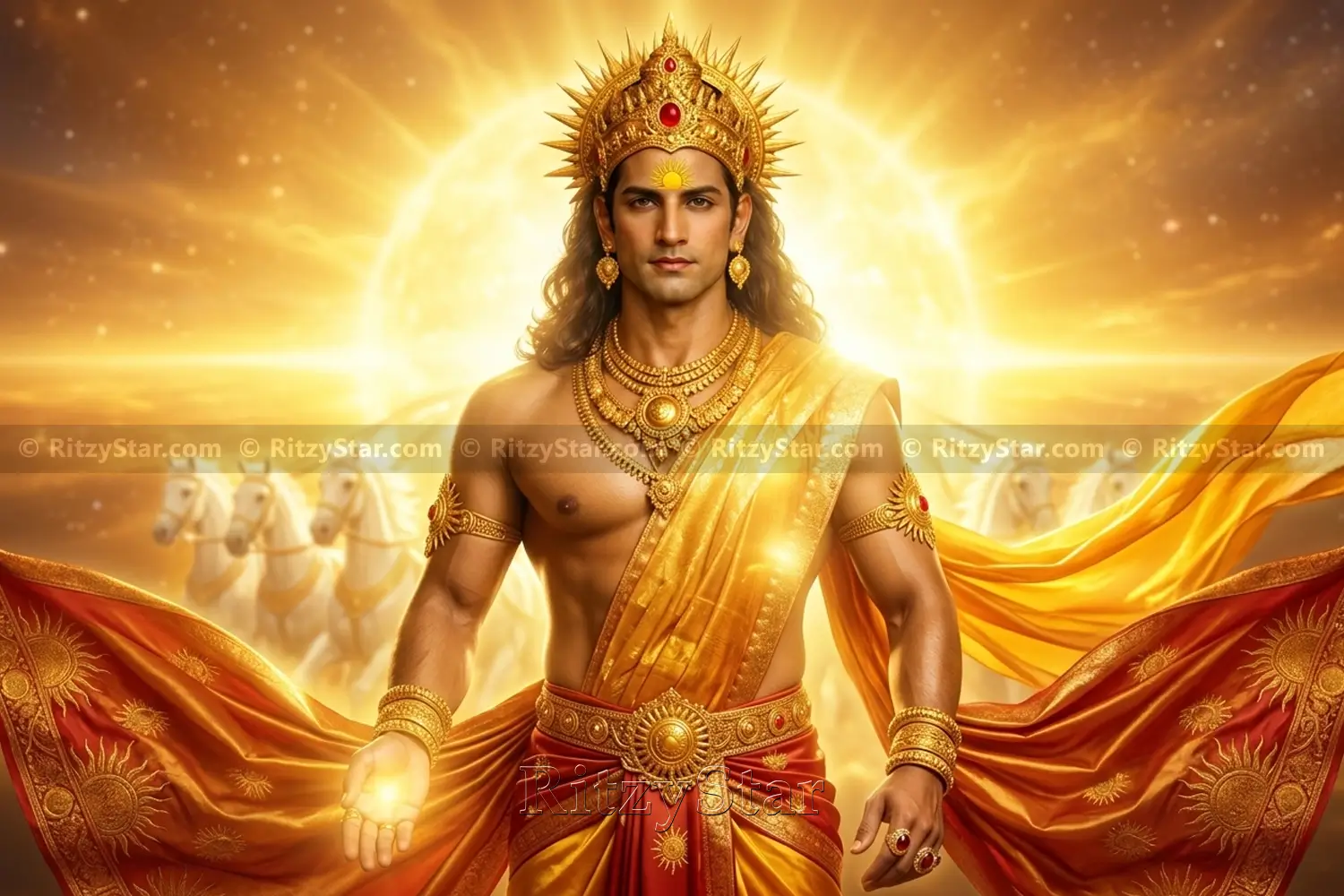
Vayu is described in the scriptures as a deity of exceptional beauty. Unlike the fierce forms of Agni or the complex forms of Shiva, Vayu is often depicted as youthful, radiant, and swift.
Physical Appearance
“वायुं रूपेणाप्रतिमं श्वेतवर्णं मनोजवम्।
चतुर्भुजं महातेजं हरिणाधिरूढं प्रभुम्॥”
— by Author
Meaning: Vayu is matchless in beauty, white in color, swift as the mind. Four-armed, of great splendor, mounted upon a deer, the lord.
Vayu is typically depicted as:
- White or smoky in complexion – Representing the colorless nature of air
- Four-armed – Holding his divine weapons and attributes
- Youthful and radiant – Embodying the energy and freshness of wind
- Riding a deer or gazelle – Symbolizing speed and grace
The Mount: The Swift Gazelle
Vayu’s vehicle (vahana) is the gazelle or deer—the fastest of land animals. This choice is deeply symbolic: just as the deer moves with effortless speed across the plain, Vayu moves with effortless speed across the cosmos. The gazelle also represents the restless, ever-moving nature of wind—never still, always flowing.
In some depictions, particularly in his role as a Dikpala (guardian of the direction), Vayu rides a chariot drawn by horses—sometimes two, sometimes forty-nine, sometimes a thousand.
The Weapons
Vayu wields several weapons, each reflecting aspects of his power:
- The Goad (Ankusha) – Used in his role as Dikpala to direct and control the forces of the northwest
- The Mace (Gada) – In his form as Mukhyaprana, representing his power to crush obstacles and evil forces
- The Vayavyastra – A divine weapon that unleashes the fury of the wind, capable of uprooting mountains and overturning armies
“वायोरस्त्रं महाघोरं वायव्यं नाम विश्रुतम्।
तत्प्रयुक्तं जगत्सर्वं कम्पयेद्भीमतेजसः॥”
— by Author
Meaning: Vayu’s weapon, the terrifying Vayavyastra, is renowned. When unleashed, it shakes the entire world with its terrible splendor.
The Banner: White and Billowing
Vayu’s banner is white—the color of pure, unpolluted air. As he moves, his banner billows behind him, visible even from a distance, announcing his presence like a cloud announcing the coming storm.
📿 Vayu in the Vedas – The First Drinker of Soma
In the Rigveda, Vayu holds a position of extraordinary importance. He is not merely one among many gods—he is the first to receive the sacred offering.
The Soma Ritual
In the Vedic sacrifice, Soma—the divine nectar—is offered to the gods. But there is an order to the offering: Vayu receives the first drink, before Indra, before Agni, before any other deity.
“प्रथमः सोमपाः पवमानो वायुरुच्यते।
तं देवा अनु तिष्ठन्ति यज्ञं चक्रुः पुरोहितम्॥”
— Rigveda
Meaning: The purifier Vayu is called the first drinker of Soma. The gods follow him and made him their priest for the sacrifice.
This primacy reflects Vayu’s fundamental nature: he is the breath through which all offerings are carried to the gods. Without wind, the smoke of the sacrifice would not rise. Without breath, the chants of the priests would not sound.
The Beauty of Vayu
The Rigvedic hymns praise Vayu’s exceptional beauty. He is described as:
- Moving noisily in his shining chariot
- Driven by two, or forty-nine, or a thousand white and purple horses
- Wearing a white banner that streams behind him
- Young, radiant, and swift as thought
“रथे शुभ्रे वायो त्वं रोचमाने वि राजसे।
हरी ते युञ्जते दिवि॥”
— Rigveda
Meaning: In your shining chariot, O Vayu, you shine brightly. Your two bay steeds are yoked in heaven.
The Maruts – Vayu’s Companions
The Maruts, the storm deities who accompany Indra in his battles, are intimately connected with Vayu. Some hymns describe them as being born from Vayu’s belly. The forty-nine Maruts represent the many forms of wind—the gusts, the gales, the storms that sweep across the earth.
“मरुतो वायुना सह प्रियेण प्रियसन्धवः।
वृष्टिं वर्षन्ति भानुना॥”
— by Author
Meaning: The Maruts, together with their beloved Vayu, rain down with their radiance.
🕉️ Vayu in the Upanishads – The Supreme Life Force
The Upanishads, the philosophical texts that form the foundation of Hindu thought, elevate Vayu to an even higher status. Here, he is not just a god among gods but the very principle of life itself.
The Contest of the Faculties
The Brihadaranyaka Upanishad tells the famous story of the contest among the deities who control bodily functions.
Once, the gods (the senses) and the asuras (demons of sin) were fighting. The gods were losing. They decided to discover which of them was the greatest, so that they could rally around that deity.
One by one, each deity left the human body:
- Speech left, but the man continued to live—he could not speak, but he breathed, saw, heard.
- Sight left, but the man continued to live—he was blind, but he breathed, heard, spoke.
- Hearing left, but the man continued to live—he was deaf, but he breathed, saw, spoke.
- Mind left, but the man continued to live—he was mindless, but he breathed, saw, heard.
Finally, Prana (Vayu) prepared to leave. As he began to depart, all the other faculties were pulled from their places—speech, sight, hearing, mind—all were dragged along, unable to resist.
“स यथा हि महान् राजा याति सर्वे अनुप्रयान्ति।
एवं प्राणे प्रयाति सर्वे अनुप्रयान्ति॥”
— Brihadaranyaka Upanishad
Meaning: Just as when a great king departs, all follow him; so when Prana departs, all follow.
The other gods, humbled, returned to their places and praised Prana as the greatest among them.
Vayu Alone Unaffected by Sin
In the same Upanishad, there is another revealing story. When the asuras (demons of sin) attacked the gods, they tried to afflict each deity with evil. But when they approached Vayu, they could not touch him—he was pure, unaffected, like wind that cannot be stained.
“तद्यथा वायुः सर्वाणि रूपाणि विविधान्यनुपूर्वं गृह्णाति।
एवं प्राणः सर्वाणि रूपाणि विविधान्यनुपूर्वं गृह्णाति॥”
— by Author
Meaning: Just as Vayu receives all forms one after another, so Prana receives all forms one after another.
This purity makes Vayu the ideal mediator between the divine and the human, the pure force that can carry prayers upward without being contaminated by earthly imperfections.
Vayu as Udgitha – The Sacred Syllable Om
The Chandogya Upanishad declares that Vayu is the Udgitha—the sacred syllable Om. Just as Om is the essence of all mantras, Vayu is the essence of all life.
“वायुर्वा उद्गीथः। अप्येतर्हि प्राणो वायुर्भूत्वैकीभवति॥”
— Chandogya Upanishad
Meaning: Vayu is indeed Udgitha. Prana becomes Vayu and becomes one with it.
To know Vayu, the Upanishad says, is to know Brahman. For Vayu is the manifest form of the unmanifest absolute—the breath through which the universe lives and moves and has its being.
🌪️ The Three Avatars – Vayu on Earth
One of the most distinctive features of Vayu’s mythology is his doctrine of avatars (incarnations). According to the Dvaita philosophy of Madhvacharya, Vayu incarnates on earth in every Yuga (age) to assist Vishnu in the preservation of dharma.
First Avatar: Hanuman – The Devotee of Rama
In the Treta Yuga, when Vishnu incarnated as Rama, Vayu incarnated as Hanuman—the mighty Vanara who would become Rama’s most devoted servant and most powerful ally.
“हनूमान् वायुपुत्रोऽसौ प्रथमो वायुजोऽभवत्।
रामस्य प्रियकर्ता च दुःखदारिद्र्यनाशनः॥”
— by Author
Meaning: Hanuman, the son of Vayu, was the first born of Vayu. He was the beloved servant of Rama and the destroyer of sorrow and poverty.
The Birth of Hanuman
The story of Hanuman’s birth is intimately connected with Vayu. Anjana, an apsara cursed to be born as a Vanara princess, was married to Kesari, the Vanara king. Both longed for a child and prayed fervently to Vayu.
At the same time, King Dasharatha of Ayodhya was performing the Putrakameshti Yagna (sacrifice for sons). Agni, the fire god, appeared and gave him a sacred pudding (payasam) to be shared among his three wives. As Dasharatha was giving a portion to his third wife Sumitra, a bird—actually an apsara under a curse—snatched a piece and flew away.
The bird flew over the forest where Anjana was worshipping. Vayu, the wind god, caught the falling pudding and delivered it into Anjana’s outstretched hands. She ate it and gave birth to Hanuman—the mighty son of Vayu, the wind god.
“वायुना प्रेषितं दिव्यं पायसं तदुपागतम्।
अञ्जनाया हस्ते पतितं तेन हनूमानजायत॥”
— by Author
Meaning: The divine pudding, sent by Vayu, arrived and fell into Anjana’s hands. From that, Hanuman was born.
Hanuman’s Powers
As the son of Vayu, Hanuman inherited his father’s speed and agility. He could fly faster than the wind, leap across oceans, and grow to the size of mountains. Yet his greatest power was his devotion—his unwavering love for Rama, which made him the ideal bhakta (devotee).
In the Ramayana, Hanuman’s exploits are legendary: he leaps across the ocean to Lanka, burns the city with his tail, brings the Sanjivani mountain to save Lakshmana’s life, and stands as the eternal symbol of selfless service.
“यत्र यत्र रघुनाथकीर्तनं तत्र तत्र कृतमस्तकाञ्जलिम्।
वायुपुत्रं वन्देऽहं प्रभुं सर्वेष्टदायकम्॥”
— by Author
Meaning: Wherever the glory of Rama is sung, there Hanuman stands with folded hands. I bow to the son of Vayu, the lord who grants all desires.
Second Avatar: Bhima – The Mighty Pandava
In the Dvapara Yuga, when Vishnu incarnated as Krishna, Vayu incarnated as Bhima—the second Pandava, the mightiest warrior of his age.
The Birth of Bhima
Kunti, the mother of the Pandavas, possessed a boon from the sage Durvasa: she could invoke any god and bear a child by him. After her husband King Pandu was cursed to die if he ever embraced a woman, Kunti used this boon to provide heirs to the throne.
She invoked Vayu, and Bhima was born—a child of immense strength, destined to be the greatest mace-wielder of his age.
“कुन्त्या संस्मृतो वायुः सुषुवे भीममूर्जितम्।
तस्मिन् हि पुत्रे सर्वेषां बलं निहितमद्भुतम्॥”
— Mahabharata
Meaning: Vayu, invoked by Kunti, begot the mighty Bhima. In that son was placed the amazing strength of all beings.
Bhima’s Strength
Bhima was known to possess the strength of ten thousand elephants. From childhood, he displayed his father’s power:
- He could lift grown elephants as if they were toys
- He could break the strongest warriors with his bare hands
- His appetite was legendary—he ate half the food consumed by the Pandavas
- His mace was so heavy that no one else could lift it
“दशानां नागयूथानां बलं भीमे समाहितम्।
पृथिव्यां नास्ति तुल्योऽस्य बलेन कुरुनन्दन॥”
— Mahabharata
Meaning: The strength of ten elephant herds was placed in Bhima. On earth, there is no equal to him in strength, O descendant of Kuru.
Bhima’s Exploits
Like his father Vayu, Bhima was a destroyer of evil. His exploits include:
- Killing the demon Bakasura, who terrorized the village of Ekachakra
- Killing the demon Hidimba and marrying his sister Hidimbi
- Killing Jarasandha, the mighty king of Magadha, by tearing him apart
- Killing all one hundred Kaurava brothers in the Kurukshetra War
- Drinking the blood of Dushasana, fulfilling his vow to avenge Draupadi’s humiliation
“भीमसेनो महाबाहुः क्रोधाद् दुर्योधनं प्रति।
प्रतिज्ञां पालयामास शपथं पाण्डुनन्दनः॥”
— Mahabharata
Meaning: Bhima of mighty arms, in his anger toward Duryodhana, fulfilled his vow, the oath of the Pandava prince.
The Meeting with Hanuman
In a beautiful episode during the Pandavas’ exile, Bhima encountered his spiritual brother—Hanuman. The two sons of Vayu met in the forest, where Hanuman, now aged and in meditation, had placed his tail across Bhima’s path.
When Bhima arrogantly asked the old monkey to move his tail, Hanuman revealed his true form—expanding to cosmic size. He then revealed that he was Bhima’s brother, both sons of Vayu. He blessed Bhima and promised to be present on the flag of Arjuna’s chariot during the great war.
“वायुपुत्रौ महावीर्यौ भीमहनुमती स्मृतौ।
समेत्य भ्रातरौ तौ तु परस्परमपूजयन्॥”
— by Author
Meaning: The two mighty sons of Vayu—Bhima and Hanuman—are renowned. Meeting, the two brothers honored each other.
Third Avatar: Madhvacharya – The Philosopher
In the Kali Yuga, the current age of darkness, Vayu incarnated as Madhvacharya (1238–1317 CE)—the philosopher who founded the Dvaita (dualistic) school of Vedanta.
The Life of Madhvacharya
Madhvacharya was born in a Brahmin family in the Udupi region of Karnataka. From an early age, he displayed extraordinary intelligence, spiritual insight, and a fiery temperament reminiscent of Vayu.
He declared himself to be an incarnation of Vayu and pointed to verses in the Rigveda (the Balitha Sukta) as proof. According to his followers, Madhvacharya was Mukhya Prana himself—the chief life force—descended to earth to restore correct understanding of the Vedas.
“मध्वाचार्यो वायुरेव द्वितीयो नात्र संशयः।
साक्षाद् मुख्यप्राणरूपो विष्णोः प्रियतमो गुरुः॥”
— Madhva Tradition
Meaning: Madhvacharya is indeed Vayu—there is no doubt. He is directly Mukhya Prana, the beloved guru of Vishnu.
The Philosophy of Dvaita
Madhvacharya’s Dvaita philosophy emphasizes the eternal distinction between God (Vishnu) and individual souls. Unlike Advaita (non-dualism), which teaches that the soul and Brahman are ultimately one, Dvaita maintains a permanent difference.
According to Madhva, Vayu occupies a unique position among souls. He is the foremost of Vishnu’s devotees, the model for all other souls seeking liberation. Hanuman, Bhima, and Madhvacharya are all manifestations of this same Vayu—the eternal servant of Vishnu.
“वायुर्देवः सदा विष्णोर्भक्तो मुख्यतमः स्मृतः।
तस्यांशा हनुमद्भीममध्वाः पृथ्व्यां प्रकाशिताः॥”
— by Author
Meaning: Vayu is the foremost devotee of Vishnu. His incarnations—Hanuman, Bhima, and Madhva—appeared on earth.
🧘 The Deeper Meaning – Vayu as Spiritual Symbol
Like all great deities in Hindu mythology, Vayu operates on multiple levels. He is at once a physical force, a divine being, and a spiritual symbol.
Vayu as Prana – The Breath of Life
The most profound identification of Vayu is with Prana—the vital breath, the life force. In Yogic and Vedantic philosophy, Prana is not merely air but the energy that animates all living beings. It flows through the body along subtle channels (nadis), centers at various points (chakras), and sustains all bodily functions.
“प्राण एव बलं प्राणो विद्या प्राणः प्रजाः प्रजाः।
प्राणः सूर्यः प्राणश्चन्द्रः प्राणं सर्वमिदं जगत्॥”
— by Author
Meaning: Prana alone is strength; Prana is knowledge; Prana is all beings. Prana is the sun; Prana is the moon; Prana is this entire world.
In this understanding, worship of Vayu is not worship of an external deity but recognition of the divine within. Every breath is a prayer. Every inhalation is a reminder that we are sustained by the same force that moves the stars.
The Allegory of the Contest
The Upanishadic story of the contest among the faculties is an allegory for the hierarchy of human functions. Speech, sight, hearing, mind—all are important. But without breath, none of them function. The story teaches that life is more fundamental than any particular ability. A person can be blind, deaf, mute, even mindless—but as long as they breathe, they live.
“प्राणो वाव ज्येष्ठश्च श्रेष्ठश्च। स यदि प्राणो न प्राणीयात् सर्वेऽन्ये प्राणा न प्राणीयुः॥”
— by Author
Meaning: Prana is indeed the eldest and the best. If Prana does not breathe, all other life-forces do not breathe.
Vayu as Mediator
Vayu’s role as the messenger of the gods and the carrier of offerings makes him the ideal mediator between the human and the divine. The smoke of the sacrifice rises on the wind. The mantras chanted by priests are carried on the breath. The prayers of devotees are said to be carried to the gods by Vayu.
“वायो सुखं ते यानि सन्ति पन्थानो रथस्य।
तेभिर्नो रक्ष सर्वदा यज्ञं नः पाहि सर्वदा॥”
— by Author
Meaning: O Vayu, the paths of your chariot are joyful. Protect us always by them; protect our sacrifice always.
In this role, Vayu is accessible to all. One does not need to be a great scholar or a powerful king to reach Vayu—everyone breathes, and everyone can feel the wind. He is the most democratic of the gods, available to the poorest and the richest alike.
🌏 Vayu in Other Traditions
Vayu’s influence extends beyond Hinduism into Buddhism and even Central Asian religions.
Vayu in Buddhism
In East Asian Buddhism, Vayu is a dharmapala (dharma protector) and one of the Twelve Devas (Japanese: Jūniten) who serve as directional guardians. He presides over the northwest direction.
In Japan, he is known as Fūten (風天), the wind deity. He is often depicted as a fierce, bearded figure holding a bag of wind or a staff with a billowing banner. He is included with the other eleven devas in the iconographic programs of many Buddhist temples.
“風天 (Fūten) – 西北の方角を守護する。
風を司り、一切のものを動かす力を持つ。”
— Japanese Buddhist Tradition
Meaning: Fūten – Guards the northwest direction. He controls the wind and has the power to move all things.
Vayu in Zoroastrianism and Central Asia
The Avestan deity Vayu-Vata is a cognate of the Hindu Vayu. In Zoroastrianism, Vayu is a dualistic figure—both a force for good and a force for destruction, depending on the context.
In Sogdian (Central Asian) tradition, the wind god was known as Weshparkar (or Veshparkar). He was depicted as a four-armed, three-headed figure, strongly influenced by the iconography of the Hindu god Shiva. In Ustrushana (modern-day Tajikistan), Weshparkar was one of the three main deities worshipped before the arrival of Islam.
“Weshparkar – the Sogdian god of the atmosphere and the wind, corresponding to the Avestan god Vayu.”
This connection across cultures testifies to the enduring power of the wind god—a figure recognized wherever humans have felt the force of the wind and pondered the mystery of their own breath.
🎨 Iconography – Depicting the Unseen
Depicting Vayu is a challenge—how do you paint the wind? Over centuries, artists developed a rich iconographic tradition that makes the invisible visible.
The Dikpala Form
As one of the eight guardians of the directions (Astadikpalas), Vayu is depicted as a regal figure:
- White or smoky complexion – Representing the color of air
- Four arms – Holding his attributes
- Riding a deer or gazelle – Symbolizing speed
- Wearing flowing garments – Moved by the wind he commands
- Crowned and bejeweled – As befits a guardian deity
“श्वेतवर्णो महातेजा हरिणस्थो वायुः स्मृतः।
चतुर्भुजो दिशो रक्षन् वायव्यां मनुजेश्वरः॥”
— by Author
Meaning: White-colored, of great splendor, seated on a deer—thus Vayu is remembered. Four-armed, guarding the northwest direction, lord among men.
The Mukhyaprana Form
In the Madhva tradition, Vayu as Mukhyaprana is depicted differently:
- Holding a mace – Representing his power to crush evil
- Accompanied by his devotees – Including Hanuman and Bhima
- Standing in a posture of service – To Vishnu, the supreme deity
In Buddhist Art
In Japan, Fūten is depicted as:
- A fierce, bearded figure – Sometimes with green skin
- Holding a bag of wind – Which he opens to release storms
- Wearing armor – As a protector deity
- Accompanied by a running figure – Symbolizing the swiftness of wind
Architectural Representations
Vayu appears on temple architecture throughout South and Southeast Asia. A notable example is a 17th-century wooden architectural strut from the Kathmandu Valley in Nepal which depicts Vayu standing on his deer mount, holding a staff with a billowing banner.
🏛️ Worship of Vayu – The Breath as Ritual
Vayu is worshipped in many forms and contexts—from the elaborate rituals of Vedic sacrifice to the simple awareness of one’s own breath.
Vedic Sacrifice
In the Vedic yajna, Vayu receives the first offering of Soma. Special hymns (suktas) are addressed to him, praising his beauty, his power, and his role as the purifier.
“वायो शुचिपा उत सोमपाः शुचिः।
प्रियः प्रियाणां नमसा हि तेऽविदम्॥”
— Rigveda
Meaning: O Vayu, pure-drinking and Soma-drinking, pure. Beloved of the beloved, by homage I have known you.
Mantras for Vayu
The most common mantra for Vayu is:
“ॐ वायवे नमः”
(Om Vayave Namah)
Meaning: Salutations to Vayu.
Another powerful mantra, from the Rigveda, is:
“आ नो रुचा वायवा याहि शुष्मिणा मन्दानो योष्मभिः सचा।”
— Rigveda
Meaning: Come to us with radiance, O Vayu, with your might, delighting with your energies.
Worship in Daily Life
For many Hindus, worship of Vayu is not confined to temples or rituals. It is the simple recognition that every breath is sacred. The practice of pranayama (breath control) in Yoga is, in essence, the worship of Vayu—learning to honor, control, and ultimately transcend the breath that sustains life.
“प्राणायामेन युञ्जीत प्राणेशं परमेश्वरम्।
वायुमाराधयेद् यस्तु स याति परमां गतिम्॥”
— by Author
Meaning: Through pranayama, one should worship the lord of breath, the supreme God. He who worships Vayu attains the highest goal.
Temples Dedicated to Vayu
While Vayu does not have as many dedicated temples as Vishnu or Shiva, there are several important shrines:
- Tarapith in West Bengal – While primarily a Shakta site, the temple is associated with Vayu in Tantric traditions
- Temples in the Madhva tradition – In Udupi and other centers of Dvaita philosophy, Vayu (Mukhyaprana) is specially honored
- Vayu shrines in Nepal – Particularly in the Kathmandu Valley, where Vayu is worshipped as a directional guardian
🌟 The Legacy of Vayu – The Breath That Never Ceases
Vayu’s legacy is written in every breath you take, in every gust of wind that moves the leaves, in every storm that sweeps across the plains.
In Language
The word “Vayu” has entered many languages. In Hindi, “vātāvaraṇa” (वातावरण) means atmosphere—literally “the circle of Vayu.” The name “Pavan” (wind) is a common Hindu name, as is “Anil.” “Bhima” remains a popular name, evoking the strength of Vayu’s mighty son.
In Literature
Vayu appears throughout Indian literature—from the Rigveda to the Mahabharata, from the Upanishads to the Puranas. His sons, Hanuman and Bhima, are among the most beloved characters in the epics.
In Philosophy
The Dvaita philosophy of Madhvacharya places Vayu at the center of its soteriology. For millions of followers of Madhva, Vayu (Mukhyaprana) is the model devotee, the eternal servant of Vishnu, and the guide for all souls seeking liberation.
In Daily Life
For the millions who practice yoga, Vayu is present in every pranayama exercise. For the millions who chant the Hanuman Chalisa, Vayu is honored as the father of the monkey god. For the millions who simply pause to feel the wind on their face, Vayu is there—unseen but unmistakable.
“वायुर्गन्धानिवादत्ते शरीराद् वासनाः शुभाः।
तथा ज्ञानानि धर्मांश्च प्राप्नुयात् सततं नरः॥”
— by Author
Meaning: As Vayu carries fragrances from the body, so a man can constantly receive knowledge and dharma.
🕉️ Conclusion – The Breath of the Universe
Vayu is the most elusive of the great gods—and the most intimate. He is not distant in some far-off heaven; he is within you, now, as you read these words. Each inhalation is his gift. Each exhalation is his movement. He is the wind that blows across continents and the breath that stirs within your lungs. He is the force that moves the clouds and the energy that moves your limbs.
“वायुः सर्वस्य जगतः प्राणो यः सर्वचेतनः।
तं नमस्यामि देवेशं प्राणानां प्राणमीश्वरम्॥”
— by Author
Meaning: Vayu, the life-breath of the entire world, who is the consciousness of all—I bow to that lord of gods, the life-breath of all life-forces, the supreme lord.
The story of Vayu is the story of the invisible made visible, of the impersonal made personal, of the universal made intimate. He is the reminder that the divine is not “out there” somewhere—it is here, now, in the air you breathe, in the wind that touches your face, in the breath that sustains your life.
In the end, Vayu remains what he has always been—the unseen force that moves all things, the breath that gives life to all beings, the wind that carries the prayers of mortals to the heavens. His story, like the wind itself, never ends. It continues with every breath you take.
Discover more from RitzyStar
Subscribe to get the latest posts sent to your email.