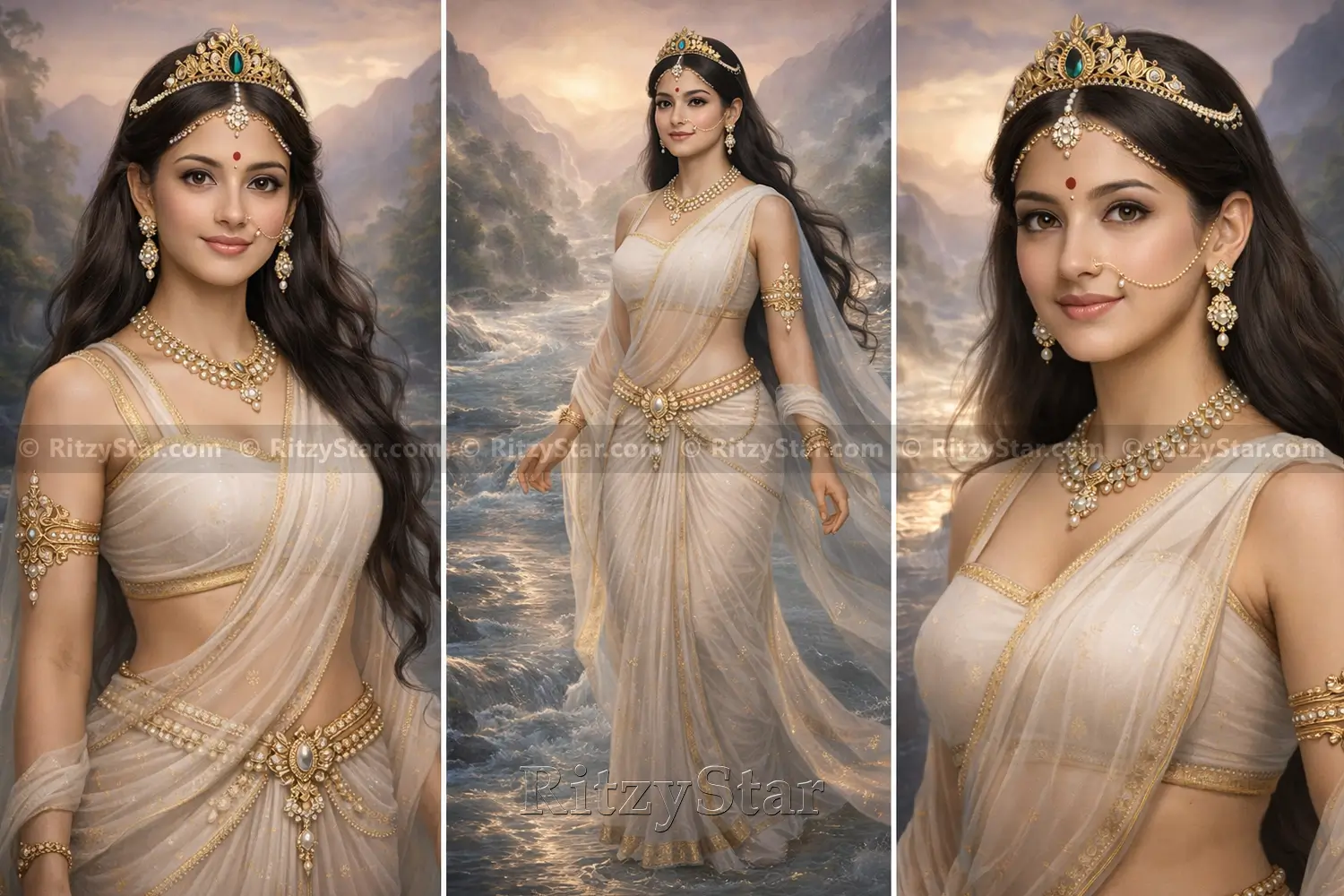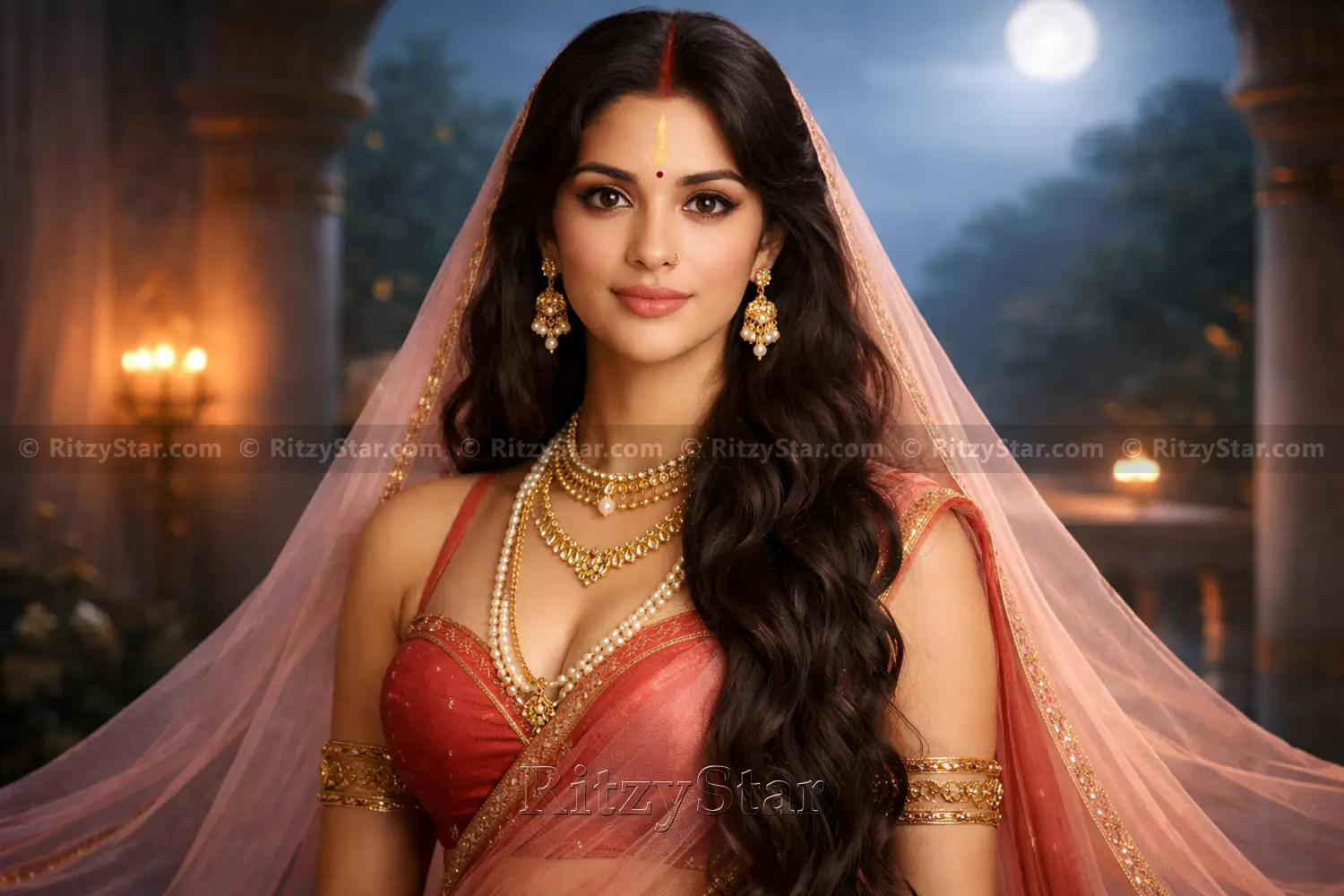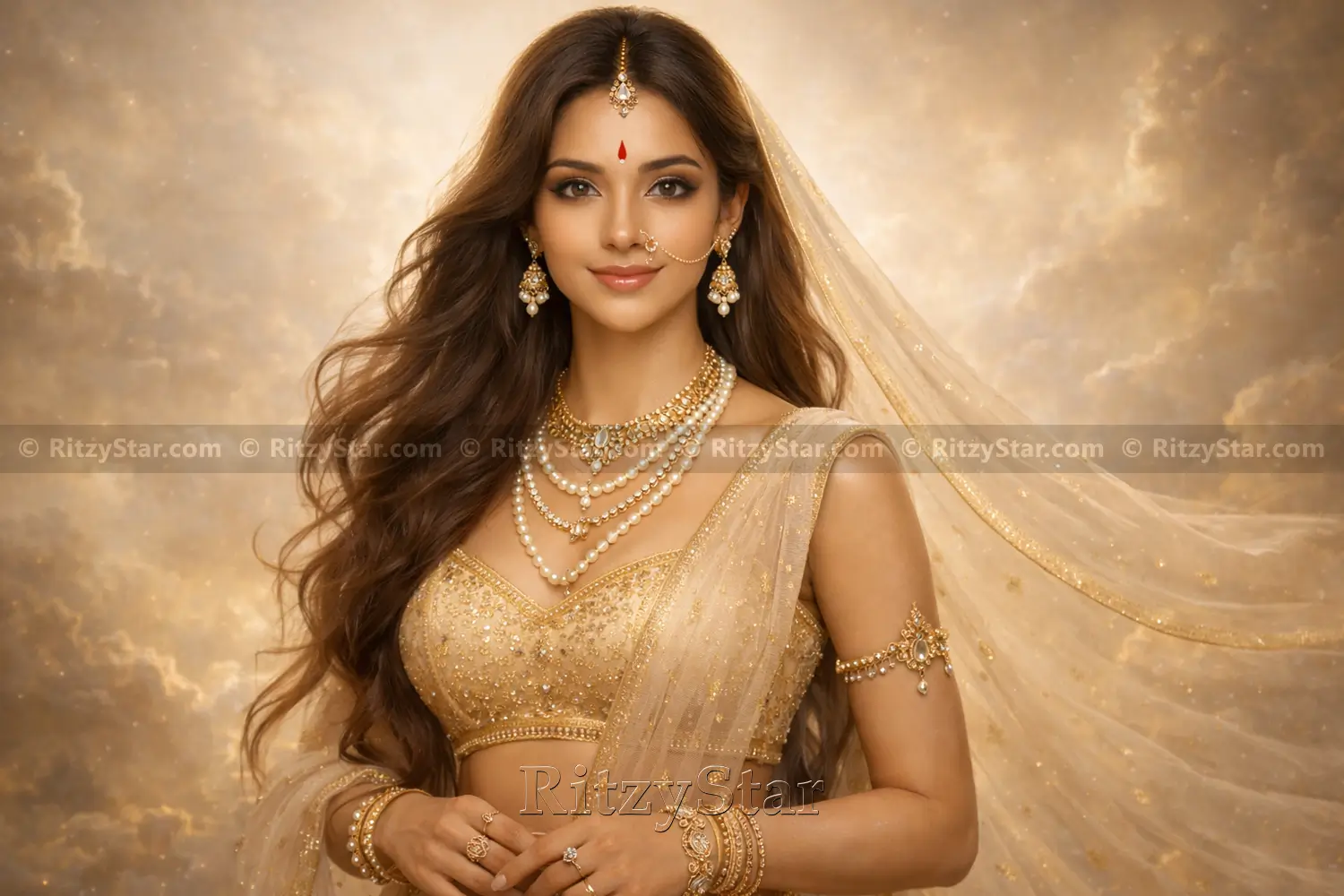
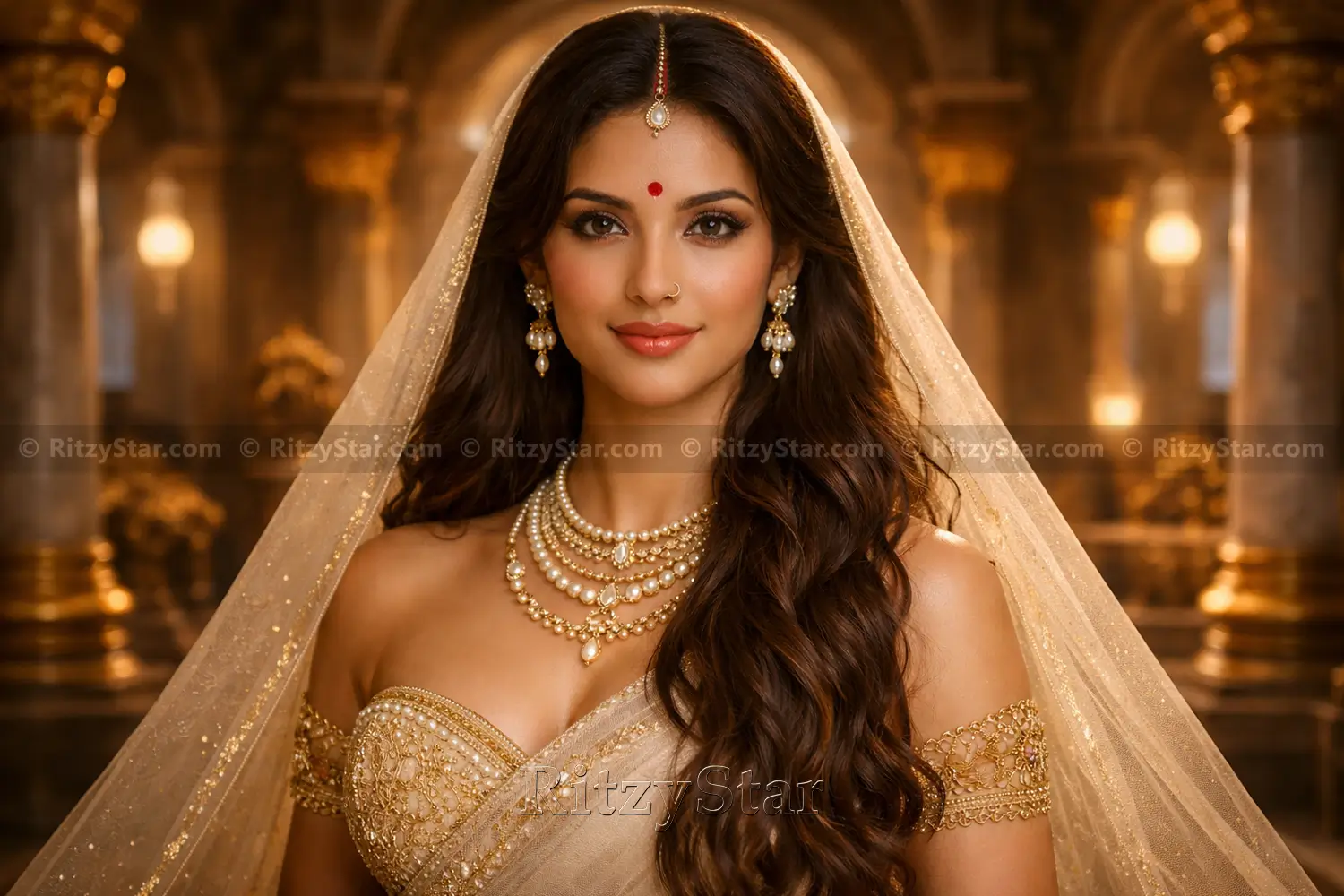
Wife of Ravana, Mother of Meghanada, The Silent Guardian of Dharma
“मन्दोदरी महाभागा रावणस्य प्रियंगमा।
धर्मज्ञा सत्यवादिनी पतिव्रता पतिप्रिया॥”
— Ancient Verse
Meaning: Mandodari, the blessed one, beloved of Ravana, knower of dharma, speaker of truth, devoted to her husband, loved by her lord.
🌸 Introduction – The Queen of Lanka
She was the queen of the most powerful kingdom on earth. Her husband was a demon king whose name struck terror into the hearts of gods and men. Her city was a marvel of gold and gems, a testament to wealth beyond imagination. And yet, when the final battle came, when her husband lay dying on the battlefield, when her kingdom crumbled into ashes—Mandodari stood silent, watching, grieving, enduring.
Among the many women of the Ramayana, Mandodari occupies a unique place. She is neither a heroine like Sita nor a villainess like Surpanakha. She is something far more complex—a woman caught between love and duty, between loyalty to her husband and knowledge of his flaws, between her role as queen and her understanding of dharma.
“न रावणसमः कोऽपि पतिर्नो मन्दोदरीसमा।
धर्मेण सत्यवाक्येन प्रसिद्धे त्रिषु लोकेषु॥”
— by Author
Meaning: There was no husband like Ravana, nor a wife like Mandodari; renowned in the three worlds for dharma and truthful speech.
Her story is one of unyielding love in the face of fatal flaws, of wisdom that could not alter destiny, of a woman who saw her husband’s destruction coming and could do nothing to stop it. She is the silent heart of the Ramayana—the voice of reason that went unheard, the hand that reached out too late, the queen who outlived her king.
📜 Who Was Mandodari? The Daughter of the Architect of the Gods
Mandodari was not born of demon lineage, as many assume. Her parentage connects her to the highest realms of celestial craftsmanship and divine wisdom.
The Daughter of Maya Danava
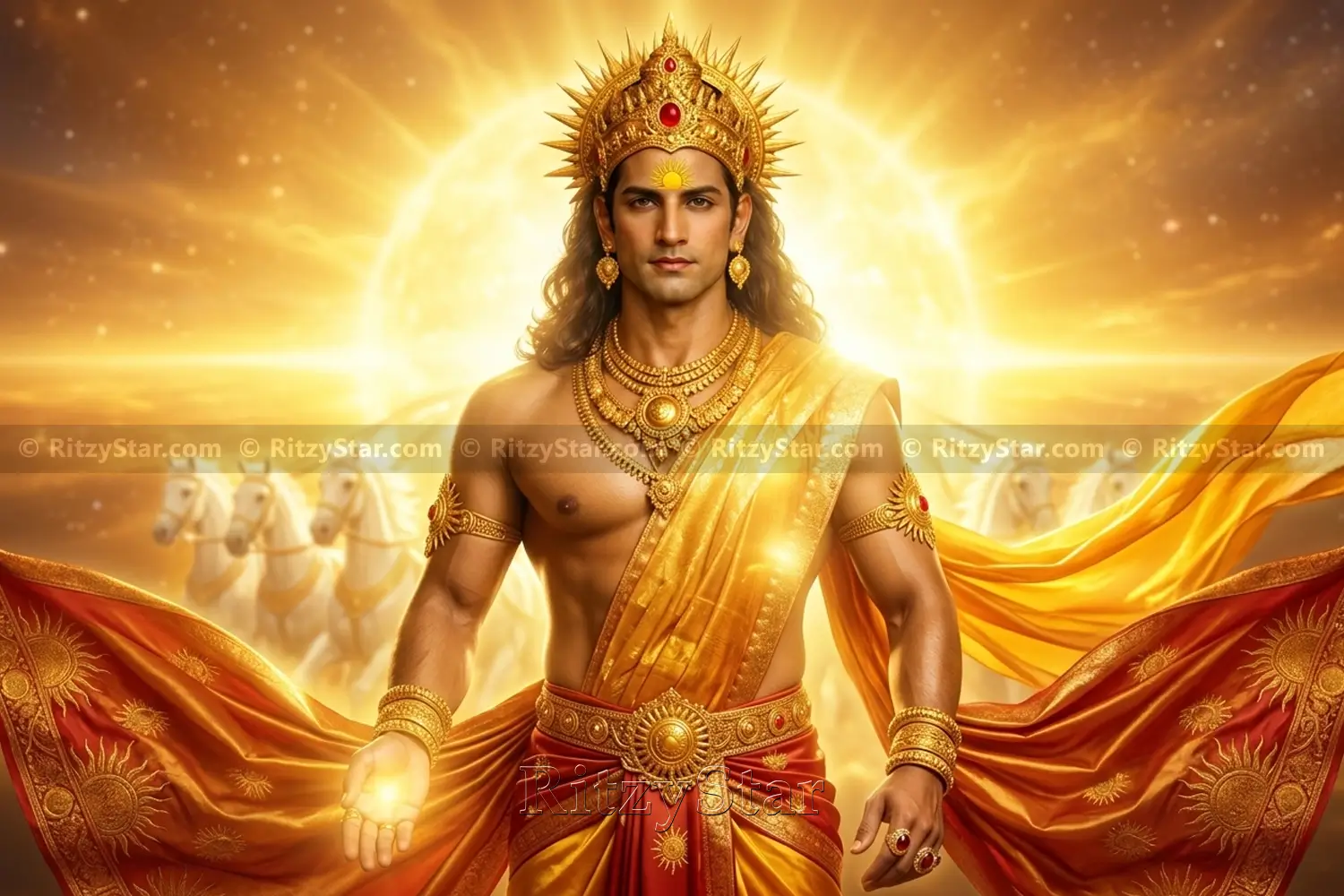
Mandodari was the daughter of Maya Danava, the celestial architect—the Vishwakarma of the demons. Maya was a being of extraordinary talent, renowned across the three worlds for his architectural genius. He had built cities that floated in the sky, palaces that defied imagination, and weapons that could destroy armies. His greatest creation was Lanka itself—the golden city that served as Ravana’s capital.
“मायो नाम महादैत्यो विश्वकर्मा सुरार्चितः।
तस्य पुत्री महाभागा मन्दोदरीति विश्रुता॥”
— by Author
Meaning: Maya by name, the great demon, the architect worshipped by the gods; his daughter, the blessed one, was renowned as Mandodari.
Maya Danava was no ordinary demon. He was a devotee of Lord Shiva, a master of the arts, and a being of such skill that even the gods sought his services. His daughter inherited his wisdom, his artistic sensibility, and his understanding of the cosmic order.
The Mother – Hema the Apsara
Mandodari’s mother was Hema, a celestial nymph (apsara) of extraordinary beauty. Hema was one of the most enchanting dancers in Indra’s court, a being of grace and allure who had captivated gods and demons alike.
“हेमा नामाप्सरा रम्या मायस्य प्रियकामिनी।
तस्यां सम्भूता मन्दोदरी लोकमातेव भास्वरा॥”
— by Author
Meaning: Hema by name, the lovely apsara, beloved of Maya; from her was born Mandodari, radiant like a universal mother.
This parentage gave Mandodari a unique heritage—the architectural genius and cosmic wisdom of her demon father, and the beauty, grace, and celestial refinement of her apsara mother. She was neither fully demon nor fully divine, but something that transcended both categories.
The Mysterious Curse – The Frog Princess
Some traditions, particularly in Southeast Asian versions of the Ramayana, offer a different origin for Mandodari. According to these accounts, Mandodari was born from a curse.
“मण्डूकी या पुरा स्त्री सच्चन्द्रशापेन निर्मिता।
मन्दोदरीति नाम्ना सा रावणस्य प्रिया भवत्॥”
— by Author
Meaning: She who was formerly a woman cursed to be a frog, created by the curse of Chandra, became Mandodari, beloved of Ravana.
The story goes that there was once a beautiful woman who incurred the curse of the moon god Chandra and was transformed into a frog. She lived in a well for many years until she was discovered by Maya Danava, who adopted her as his daughter. When she grew up, her frog-like origins were reflected in her name—Mandodari, meaning “one with a frog-like belly” (manduka = frog, udara = belly). Yet she was so beautiful that this minor imperfection was overlooked by all who beheld her.
✨ The Divine Boon – A Gift from Shiva Himself
Mandodari possessed a unique boon that made her invaluable to Ravana—and ultimately, a source of one of his greatest vulnerabilities.
The Garland of Immortality
According to some versions of the Ramayana, Mandodari possessed a garland (vanamala) that granted invincibility to whoever wore it. This garland, a gift from Lord Shiva or Brahma, had the power to protect the wearer from death in battle.
“अमोघा मन्दोदर्याः सा वनमाला महाप्रभा।
यां धृत्वा रावणो युद्धे न जय्यः सुरदानवैः॥”
— by Author
Meaning: Mandodari had that infallible garland of great splendor; wearing which, Ravana could not be conquered by gods or demons.
Mandodari, knowing her husband’s pride and his tendency to underestimate enemies, often tried to get him to wear this garland. But Ravana, confident in his own strength, would refuse. He considered it beneath his dignity to rely on a woman’s protection.
This refusal would prove fatal. When Rama’s arrow finally struck Ravana’s heart, it was not just an arrow—it was the culmination of Ravana’s own pride, his refusal to accept protection from those who loved him, his insistence on facing fate alone.
The Kumbhakarna Connection
Some texts mention that Mandodari was also the sister of the demon Kumbhakarna—though this appears to be a conflation with another tradition. More commonly, Kumbhakarna is Ravana’s brother, making him Mandodari’s brother-in-law. Their relationship was one of mutual respect; Kumbhakarna, despite his terrifying form and appetite, was known for his wisdom and his respect for his sister-in-law.
👑 The Divine Wedding – When the Demon King Married an Apsara’s Daughter
The marriage of Ravana and Mandodari was not merely a political alliance but a union of cosmic significance. Ravana, the king of Lanka, had conquered the three worlds; Mandodari, the daughter of the celestial architect and an apsara, represented the pinnacle of beauty, wisdom, and refinement.
The Courtship
How did Ravana win Mandodari? The accounts vary. Some say that Maya Danava, impressed by Ravana’s power and devotion to Shiva, offered his daughter to the demon king. Others suggest that Ravana saw Mandodari and was captivated by her beauty, pursuing her until she agreed to become his queen.
“मन्दोदरीं रावणो राजा विवाहे समयोजयत्।
मायायै दत्त्वा राज्यानि धनरत्नान्यनेकशः॥”
— by Author
Meaning: King Ravana married Mandodari, giving to Maya many kingdoms, wealth, and jewels without number.
Regardless of the specifics, the marriage was celebrated with unparalleled grandeur. Lanka’s golden palaces were decorated with flowers from the celestial gardens. The finest musicians of the three worlds performed. Gods, demons, and sages attended. It was a wedding befitting the most powerful king on earth.
The Queen’s Role
As queen of Lanka, Mandodari was not merely a decorative figure. She ruled alongside Ravana, managing the affairs of the kingdom with wisdom and efficiency. Her father Maya had built Lanka, and she understood its workings intimately. Her mother Hema had taught her the arts of governance, diplomacy, and statecraft.
“लङ्कायां मन्दोदरी राज्ञी सर्वलोकनमस्कृता।
राज्यभारं समादाय रावणेन समं दधौ॥”
— by Author
Meaning: In Lanka, Queen Mandodari, revered by all worlds, shared the burden of the kingdom equally with Ravana.
She was respected by the ministers, loved by the people, and feared by the enemies of Lanka. Her judgment was sound, her counsel wise, and her devotion to her husband unwavering—even when she disagreed with his decisions.
👨👩👧👦 The Family of Mandodari
| Sl.No | Name | Relationship | Children | Remarks |
|---|---|---|---|---|
| 1 | Ravana – King of Lanka, ruler of the three worlds, supreme devotee of Shiva, the ten-headed demon king | Husband (Chief Consort) | 1. Meghanada (Indrajit) – The mightiest warrior of his age; conquered Indra himself; possessed the Brahmastra and other divine weapons; performed a yajna that made him invincible as long as it was incomplete; Ravana’s heir apparent. 2. Atikaya – A powerful warrior known for his immense size and strength; possessed celestial weapons; fought valiantly in the Ramayana war until killed by Lakshmana. 3. Akshayakumara – The youngest son; a prodigy who fought Rama and Lakshmana at only 16 years old; was killed by Hanuman in the Ashoka Vana after a fierce battle. 4. Narantaka – One of Ravana’s generals; led a division of the rakshasa army; killed in the war by Angada, the vanara prince. 5. Devantaka – Another of Ravana’s sons; fought with exceptional valor; killed in the war by Hanuman. 6. Trishira – A three-headed rakshasa warrior; commanded a large army; killed in the war by Rama himself. 7. Prahasta – Note: Some traditions list Prahasta as Ravana’s son, though more commonly he is Ravana’s chief minister and maternal uncle. The list varies across Ramayana versions. | Mandodari is generally considered the mother of Meghanada (Indrajit), Atikaya, and Akshayakumara. Some versions attribute all of Ravana’s sons to her; others suggest Ravana had other wives (Dhanyamalini, etc.) who bore some of these children. The Ramayana itself is ambiguous on the exact parentage. In Valmiki’s Ramayana, Meghanada (Indrajit) is explicitly stated to be Mandodari’s son. |
| 2 | Dhanyamalini (in some traditions) | Secondary Wife / Consort | 1. Several of Ravana’s other sons (varies by text) 2. Some traditions attribute Atikaya and/or Narantaka to Dhanyamalini | The existence and role of Dhanyamalini varies across Ramayana versions. In Valmiki’s Ramayana, Mandodari is Ravana’s chief queen, and other consorts are mentioned but not named in detail. Later versions expanded the family structure. |
Important Notes on Mandodari’s Family:
- Chief Queen – Mandodari was Ravana’s principal wife (patrani). She held the highest status among all his consorts.
- Meghanada (Indrajit) – Her eldest son was the greatest warrior of the rakshasa race. He earned the name “Indrajit” (conqueror of Indra) after defeating the king of gods. His death was the turning point of the Ramayana war.
- Atikaya – Another powerful son, described as possessing the strength of ten thousand elephants. He was killed by Lakshmana after a fierce battle.
- Akshayakumara – The youngest son, whose name means “indestructible” or “eternal youth.” Despite his youth, he was a formidable warrior. His death at the hands of Hanuman deeply affected Mandodari.
- Other Sons – The exact number and parentage of Ravana’s sons vary across texts. Some traditions name up to seven sons, while others mention only three or four.
- No Daughters – Unlike Ravana’s brothers who had daughters (Surpanakha being the most famous), Mandodari bore only sons—a fact sometimes interpreted as a blessing or curse depending on the tradition.
🌺 The Queen’s Wisdom – A Voice Crying in the Wilderness
Throughout the Ramayana, Mandodari emerges as a voice of reason—a woman who sees clearly what her husband refuses to see. Her wisdom, however, goes unheeded. Again and again, she warns Ravana of the consequences of his actions. Again and again, he ignores her.
The Warning About Sita
When Ravana abducted Sita, Mandodari was horrified. She understood immediately the magnitude of the folly. This was not merely a crime against a mortal woman—it was a violation of dharma that would bring destruction upon all of Lanka.
“नासि धर्मविदां श्रेष्ठो न च बुद्धिमतां वरः।
यस्त्वं परदारान् गच्छेः सीतां सत्यपराक्रमाम्॥”
— by Author
Meaning: “You are not the best among the knowers of dharma, nor the foremost among the wise, since you would approach another’s wife—Sita, whose valor is truth itself.”
The Ramayana records her words to Ravana after the abduction:
“आनृतं न कृतं पूर्वं रावणेन कदाचन।
इदानीं तु परां वेलां प्राप्तोऽसि राक्षसाधिप॥”
— Valmiki Ramayana, Sundara Kanda
Meaning: “Never before had Ravana committed an untruth; but now, O lord of rakshasas, you have reached the opposite shore (of dharma).”
She reminded him of his greatness—his devotion to Shiva, his unparalleled strength, his wisdom. And she pleaded with him to return Sita to Rama, to make amends before it was too late.
“प्रतिदेहि च वैदेहीं रामायाक्लिष्टकर्मणे।
मैवं विनाशमाप्नुया लङ्कया सह राक्षसैः॥”
— by Author
Meaning: “Return Vaidehi (Sita) to Rama of unblemished deeds, lest you meet destruction along with Lanka and the rakshasas.”
Ravana dismissed her words. He was the lord of the three worlds; what could a mortal prince do to him?
The Mourning for Akshayakumara
When her youngest son, Akshayakumara, was killed by Hanuman in the Ashoka Vana, Mandodari’s grief knew no bounds. Akshayakumara was a prodigy—a warrior of exceptional skill despite his youth. He had begged his father to let him confront the monkey who had destroyed the Ashoka Vana. Ravana, perhaps seeing this as an opportunity to test Hanuman’s strength, allowed him to go.
“अक्षयकुमारो युवराजः सुतस्ते येन हनुमता हतः।
स बालो रणे पराक्रमी सुरैरपि दुर्जयः॥”
— by Author
Meaning: “Your son, the young prince Akshayakumara, who was invincible even to the gods in battle, was killed by Hanuman.”
Mandodari’s lament for her son is one of the most moving passages in the Ramayana. She mourned not just his death but the foolishness that had caused it—a father’s pride sending a boy to fight a being he could not defeat.
The Attempt to Save Meghanada
When her eldest son, Meghanada (Indrajit), prepared for his final battle against Lakshmana, Mandodari made one last desperate attempt to prevent disaster. She approached her son and begged him not to go.
“मा गच्छ पुत्र युद्धाय रामो धर्मभृतां वरः।
लक्ष्मणश्च महातेजा हनिष्यति न संशयः॥”
— by Author
Meaning: “Do not go to battle, my son. Rama is the best among the upholders of dharma, and Lakshmana of great splendor will surely kill you.”
But Meghanada, bound by his duty to his father and his pride as a warrior, could not heed his mother’s words. He went to battle—and he never returned.
⚔️ The Death of a Son – A Mother’s Grief
The death of Meghanada (Indrajit) was the turning point of the Ramayana war. He was Ravana’s greatest warrior, the one whose defeat made Ravana vulnerable. His death came at the hands of Lakshmana, guided by Vibhishana’s knowledge of the yajna that made Indrajit temporarily vulnerable.
The Yajna Vulnerability
Meghanada possessed a boon that made him invincible in battle—as long as he was performing a secret yajna (fire sacrifice) before each engagement. During this yajna, he could not be harmed. But once the yajna was complete, he was vulnerable until he could perform it again.
“इन्द्रजिन्नाम यज्ञेन युध्यमानो जयत्यरीन्।
यज्ञान्तरे वधं याति नान्यथा राक्षसोत्तमः॥”
— by Author
Meaning: “Indrajit, while performing his yajna, conquers his enemies in battle; only during the interval of the yajna can that foremost of rakshasas be killed.”
Vibhishana, Ravana’s brother who had defected to Rama’s side, revealed this secret to Lakshmana. When Meghanada emerged from his yajna, Lakshmana attacked—and killed the mightiest warrior of Lanka.
Mandodari’s Lament
When Mandodari learned of Meghanada’s death, her grief was overwhelming. Her lament is recorded in various versions of the Ramayana:
“हा पुत्र हा वत्स हा तात क्व गतोऽसि।
मामेकाकिनीं संसारसागरे विपन्नाम्॥”
— by Author
Meaning: “Alas, my son! Alas, my child! Alas, my beloved! Where have you gone, leaving me alone, destitute in the ocean of existence?”
She mourned not just her son but the destruction that his death foretold. With Meghanada gone, Lanka had lost its greatest protector. The fall of the kingdom was now inevitable.
💔 The Fall of Ravana – A Widow’s Lament
The final battle between Rama and Ravana was epic in scale. The two greatest warriors of the age—one the embodiment of dharma, the other the embodiment of power—fought for days. And when it ended, Ravana lay dead on the battlefield, struck down by Rama’s Brahmastra.
The Silence of Mandodari
As Ravana fell, there was chaos on the battlefield. The rakshasas fled in terror. Vibhishana was crowned king. Rama and his army celebrated their victory.
But Mandodari stood in silence.
“मन्दोदरी तु निष्कम्पा स्थिता शोकसमन्विता।
न रुरोद न विव्याध नाशपत् किञ्चिदेव सा॥”
— by Author
Meaning: Mandodari stood motionless, overcome with grief. She did not weep, she did not wail, she did not curse anyone.
Her silence was more powerful than any lament. She had warned him. She had begged him. She had lost her sons—first Akshayakumara, then Atikaya, then Meghanada—and now her husband. There was nothing left to say.
The Lament for Ravana
But silence could not hold forever. When she saw Ravana’s body lying on the battlefield, his ten heads severed, his armor shattered, his glory ended—Mandodari finally spoke. Her lament is one of the most poignant passages in the Ramayana:
“धिगस्तु पौरुषं यत्त्वया दर्पितेन।
यत्त्वं रामबाणैर्विनाशितः शोच्यः॥”
— by Author
Meaning: “Cursed be the pride in your manhood! You, who were so arrogant, have been destroyed by Rama’s arrows—you, who are now to be pitied.”
She mourned the man she had loved—not the demon king, not the conqueror of worlds, but the husband who had once been great. She remembered his devotion to Shiva, his wisdom, his strength. And she contrasted that memory with the reality before her.
“सिंहासनस्थो विजयी नित्यं त्वं।
अद्य शोकस्थः शत्रुभिर्निहतः॥”
— by Author
Meaning: “You who always sat on the lion-throne, victorious; today you lie slain by enemies, given over to grief.”
She praised his virtues even as she condemned his vices. She acknowledged his greatness even as she mourned his fall. And she spoke the final truth that Ravana had refused to accept:
“यदा सीता हृता रामाद्दर्पितेन त्वया नृप।
तदा विनाशो मूर्ध्नि ते स्थितो नात्र विचारणा॥”
— by Author
Meaning: “When Sita was abducted from Rama by you in your pride, O king, your destruction was already standing on your head—there is no doubt about this.”
The Queen’s Grace
After her lament, Mandodari did something remarkable. She approached Rama and asked him to perform the last rites for Ravana—because Rama, as the victor, was now the king and had the duty to honor a fallen enemy.
“रावणस्य रणे नाशं प्राप्तस्य रघुनन्दन।
अन्त्येष्टिं कारयस्वैनं धर्मो हि त्वयि संस्थितः॥”
— by Author
Meaning: “O delight of the Raghu dynasty, Ravana has met his destruction in battle; perform his last rites, for dharma resides in you.”
Rama, moved by her wisdom and dignity, agreed. He instructed Vibhishana to perform the funeral rites for his fallen brother with all the honors due to a great king. Mandodari watched as her husband’s body was cremated—the man she had loved, the father of her children, the king she had served for millennia.
🌿 The Aftermath – Life After Ravana
After Ravana’s death, Mandodari faced an uncertain future. Her kingdom was in ruins, her family destroyed, her husband dead. Yet she did not succumb to despair.
The Transition of Power
Vibhishana, Ravana’s brother who had sided with Rama, was crowned king of Lanka. Mandodari’s relationship with Vibhishana had been complex—she had respected him but disagreed with his decision to defect. Yet she accepted the new order.
“विभीषणं राज्ये संस्थाप्य राघवः।
मन्दोदरीं समादिशत् स्नुषा इव सम्मानय॥”
— by Author
Meaning: “Having installed Vibhishana on the throne, Raghava (Rama) instructed him: ‘Honor Mandodari as a daughter-in-law (of the family).'”
Rama himself instructed Vibhishana to treat Mandodari with the respect due to a queen mother. She was not to be punished for her husband’s sins; she was to be honored for her virtues.
The Widow’s Life
Some traditions suggest that Mandodari remained in Lanka as a respected elder. Others say she retired to the forest to perform austerities, following in the footsteps of other widowed queens of the epics. Still others suggest she was taken in by Sita in Ayodhya, the two queens of the Ramayana—one who had been abducted, one who had been widowed—finding solace in each other’s company.
“मन्दोदरी सीतया सह आयोध्यां गता।
तपः कर्तुं वने रम्ये द्वे रामपत्न्यौ समम्॥”
— by Author
Meaning: “Mandodari went to Ayodhya with Sita, to perform austerities in the beautiful forest—the two wives of Rama (in different ways) together.”
This tradition, while not in Valmiki’s Ramayana, appears in later versions and folk traditions. It imagines a reconciliation between the two women whose fates had been intertwined by Ravana’s actions—Sita, the innocent victim; Mandodari, the queen who had warned her husband but could not stop him.
🕉️ The Deeper Meaning – Mandodari’s Place in the Ramayana
Mandodari is often overlooked in discussions of the Ramayana, but her role is crucial to understanding the epic’s moral complexity.
The Voice of Dharma
Throughout the Ramayana, Mandodari represents the voice of dharma within the rakshasa court. She sees clearly what Ravana refuses to see: that power without righteousness is ultimately self-destructive, that desire without restraint leads to ruin, that wisdom ignored becomes a curse.
“न रावणसमः पतिर्न मन्दोदरीसमा प्रिया।
धर्मो यत्र स्थितस्तत्र श्रीः स्थिता नात्र संशयः॥”
— by Author
Meaning: “There was no husband like Ravana, no beloved like Mandodari. Where dharma resides, there Shri (prosperity) resides—there is no doubt.”
Her tragedy is that her wisdom could not save those she loved. She was Cassandra in her own city—speaking truth that no one would hear, warning of destruction that no one could avert.
The Complexity of Evil
Mandodari forces us to confront a difficult truth: that those who do evil are not necessarily evil in every aspect of their lives. Ravana was a tyrant, a rapist, a conqueror who terrorized the three worlds. But he was also a devoted husband (to Mandodari), a loving father (to his sons), a great scholar, and a supreme devotee of Shiva.
“रावणो विद्यया युक्तः शिवभक्तः परात्परः।
तथापि सीताहरणात् विनाशं प्राप दारुणम्॥”
— by Author
Meaning: “Ravana was learned, a devotee of Shiva, supreme among devotees. Yet by abducting Sita, he met terrible destruction.”
Mandodari loved this complex man—not despite his flaws but alongside them. She grieved his death even as she knew it was deserved. This is the paradox of love: it does not cease just because the beloved has sinned.
The Feminine Perspective
Mandodari’s story also offers a rare feminine perspective in the Ramayana. While Sita’s story is one of innocence and endurance, Mandodari’s is one of wisdom and grief. While Kaikeyi’s story is one of ambition and regret, Mandodari’s is one of love and loss.
“रामायणे स्त्रियः पञ्च सीता कैकेयी च मन्दोदरी।
अहल्या शबरी चेति पुण्याश्च पापाश्च सङ्गताः॥”
— by Author
Meaning: “In the Ramayana, five women—Sita, Kaikeyi, Mandodari, Ahalya, and Shabari—are associated with both virtue and vice.”
Each of these women embodies a different aspect of the feminine experience: Sita (fidelity), Kaikeyi (ambition), Mandodari (wisdom), Ahalya (redemption), Shabari (devotion). Together, they represent the full spectrum of womanhood in the epic tradition.
🌺 Mandodari in Later Traditions
The figure of Mandodari continued to evolve in later literature, art, and performance traditions across India and Southeast Asia.
In Krittivasi Ramayana (Bengal)
The Bengali version of the Ramayana by Krittivas Ojha expands Mandodari’s role significantly. Here, she is given more dialogue, more agency, and a more complex emotional arc. Her laments for her sons and husband are elaborated into full poetic passages.
In Thai Ramakien
In the Thai version of the Ramayana (Ramakien), Mandodari (called Montho) plays an even more prominent role. She is depicted as a wise and powerful queen who tries repeatedly to restrain her husband’s destructive impulses. Some versions suggest she eventually leaves Ravana after his abduction of Sita, taking refuge with her father Maya.
In Folk Traditions
Across India, folk traditions preserve stories about Mandodari that are not found in Valmiki’s Ramayana. Some tell of her magical powers, inherited from her father Maya. Others speak of her devotion to Shiva, which rivaled even Ravana’s. Still others recount how she used her wisdom to protect Lanka from various threats over the centuries.
In Art and Performance
Mandodari is a popular character in Ramayana dance dramas, particularly in Kathakali (Kerala) and Odissi (Odisha). Her laments are considered some of the most challenging and emotionally demanding scenes for female performers. The depiction of her grief—restrained yet overwhelming, dignified yet heartbroken—is a test of an actress’s skill.
🏛️ The Legacy of Mandodari – The Queen Who Endured
What does Mandodari leave behind? Not a kingdom—Lanka was lost. Not a dynasty—her sons were dead. Not a legacy of power—her husband’s name became synonymous with evil.
She leaves something more precious: an example of enduring love, of wisdom that persists even when ignored, of dignity that survives even the destruction of everything one holds dear.
“मन्दोदरी यशो धर्मः सत्यं चैव स्थिरं सदा।
रामायणे महाकाव्ये दीपो यथा प्रकाशते॥”
— by Author
Meaning: “Mandodari’s fame, her dharma, her truthfulness remain forever stable, shining like a lamp in the great epic Ramayana.”
The Unanswered Questions
Like Madhavi’s story, Mandodari’s leaves us with questions that linger:
What did she feel when she first learned of Sita’s abduction? Was it anger at her husband, or fear for the future?
How did she bear the loss of three sons—Akshayakumara, Atikaya, Meghanada—each death a piece of her heart torn away?
What thoughts occupied her in the silent years after Ravana’s death, when she was no longer queen, no longer wife, no longer mother?
The texts do not fully answer these questions. Mandodari’s inner life remains, like Madhavi’s, partly hidden from us.
The Eternal Queen
But perhaps that is the point. Mandodari endures as a symbol—of the wife who loves despite knowing her husband’s flaws, of the mother who grieves for her children, of the wise woman whose counsel goes unheeded. She is every woman who has ever seen disaster approaching and been powerless to stop it.
“या देवी सर्वभूतेषु मन्दोदरीरूपेण संस्थिता।
नमस्तस्यै नमस्तस्यै नमस्तस्यै नमो नमः॥”
— by Author
Meaning: “To that goddess who abides in all beings in the form of Mandodari, salutations to her, salutations to her, salutations to her again and again.”
Discover more from RitzyStar
Subscribe to get the latest posts sent to your email.