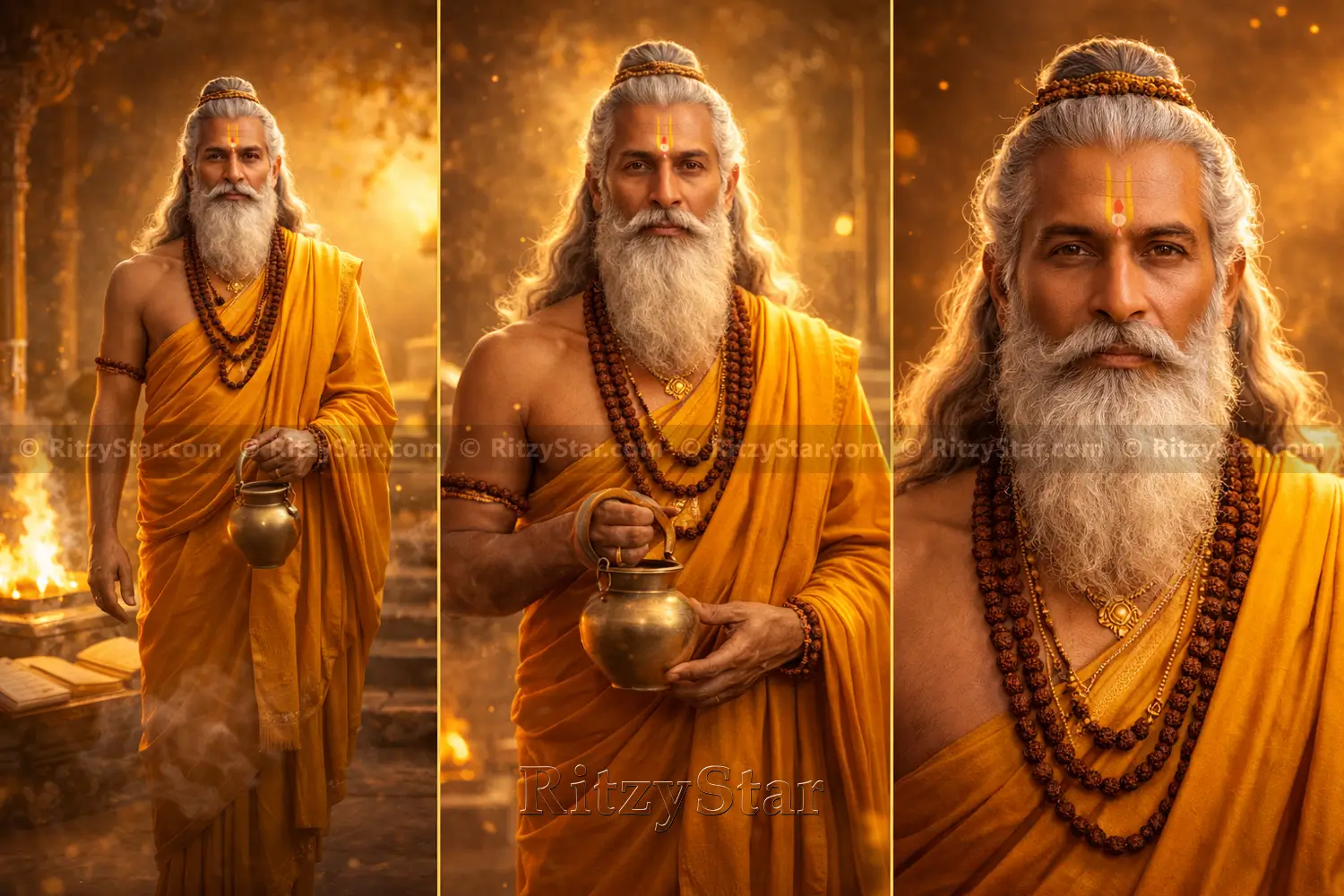

The Enchantress of Heaven, Mother of Shakuntala, Weaver of Destiny
“मेनका नाम देवर्षिरप्सरा जलजन्मजा।
ब्रह्मणः सृष्टिसंभूता विश्वमोहनरूपिणी॥”
— Ancient Verse
Meaning: Menaka, the celestial nymph born of the waters, created by Brahma himself, possessed a form that enchanted the entire universe.
🌸 Introduction: The Enchantress of the Celestial Realms
She was born from the churning of the cosmic ocean, a jewel of unparalleled beauty. She was trained in the arts of enchantment, her every gesture capable of turning the minds of the most disciplined sages. She was sent by the king of gods to break the penance of a sage whose spiritual power threatened the very order of heaven.
And yet, when her mission succeeded, she found herself undone by the one thing she was never meant to feel—love.
This is the story of Menaka.
Not merely the story of an apsara who seduced a sage, but of a celestial being who discovered her own humanity in the most unlikely of circumstances. Not the tale of a divine weapon wielded by the gods, but of a woman who, in fulfilling her duty, lost her heart. Not the legend of the mother of Shakuntala, but the untold journey of the woman herself—from the waters of creation to the forests of renunciation.
“स्वर्गस्य साधनं रूपं शापस्य कारणं तपः।
प्रेम्णो दुर्लभसंयोगं मेनकायाः कथा शुभा॥”
— by Author
Meaning: Her beauty was heaven’s instrument, her encounter the cause of a curse, her love a rare union—this is the sacred story of Menaka.
In the vast tapestry of Hindu mythology, where gods scheme and sages strive for liberation, Menaka stands at the intersection of duty and desire. She is at once the weapon of Indra’s politics and the unwitting mother of one of the Mahabharata’s most beloved characters. Her story asks us to consider: What happens when the enchantress becomes enchanted? When the weapon develops a heart? When the celestial nymph, designed to distract others from their purpose, finds herself distracted from her own?
💧 Who Was Menaka? The Nymph Born of Cosmic Waters
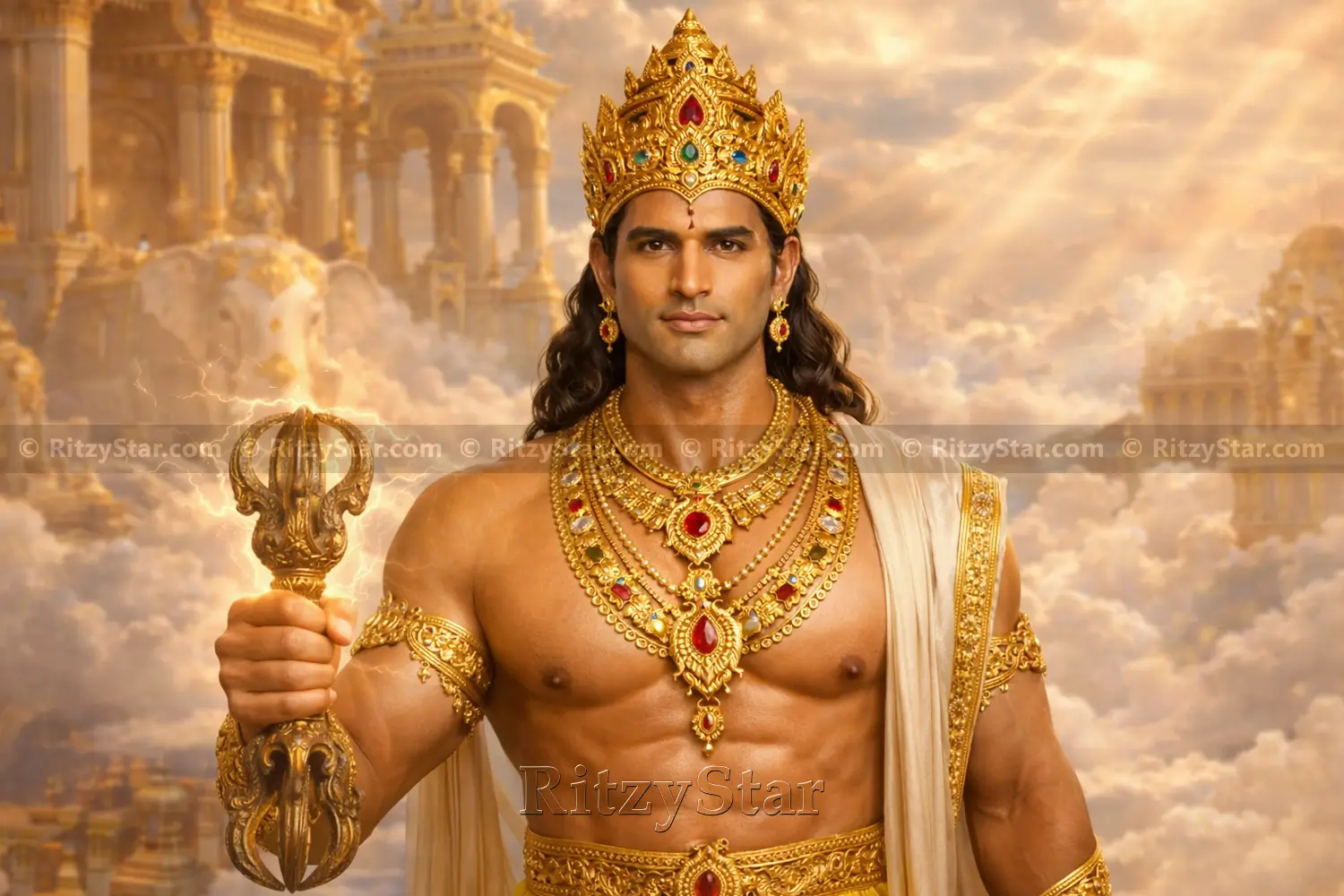
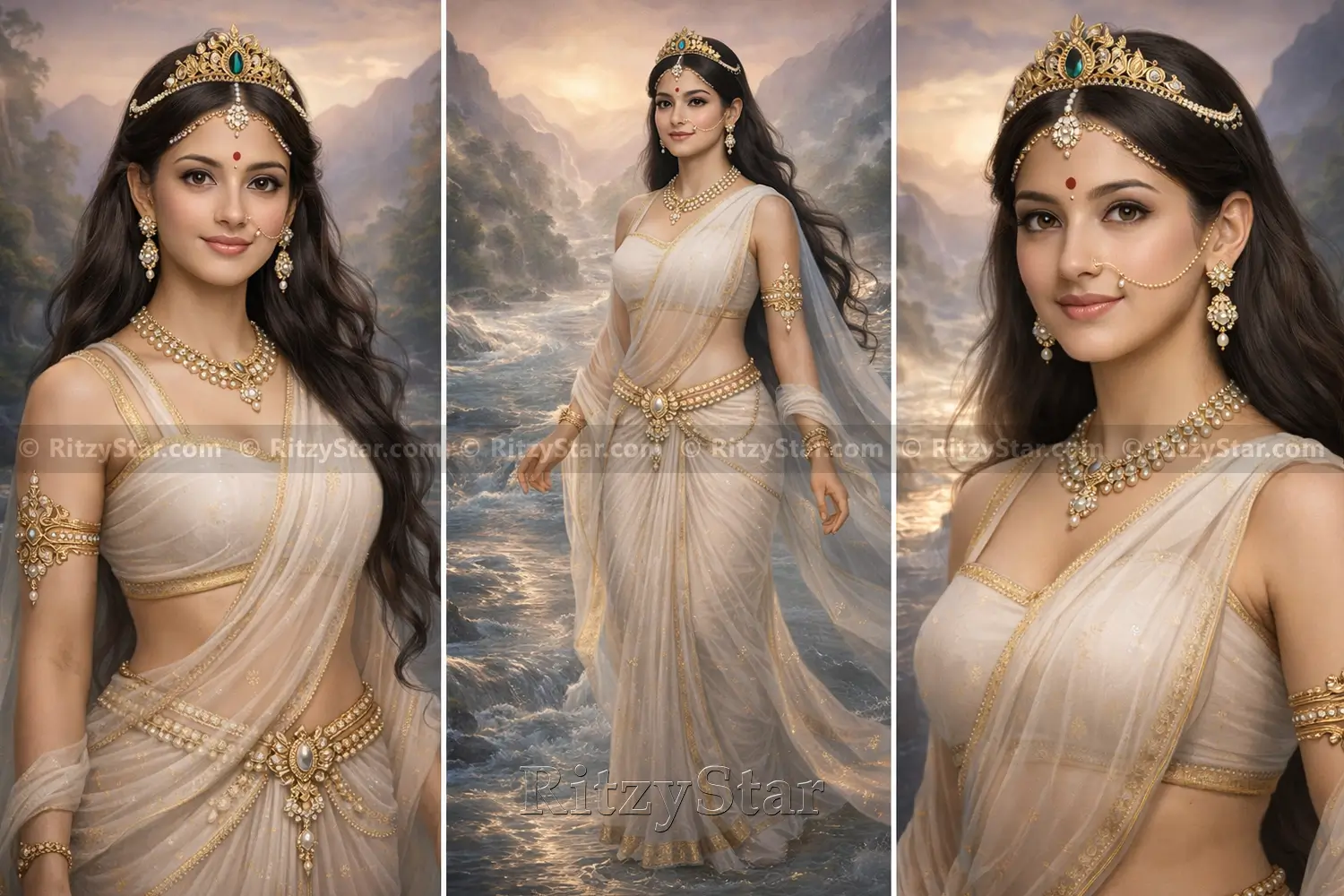
Menaka was one of the most celebrated apsaras in the celestial court of Indra, the king of the gods. The apsaras—celestial nymphs of unparalleled beauty—were created to serve as entertainers in the court of heaven, dancers who delighted the gods with their grace, and enchantresses who could break the most intense tapas (spiritual penance) when the cosmic balance required it.
“मेनका नाम विख्याता अप्सरासु वराप्सराः।
रूपेणाप्रतिमा दिव्या सुरैरपि सुपूजिता॥”
— by Author
Meaning: Menaka was renowned as the foremost among apsaras. She was divinely matchless in beauty, worshipped even by the gods.
The Origins of Menaka
According to the Puranas, Menaka was one of the apsaras who emerged during the Samudra Manthan—the great churning of the cosmic ocean by the devas and asuras. As the gods and demons churned the primordial waters, countless treasures arose: the wish-fulfilling tree, the celestial horse, the goddess Lakshmi, and the nectar of immortality. Among these emerged the apsaras—celestial maidens of such exquisite beauty that even the gods were entranced.
“क्षीरोदमन्थनाज्जाता मेनका जलसम्भवा।
रत्नभूता सुराणां च मोहनी कामरूपिणी॥”
— by Author
Meaning: Born from the churning of the ocean of milk, Menaka arose from the waters. She became a jewel among the gods, an enchantress who could take any form she desired.
Some texts, however, describe a different origin. According to the Brahmanda Purana, Menaka was created directly by Brahma, the creator god, specifically to serve in Indra’s court. Brahma fashioned her from the essence of the moon’s beauty, the fragrance of the jasmine, the sweetness of honey, and the rhythm of the ocean’s waves. She was, quite literally, created to be enchanting.
Her Name and Its Meaning
The name “Menaka” carries significance. Derived from the Sanskrit root “mana” (mind, thought, desire) with a diminutive suffix, it suggests “one who captivates the mind” or “she who is desired.” Some etymologists trace it to “menaka” meaning “speech” or “eloquence,” reflecting the apsara’s skills in the arts of conversation and seduction.
“मेनका नाम नाम्नैव मनःकान्ता प्रकीर्तिता।
मनः कामयते यस्मात् तस्मात् मेनकेत्यपि॥”
— by Author
Meaning: Menaka by name, she is called ‘beloved of the mind.’ Because she captivates the mind, she is thus named Menaka.
🏛️ The Celestial Court – Menaka in Indra’s Service
In the court of Indra, Menaka held a position of high honor. She was not merely a dancer or courtesan but a celestial being with specific duties and powers. The apsaras, though often misunderstood as mere seductresses, played a crucial role in maintaining cosmic order.
The Role of Apsaras
The apsaras served multiple functions in the celestial hierarchy:
First, they were entertainers. Their dances in Indra’s court celebrated victories over the asuras, honored visiting sages and deities, and maintained the splendor of Amaravati, the celestial capital.
Second, they were rewards. Great heroes and righteous kings who performed extraordinary deeds were often granted the company of an apsara in Indra’s court as a reward for their merit.
Third, they were weapons. When sages performed tapas (intense spiritual austerities) that threatened to unseat Indra from his throne or disrupt the cosmic balance, the apsaras were deployed to break their concentration. A sage whose tapas was broken lost the accumulated spiritual power—power that, if unchecked, could have endangered the gods.
“यदा यदा तपोभिः स्याद् देवराजो विलुप्यते।
तदा तदा व्रजन्त्याप्सराः कामरूपिण्यो मुनीन् प्रति॥”
— by Author
Meaning: Whenever the king of the gods was threatened by penance, the apsaras, capable of taking any form, would go to the sages.
Menaka was considered the most skilled among the apsaras in this art. Her beauty was not merely physical—she was trained in music, dance, poetry, and the subtle arts of conversation. She could adapt her form and manner to any man’s deepest desires, becoming the perfect enchantment for any sage.
Her Reputation
Among the celestial nymphs, Menaka was second only to Urvashi in fame. While Urvashi was celebrated for her passionate romance with King Pururavas (the story immortalized in Kalidasa’s Vikramorvashiyam), Menaka was known for her grace, her intelligence, and her mastery of the arts of enchantment.
“उर्वशी मेनका रम्भा तिलोत्तमा च विश्रुताः।
पञ्चाप्सरोवरा यासां मेनका नाम पञ्चमी॥”
— by Author
Meaning: Urvashi, Menaka, Rambha, and Tilottama are renowned as the five foremost apsaras, among whom Menaka is counted fifth.
Some lists place her third, after Urvashi and Rambha. Regardless of ranking, all sources agree: Menaka was among the most beautiful, most skilled, and most dangerous of the celestial nymphs.
🧘 The Mission – Indra’s Fear and the Sage Vishwamitra
The central event of Menaka’s story—the one that would define her legacy—began with a sage whose spiritual power threatened the heavens themselves.
The Rise of Vishwamitra
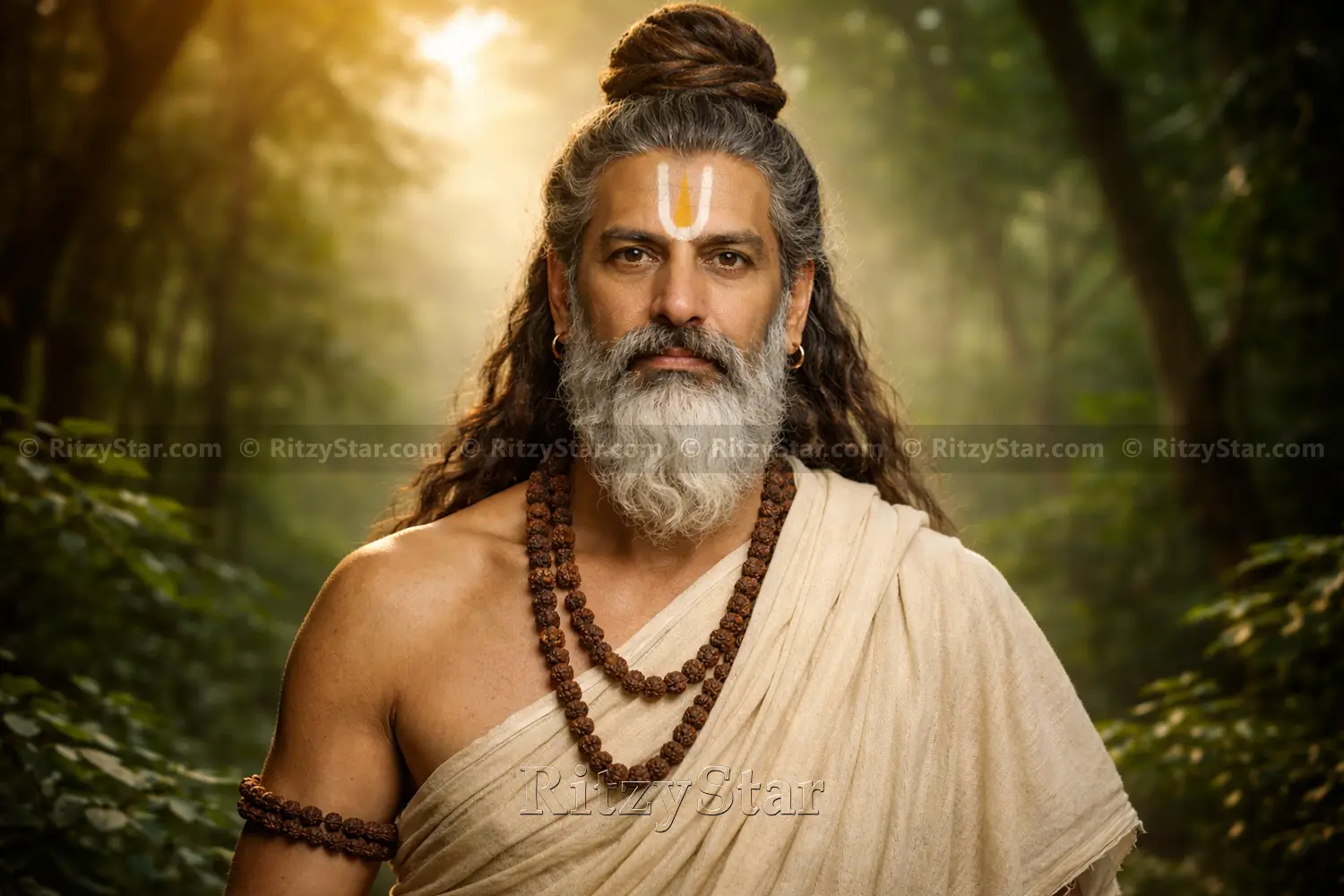
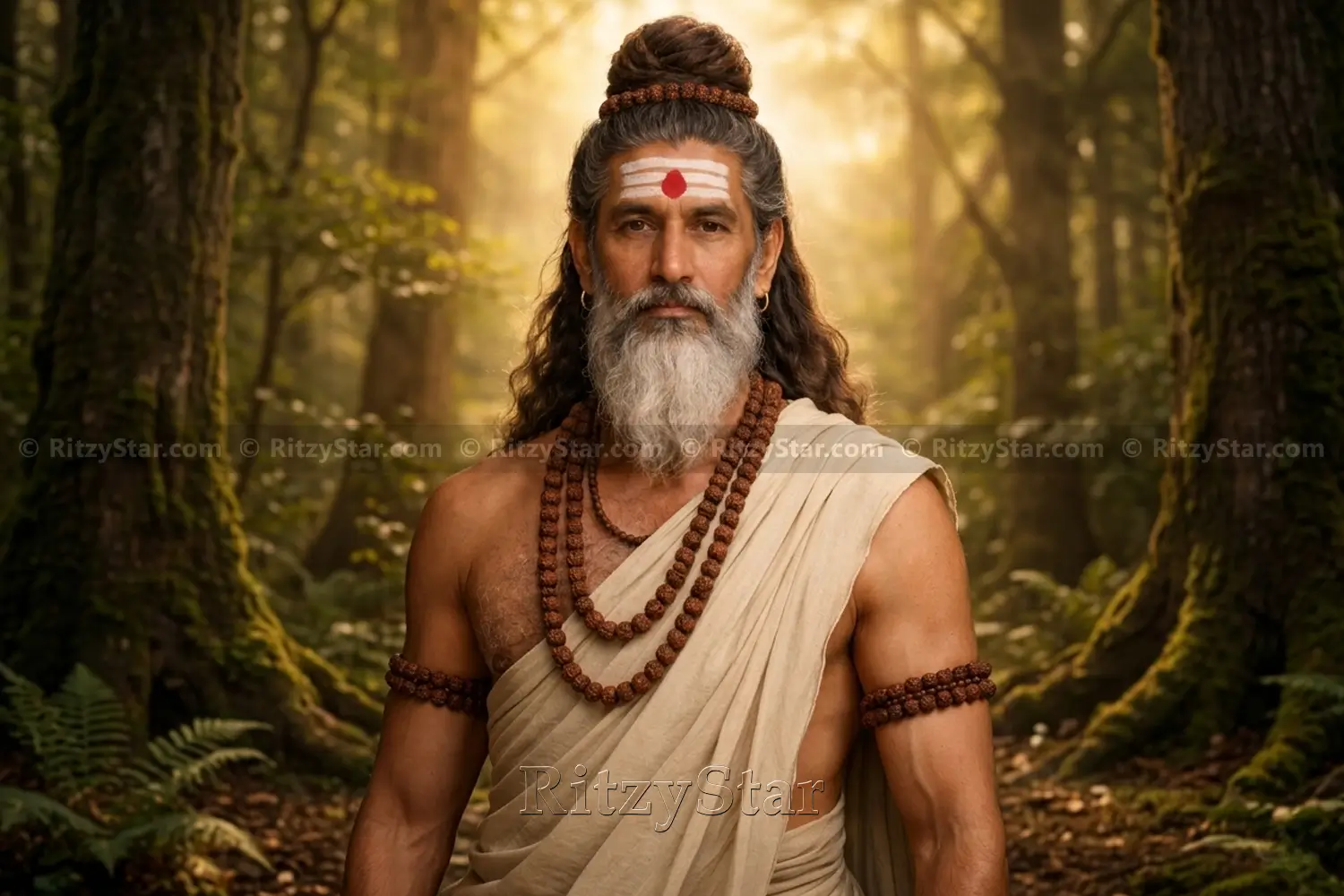
Vishwamitra had not always been a sage. He was born a king—Kaushika by name—a powerful warrior of the Chandravansha (Lunar Dynasty). Through centuries of intense penance, he had risen from being a kshatriya (warrior) to a brahmarshi (Brahmin sage), a transformation that was considered virtually impossible. His tapas was so powerful that it shook the very foundations of Indra’s throne.
“विश्वामित्रो महातेजा ययौ तपसि निश्चलः।
तस्य तेजोभयादिन्द्रो देवराजश्चचाल ह॥”
— by Author
Meaning: Vishwamitra of great splendor became unwavering in his penance. Indra, the king of the gods, trembled with fear at his power.
Indra had faced this situation before. Sages like Vashistha, Kashyapa, and others had performed such intense tapas that they had become more powerful than the gods themselves. If Vishwamitra continued unchecked, he could claim Indra’s throne—or worse, unravel the carefully maintained order of the cosmos.
The Council of the Gods
Indra called a council of the gods to address the threat. The assembled deities discussed various strategies, but all agreed on one thing: Vishwamitra’s tapas could not be broken by force. His spiritual power was too great, his will too strong. Only one weapon remained—the weapon of desire.
“न शस्त्रैर्न च युद्धेन जीयते स महामुनिः।
काममार्गेण जेतव्यो युष्माभिरप्सरोगणैः॥”
— by Author
Meaning: “He cannot be conquered by weapons nor by war, that great sage. He must be conquered through the path of desire—by you, the apsaras.”
The task was given to the apsaras. But this was no ordinary assignment. Vishwamitra was not a novice sage who could be easily distracted. He had already conquered his passions, subdued his senses, and attained a level of spiritual mastery that few in history had achieved. Breaking his penance would require the most skilled enchantress in the celestial court.
The Selection of Menaka
Among all the apsaras, Menaka was chosen. Some versions of the story say that Indra personally selected her, knowing that only her beauty, her intelligence, and her skills could succeed where others might fail.
“इन्द्र आहूय मेनकां समादिशद् याहि मुनेः।
विश्वामित्रस्य तपसो विघ्नं कुरु सुलोचने॥”
— by Author
Meaning: Indra summoned Menaka and commanded: “Go, beautiful-eyed one. Create an obstacle in the penance of Vishwamitra.”
But the gods did not leave Menaka to succeed by beauty alone. They arranged for favorable conditions: Kama (the god of desire) would assist with his flowery arrows; Vayu (the wind god) would create a spring breeze carrying the most intoxicating scents; Vasanta (spring) would make the forest burst into bloom. The stage was set for the most elaborate seduction ever conceived.
🌺 The Seduction – When Spring Came to the Forest
The scene of Vishwamitra’s penance was a forest on the banks of the river Kaushiki (named after his own family, the Kushikas). Here, the sage had sat in meditation for years—centuries, perhaps—his body reduced to skin and bone, his eyes closed to the world, his mind fixed on the Absolute.
The Arrival of Spring
According to Kalidasa’s immortal Shakuntala, the gods orchestrated the arrival of spring itself to aid Menaka’s mission. The season came early to Vishwamitra’s forest, transforming the austere landscape into a paradise.
“वसन्तः समयः प्राप्तः कुसुमायुधकर्मणा।
तरवो मुमुचुः पुष्पाणि द्विरेफाः पेतुरुत्सुकाः॥”
— by Author
Meaning: Spring arrived, armed with flowers for arrows. Trees released their blossoms, bees hummed with excitement.
The wind carried the scent of mango blossoms and jasmine. The air became warm and fragrant. The birds sang songs of courtship, and the very earth seemed to pulse with the energy of desire. Into this enchanted forest, Menaka descended.
The First Encounter
Menaka approached Vishwamitra’s ashram not as a celestial nymph but as a beautiful ascetic, seemingly lost in the forest. She had taken the form of a woman of extraordinary beauty—not in the opulent style of the celestial court, but in the simple, natural elegance that would appeal to a sage who had renounced worldly luxuries.
“सा ददर्श महात्मानं विश्वामित्रं तपोधनम्।
ध्यानस्थमचलप्रख्यं तेजोराशिमिव स्थितम्॥”
— by Author
Meaning: She beheld the great-souled Vishwamitra, whose wealth was his penance. He was fixed in meditation, unmoving as a mountain, blazing like a mass of concentrated light.
Vishwamitra, lost in his meditation, did not notice her at first. But Menaka did not rush. She had been trained for this moment. She began to sing—softly at first, then louder—a song of such sweetness that it seemed to come from the earth itself.
The Breaking of Penance
The song reached Vishwamitra’s consciousness. For the first time in centuries, his concentration wavered. He opened his eyes—and saw her.
“विश्वामित्रोऽपि तां दृष्ट्वा मेनकां रूपशालिनीम्।
चकितः कामबाणेन हृदये समताड्यत॥”
— by Author
Meaning: Vishwamitra, beholding the beautiful Menaka, was struck in his heart by the arrows of desire.
The texts describe the moment as the breaking of a dam. All the passion that Vishwamitra had suppressed for centuries—through sheer will, through ascetic discipline, through the focused power of his tapas—rushed back in a flood. He had conquered desire, but he had never learned to transform it. And so, when it returned, it overwhelmed him completely.
The seduction that followed is described in varying levels of detail across different texts. Some versions speak of Menaka and Vishwamitra spending years together—some say a decade, others say sixty years—in the forest, lost in each other. Vishwamitra forgot his penance, forgot his austerities, forgot everything except the celestial nymph who had entered his life.
“तस्याः स्पर्शेन मुनेः सर्वं तपो नष्टमभूत् तदा।
रागरक्तं मनश्चासीद् विषयेषु प्रसक्तवत्॥”
— by Author
Meaning: With her touch, all of the sage’s penance was destroyed. His mind became stained with passion, attached to worldly pleasures.
👶 The Unintended Consequence – The Birth of Shakuntala
But Menaka’s mission had consequences that none had foreseen—least of all Menaka herself.
The Unexpected Pregnancy
In the course of her time with Vishwamitra, Menaka conceived a child. This was not part of the plan. Apsaras, though capable of bearing children, were not meant to form permanent attachments. Their role was to enchant and depart, leaving no trace behind.
“मेनकायाः सुतोत्पत्तिर्न चिन्तिता सुरैः पुरा।
यदा जाता तदा सर्वे विस्मयं परमं गताः॥”
— by Author
Meaning: Menaka’s conception had not been anticipated by the gods. When it occurred, they were filled with the greatest astonishment.
Some versions of the story suggest that Menaka herself did not know she was pregnant until the later stages. Others say she knew but delayed her departure because she could not bear to leave. The texts are ambiguous about her feelings—a silence that speaks volumes.
The Departure
When the time came, Menaka knew she had to leave. Her mission was complete: Vishwamitra’s tapas was broken. Indra’s throne was safe. The gods were satisfied. There was no reason for her to remain.
But there was her child—a daughter, born in the forest, innocent of the politics that had brought her into existence.
“जातमात्रा तु तनया विश्वामित्रात् सुता शुभा।
चिन्तयामास मेनका किं करोमि व्रजामि किम्॥”
— by Author
Meaning: As soon as the daughter was born to Vishwamitra, the auspicious child, Menaka thought: “What should I do? Should I go?”
Menaka faced an impossible choice. She could take the child with her to the celestial realms—but an apsara’s daughter would have no place in Indra’s court. She could leave the child with Vishwamitra—but the sage, his penance broken, might reject her. She could raise the child herself—but that would mean abandoning her duties in heaven, becoming a fugitive from the gods she served.
The Abandonment
In the end, Menaka did what she believed was best for her daughter. She left the newborn on the banks of the river Malini, near the ashram of the sage Kanva, knowing that the gentle sage would find her and raise her as his own.
“न्यस्य बालां तटे तस्मिन् मालिन्याः पुत्रिकां शुभाम्।
मेनका स्वर्गमायाता दुःखिता भृशमातुरा॥”
— by Author
Meaning: Placing the daughter on the banks of the Malini, the beautiful child, Menaka returned to heaven, deeply sorrowful and anguished.
The abandonment is the most painful moment in Menaka’s story—and the most human. She was not a mother in any conventional sense. She had not wanted this child, had not planned for this child. And yet, when she held her daughter, something shifted within her. The apsara, trained to feel nothing but the pleasure of enchantment, discovered in herself the capacity for love—and for loss.
The child was found by Sage Kanva, who named her Shakuntala (“protected by the shakunta birds” who had sheltered her). She would grow up in Kanva’s ashram, unaware of her celestial origins, until one day she would meet King Dushyanta and become the mother of Bharata—the emperor whose name would be given to the land of India.
🌊 The Aftermath – Return to Heaven and the Weight of Memory
Menaka returned to Indra’s court, but she was not the same apsara who had descended to Vishwamitra’s forest. Something had changed within her.
The Reception in Heaven
Indra was pleased. His throne was secure. Vishwamitra’s tapas was broken. The mission was a success. Menaka was praised and honored, celebrated for her skill and her loyalty.
“इन्द्रः प्रीतोऽब्रवीद् देवीं मेनकां प्रणतां तदा।
साधु साधु महाभागे कृतं कार्यं सुरेशितुः॥”
— by Author
Meaning: Pleased, Indra spoke to the goddess Menaka, who bowed before him: “Well done, well done, blessed one. You have accomplished the task of the king of gods.”
But Menaka took no joy in the praise. She had done her duty—and in doing so, had lost something she had never known she possessed.
The Loss That Never Healed
The texts do not describe Menaka’s inner life after her return. But later events reveal the depth of her attachment. When Shakuntala, now a young woman, was abandoned by King Dushyanta (due to a curse that made him forget her), Menaka could not stay away.
“शकुन्तलां दुःखितां दृष्ट्वा मेनका दुःखमाप ह।
स्वसुतां परिचिन्त्यैव स्वर्गादागम्य सत्वरम्॥”
— by Author
Meaning: Seeing Shakuntala in distress, Menaka herself was filled with sorrow. Thinking of her daughter, she swiftly descended from heaven.
In the Mahabharata’s version of the Shakuntala story, Menaka appears at a crucial moment—not as an apsara fulfilling a mission, but as a mother answering her daughter’s need. When Shakuntala, pregnant and abandoned, is wandering in the forest, Menaka descends and takes her to the ashram of Sage Kashyapa, where she is cared for until her son Bharata is born.
“तामादाय मेनका तु शकुन्तलां सुदुःखिताम्।
कश्यपस्याश्रमं प्राप्य स्थापयामास सत्कृताम्॥”
— by Author
Meaning: Taking the deeply sorrowful Shakuntala, Menaka reached the ashram of Kashyapa and established her there with honor.
This moment reveals the transformation that had occurred in Menaka. The apsara who was sent to break a sage’s penance had become a mother—a mother who could not openly acknowledge her daughter but who would never abandon her to suffering.
🕉️ The Deeper Meaning – Allegories and Interpretations
The story of Menaka and Vishwamitra has fascinated and perplexed readers for millennia. On its surface, it appears to be a straightforward tale of seduction and betrayal. But traditional commentators have discerned deeper layers of meaning beneath this narrative surface.
The Struggle Between Asceticism and Worldliness
At its core, the Menaka-Vishwamitra story represents the eternal tension between two paths: the path of renunciation (sannyasa) and the path of engagement (pravritti). Vishwamitra, a kshatriya king, chose to become a brahmin sage—a crossing of boundaries that challenged the established order. His tapas was so powerful that it threatened to break the cosmic balance, and Menaka was the instrument that restored that balance.
“तपसा प्राप्यते ब्रह्म सुखं वा यदि वा ध्रुवम्।
तपसो विघ्नकर्तारः सुराः स्युः कामरूपिणः॥”
— by Author
Meaning: Through penance one attains Brahman, whether happiness or the eternal. Those who create obstacles to penance are the gods, taking enchanting forms.
But the story is not simply a celebration of the gods’ victory over an overly ambitious sage. Vishwamitra’s penance, though broken, was not destroyed. After his fall, he rose again—more determined, more powerful, and ultimately more wise. He learned that tapas without control of the passions is unstable, that true renunciation comes not from suppressing desire but from transforming it.
The Transformation of Menaka
For Menaka, the story represents something equally profound: the awakening of the heart. Created as an instrument of divine politics, trained to feel nothing but the pleasure of her art, she discovered in herself the capacity for love—and for loss. Her abandonment of Shakuntala was not cruelty but sacrifice: she gave her daughter to a life of peace in Kanva’s ashram rather than a life of uncertainty in Indra’s court.
“मेनका नाप्सरा केवला माता सती शकुन्तलाम्।
जननीहृदयेनैव त्यक्त्वा पुत्रीं रुरोद ह॥”
— by Author
Meaning: Menaka was not merely an apsara but a mother to Shakuntala. With a mother’s heart, having left her daughter, she wept.
The apsara who had been taught to enchant without attachment discovered the pain of attachment—and in that pain, found her humanity.
The Cosmic Balance
Some interpreters see the Menaka-Vishwamitra encounter as representing the necessary interplay of forces in the universe. Tapas (ascetic heat) generates power, but unchecked tapas can destroy the balance of creation. Kama (desire) is not an enemy but a counterforce—not to be eliminated but to be integrated.
“न कामो नापि क्रोधो वा हन्तव्यौ साधुभिर्मुने।
तौ हि वश्यौ यदा स्यातां जितात्मा स्यात्तदा नरः॥”
— by Author
Meaning: Neither desire nor anger should be destroyed by the virtuous, O sage. When they are brought under control, then a person is said to have conquered himself.
Vishwamitra’s great tapas was broken, but his great wisdom was born from that breaking. He learned to integrate desire rather than simply suppress it—a lesson that would eventually lead him to become one of the most revered sages in Hindu tradition.
👨👩👧 The Family of Menaka
| Sl.No | Name | Relationship | Children | Remarks |
|---|---|---|---|---|
| 1 | Sage Vishwamitra (Kaushika – King turned Brahmarshi) | Union (by divine arrangement to break his penance) | 1. Shakuntala – Daughter born in the forest; raised by Sage Kanva; later married King Dushyanta; mother of Emperor Bharata, after whom India (Bharatavarsha) is named. | This union was orchestrated by Indra to break Vishwamitra’s intense tapas, which threatened the cosmic balance. Menaka descended from heaven with the assistance of Kama (desire), Vayu (wind), and Vasanta (spring) to create the perfect enchantment. The relationship lasted many years—some texts say ten, others sixty—during which Vishwamitra completely forgot his penance. When their daughter was born, Menaka abandoned her on the riverbank and returned to heaven, unable to raise her in the celestial realm. |
| 2 | No other known unions/partners | Menaka is not recorded to have any other significant unions or permanent consorts. As an apsara, her role was to serve in Indra’s court and occasionally be sent on missions to test or break the penance of sages. Unlike some apsaras who had multiple notable relationships (such as Urvashi with King Pururavas), Menaka’s lasting legacy is defined by her one significant union with Vishwamitra and her daughter Shakuntala. | — | Apsaras were not typically bound to permanent relationships. They served in the celestial court, danced for the gods, and were sometimes dispatched as divine instruments. Menaka’s union with Vishwamitra was her most significant—and the only one that produced a child who would shape history. Some later folklore mentions other brief encounters, but these are not attested in the major Puranic or epic sources. |
Notes on the Family Table:
- Vishwamitra’s Lineage – Vishwamitra was originally a king named Kaushika, a descendant of the Lunar Dynasty (Chandravansha). Through his penance, he transformed himself into a brahmarshi—one of the most revered sages in Hindu tradition. His lineage includes numerous other sons from other unions, but Menaka’s daughter Shakuntala is among his most significant offspring due to her role in the Mahabharata.
- Shakuntala’s Legacy – Shakuntala married King Dushyanta and gave birth to Bharata, the legendary emperor whose name was given to the land of India (Bharatavarsha). Through Bharata, Menaka became the ancestress of both the Kauravas and Pandavas—the central families of the Mahabharata.
- Menaka’s Other Associations – Some Puranic lists mention Menaka as one of the apsaras who attended various celestial events, but she is not recorded to have any other significant unions or offspring. Her story is uniquely tied to the Vishwamitra episode.
- The Apsara’s Life – Unlike mortal women, apsaras were not bound by the same social structures. They could form temporary unions, bear children, and return to their celestial duties without the stigma that mortal women would face. Menaka’s abandonment of Shakuntala, while painful, was not considered a moral failing within the context of her role—though her later actions reveal that she felt the loss deeply.
- Kanva as Foster Father – Though not a biological relative, Sage Kanva played a crucial role as Shakuntala’s foster father. Menaka placed her daughter on the riverbank knowing that Kanva’s ashram was nearby and that the compassionate sage would care for the child.
🎭 Menaka in Literature and Art
Menaka’s story has inspired countless works of literature, drama, and art across the centuries. Her portrayal has evolved, reflecting changing attitudes toward women, desire, and the relationship between the human and the divine.
In Kalidasa’s Shakuntala
The most famous depiction of Menaka appears indirectly in Kalidasa’s Abhijnana Shakuntalam (The Recognition of Shakuntala), one of the greatest works of Sanskrit literature. Kalidasa does not show Menaka directly, but her presence haunts the play—especially in the character of Shakuntala, whose beauty and grace reflect her celestial origins.
“न खलु त्वत्कथा योगादप्सरोजन्मना मया।
विश्वामित्रात्मजा जाता शकुन्तला सुता शुभा॥”
— by Author
Meaning: “It is indeed through connection with your story that I, born of an apsara, became Shakuntala, the daughter of Vishwamitra, the auspicious child.”
Kalidasa uses Menaka’s story to explore themes of destiny, identity, and the mysterious ways in which the divine and human intersect. Shakuntala’s abandonment and subsequent recognition mirror the larger pattern of loss and reunion that runs through Indian literature.
In the Mahabharata
The Mahabharata contains the earliest known version of the Shakuntala story, including Menaka’s role. Here, Menaka appears not as a seductress but as a mother—descending from heaven to rescue her daughter when she is abandoned by Dushyanta.
“तां दृष्ट्वा मेनका देवी स्वसुतां क्लिष्टचारिणीम्।
उपगम्याब्रवीद् वाक्यं पुत्रि किं करवाणि ते॥”
— by Author
Meaning: Seeing her daughter, the goddess Menaka, living in distress, approached her and said, “Daughter, what can I do for you?”
This maternal intervention reveals a different dimension of Menaka—one that complicates the earlier image of the cold, calculating enchantress. In the epic, she is not merely a weapon of the gods but a mother who, despite the constraints of her celestial role, reaches out to protect her child.
In Puranic Literature
The various Puranas—the Vishnu Purana, the Brahmanda Purana, the Bhagavata Purana—contain scattered references to Menaka. These texts focus primarily on her role in the Vishwamitra episode, treating her as a necessary instrument in the cosmic drama of asceticism and desire.
“विश्वामित्रस्तपो यावद् आसीद् दुष्करमास्थितः।
तावन्मेनकया तस्य तपोभङ्गः कृतः सुरैः॥”
— by Author
Meaning: As long as Vishwamitra performed difficult penance, the gods, through Menaka, caused his penance to be broken.
The Puranas generally take a neutral tone toward Menaka—neither celebrating nor condemning her actions. She is presented as a tool of the gods, acting not out of personal desire but out of cosmic necessity.
In Regional Traditions
In various regional traditions across India, Menaka is venerated as a mother figure—especially in regions associated with the Shakuntala story. Temples dedicated to Shakuntala often include depictions of Menaka, acknowledging her role as the celestial mother of the dynasty that would produce the Bharata emperors.
In Kerala, the Menaka story is part of the region’s rich performance traditions. The Koodiyattam (Sanskrit theater) tradition includes plays that depict the Vishwamitra-Menaka episode with great emotional depth, emphasizing the tragedy of their separation and Menaka’s abandonment of her daughter.
🌸 The Legacy of Menaka – Mother of a Dynasty
Menaka’s greatest legacy is not her beauty or her skills as an enchantress—it is her daughter Shakuntala, and through Shakuntala, her grandson Bharata.
Bharata – The Emperor
Bharata, the son of Shakuntala and Dushyanta, became one of the most powerful emperors in Indian tradition. His name was given to the land of India (Bharatavarsha), and his descendants—the Bharatas—were the central family of the Mahabharata.
“यस्य नाम्ना इदं सर्वं भारतं क्षेत्रमुच्यते।
स भरतः सम्राडासीत् पुत्रः शकुन्तलात्मजः॥”
— by Author
Meaning: He after whom this entire land is called Bharata—that emperor Bharata was the son of Shakuntala.
Through Bharata, Menaka became the ancestress of the Kauravas and Pandavas, the families whose great war forms the central narrative of the Mahabharata. In this sense, Menaka’s blood flows through the veins of virtually every major character in the epic.
The Lunar Dynasty Connection
Bharata was a king of the Lunar Dynasty (Chandravansha), which traced its lineage to the moon god Soma. Through her grandson, Menaka became connected to this illustrious lineage—the same dynasty that produced Yayati, the Pandavas, and many other legendary figures.
“चन्द्रवंशसमुद्भूतः भरतो नाम विश्रुतः।
तस्य माता शकुन्तला तस्यै मेनकया सुता॥”
— by Author
Meaning: Bharata was renowned as born in the Lunar Dynasty. His mother was Shakuntala, and she was Menaka’s daughter.
This connection elevated Menaka from a celestial nymph—a figure of pleasure and enchantment—to a matriarch of the most important dynasty in Indian tradition. Her union with Vishwamitra, though born of divine politics, became the source of one of the great royal lineages of antiquity.
The Philosophical Legacy
Beyond the dynastic legacy, Menaka’s story has contributed to Indian philosophical discourse on the nature of desire, attachment, and the relationship between asceticism and engagement with the world.
“न निवृत्तिर्न संसारः सत्यं सर्वं तथापि च।
मेनकायाश्चरित्रेण दर्शितं विश्वसंकटम्॥”
— by Author
Meaning: Neither renunciation nor engagement, truth is everything; through Menaka’s story, the world’s complexity is revealed.
The story suggests that neither complete renunciation nor complete engagement is sufficient. Vishwamitra’s asceticism, without the integration of desire, was unstable. Menaka’s role as a divine instrument, without the capacity for genuine love, was incomplete. The meeting of the two—and the birth of Shakuntala from that meeting—represents the possibility of integration, of wholeness.
🪷 Menaka in Tantric and Yogic Traditions
Beyond the narrative traditions, Menaka holds a place in certain Tantric and Yogic texts as a symbol of the challenges faced by spiritual practitioners.
The Apsara as Obstacle
In yogic literature, the apsara represents one of the obstacles on the path to liberation. The practice of brahmacharya (celibacy) is considered essential for accumulating spiritual energy (ojas). The apsara, representing desire and distraction, tests the practitioner’s mastery over his senses.
“आप्सरसो योगिनां मार्गे विघ्नरूपाः प्रकीर्तिताः।
यासां संगेन नश्यन्ति तपांसि वर्षार्जितानि॥”
— by Author
Meaning: Apsaras are said to be obstacles on the path of yogis. Through association with them, penance accumulated over years is destroyed.
Menaka, as the most skilled of the apsaras, represents the most refined and therefore most dangerous form of this obstacle. Her beauty, her intelligence, her ability to adapt to the deepest desires of the sage—all these make her the ultimate test of spiritual discipline.
The Integration of Desire
However, some Tantric traditions interpret the Menaka-Vishwamitra story differently. Here, the union of the apsara and the sage is not a fall but a transformation—the integration of desire into spiritual practice rather than its suppression.
“न विघ्नो न च पातश्च संयोगो योगिनः स्त्रिया।
यदि विज्ञानसंयुक्तः सा मुक्तिरिति कथ्यते॥”
— by Author
Meaning: The union of a yogi with a woman is neither an obstacle nor a fall—if it is combined with wisdom, it is said to be liberation.
In this reading, Vishwamitra’s “fall” is actually a necessary stage in his spiritual evolution. He needed to experience desire fully—to be consumed by it, to be broken by it—in order to move beyond it. His subsequent penance, after the Menaka episode, was more powerful and more stable because it was based not on suppression but on genuine transcendence.
🌅 Conclusion – The Enchantress Who Was Herself Enchanted
The story of Menaka is not merely the story of a celestial nymph who seduced a sage. It is the story of a being who discovered her own humanity in the most unlikely of circumstances—through the experience of love, loss, and motherhood.
“मेनका कामसंयोगे मातृत्वे च द्विधा गता।
स्वर्गं च मातरं चैव न त्यक्तुं शक्नुयाद् यतः॥”
— by Author
Meaning: Menaka, divided between desire and motherhood, could neither renounce heaven nor her child.
She was created as an instrument, trained to feel nothing, deployed to break the greatest sage of her age. And she succeeded. But in succeeding, she failed—failed to remain the cold, calculating enchantress the gods required. She fell in love. She became a mother. And when duty required her to abandon her child, she discovered that her heart had become human.
The Unanswered Questions
Her story leaves us with questions that resonate across time:
What did Menaka feel when she returned to Indra’s court, praised for her success, knowing she had left her newborn daughter alone on a riverbank?
Did she watch Shakuntala from heaven, invisible, seeing her grow up without a mother?
When Shakuntala was rejected by Dushyanta, what did Menaka feel—the apsara who knew exactly what it meant to be used and then discarded?
The texts do not answer these questions. Menaka’s inner life remains, like the inner lives of so many mythological women, largely hidden. But in her actions—her intervention to save Shakuntala, her presence at her daughter’s times of need—we glimpse a heart that had been transformed.
The Mother of a Nation
In the end, Menaka’s legacy is not her beauty or her skills as an enchantress. It is her daughter Shakuntala, and through Shakuntala, her grandson Bharata—the emperor whose name was given to the land of India. Every person born in Bharatavarsha, in this sense, is connected to Menaka, the celestial nymph who descended to earth and found, in the depths of the forest, something she never knew she possessed.
“या देवी सर्वभूतेषु मेनकारूपेण संस्थिता।
नमस्तस्यै नमस्तस्यै नमस्तस्यै नमो नमः॥”
— by Author
Meaning: To that goddess who abides in all beings in the form of Menaka, salutations to her, salutations to her, salutations to her again and again.
Menaka, the enchantress of heaven, the mother of a dynasty, the woman who learned to love—her story continues to resonate, reminding us that even those created as instruments can become architects of destiny, that even the most carefully trained heart can awaken to love, and that from the most unlikely unions can emerge the foundations of nations.
Discover more from RitzyStar
Subscribe to get the latest posts sent to your email.