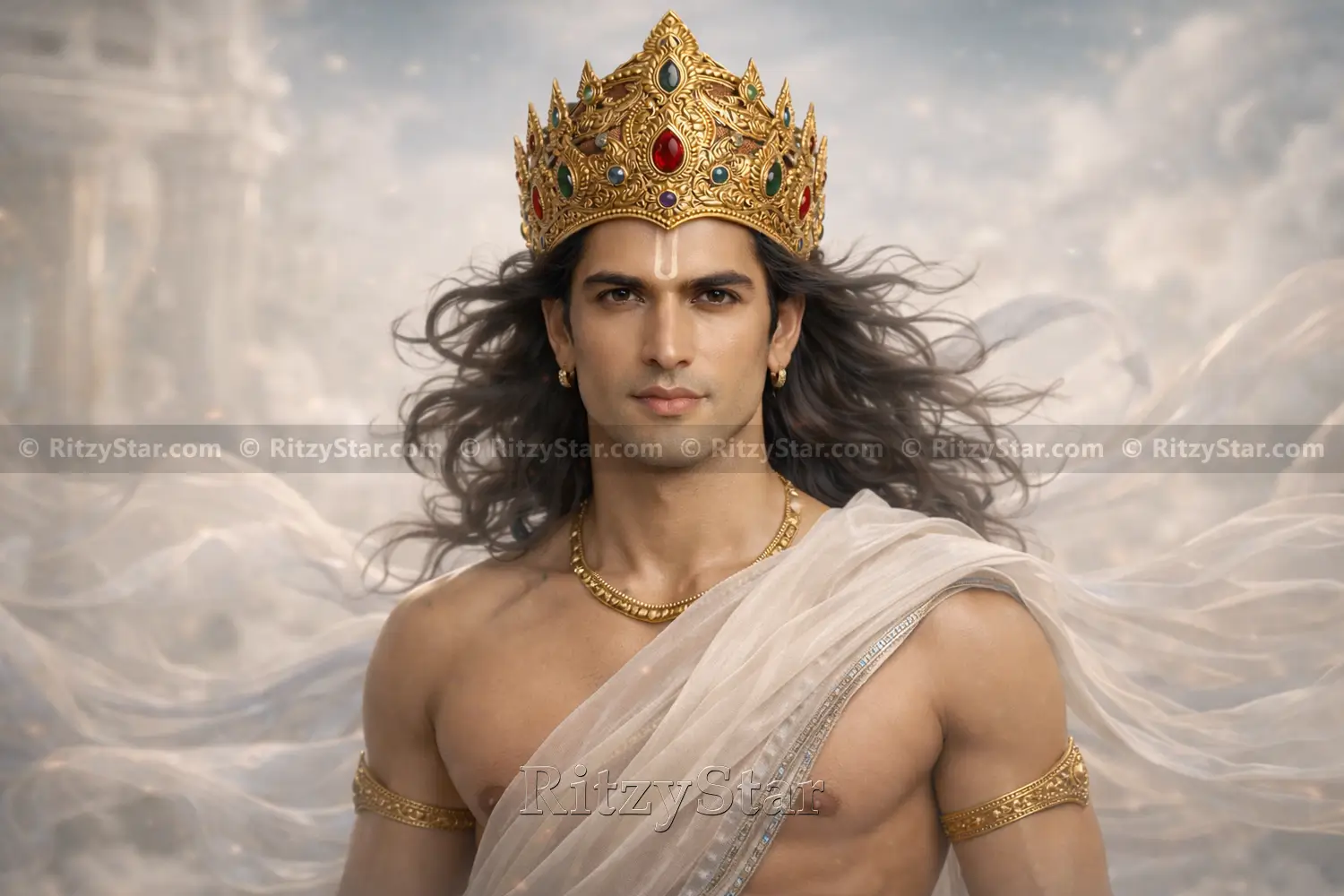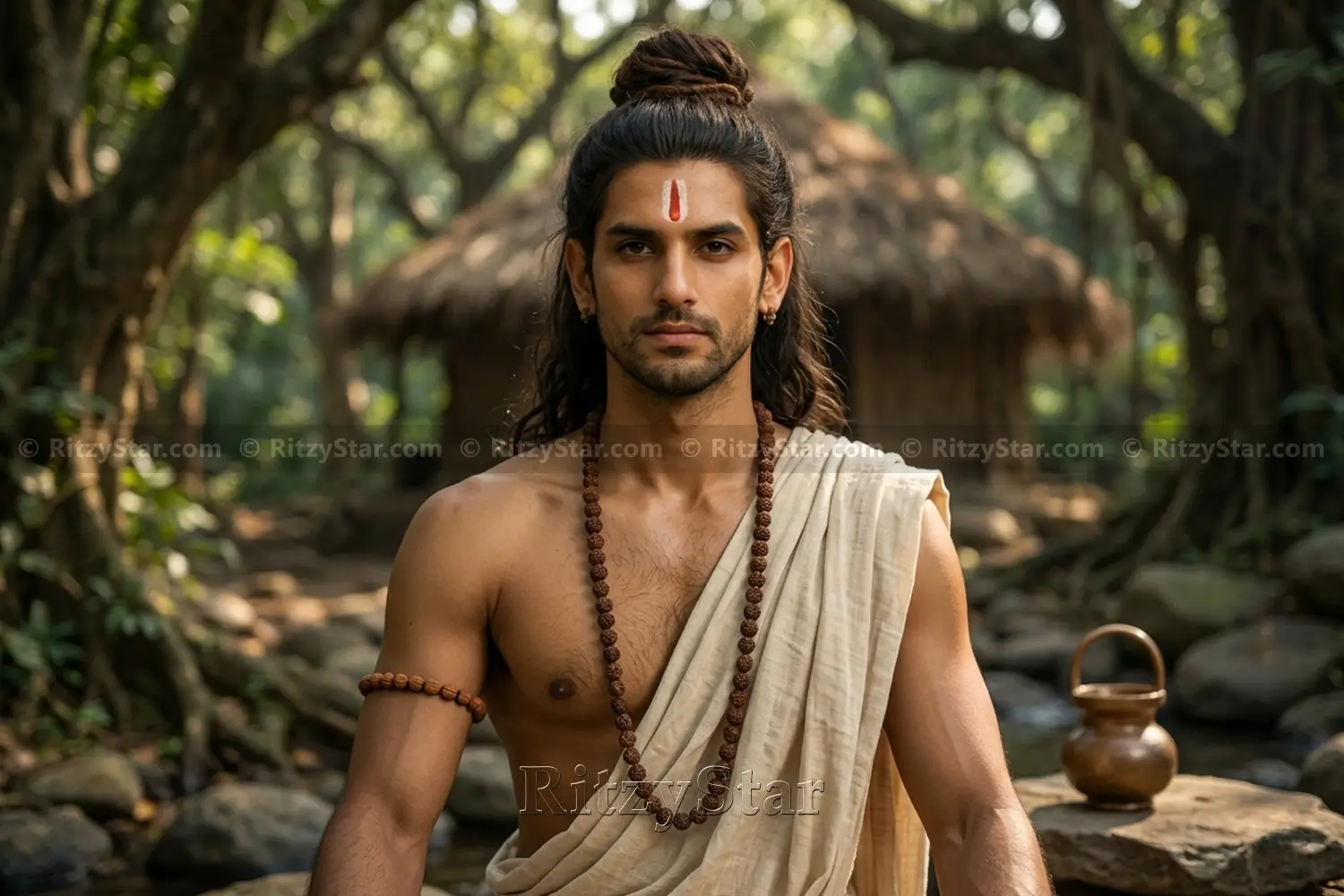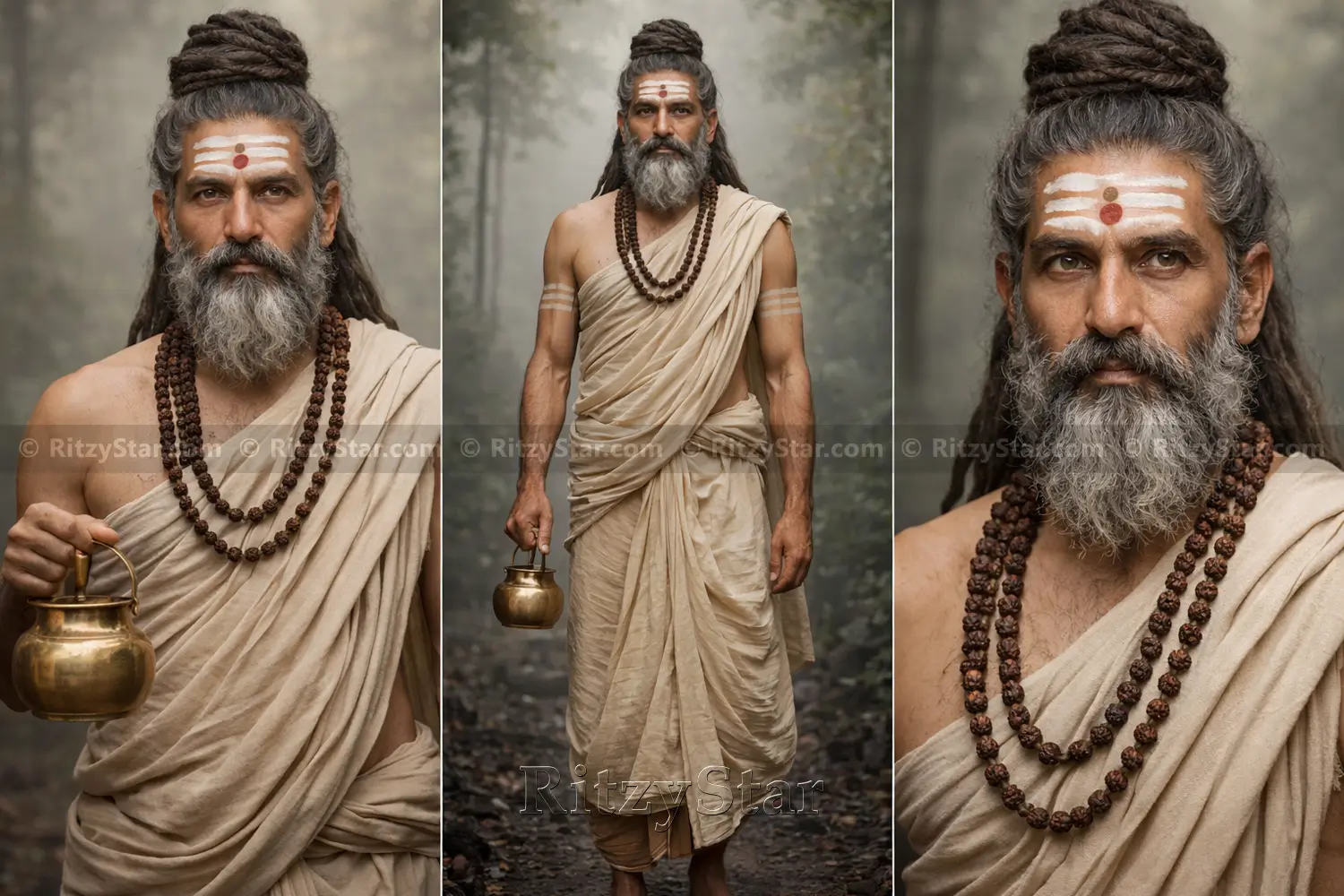
The Master of Weapons, The Guru Whose Love Became His Curse
“धनुर्वेदस्य कर्ता स आचार्यो द्रोण एव सः।
ब्रह्मदत्तवरो योद्धा कृपस्य भगिनीपतिः॥”
— Ancient Verse
Meaning: He was the founder of the science of archery, the preceptor Drona himself. The warrior blessed by Brahma, the husband of Kripi.
🏹 Introduction: The Teacher Who Shaped an Era
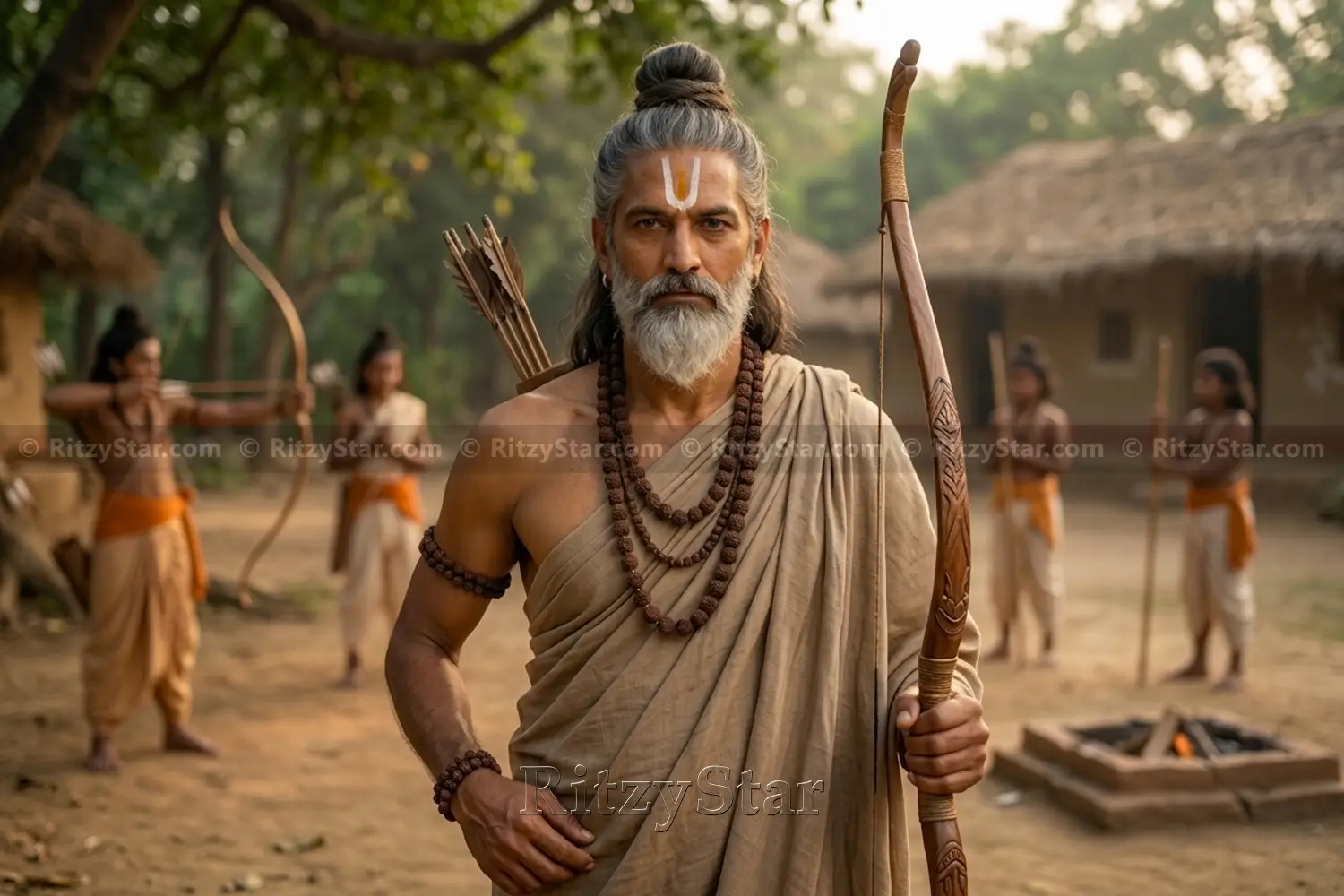
He was born in a cave with nothing but his parents’ prayers. He became the greatest master of weapons the world has ever known. He taught gods and demons, princes and outcasts. His students included the mightiest warriors of an age—Arjuna, Bhima, Ashwatthama, Karna, Duryodhana—names that still echo through time.
He was Dronacharya, the warrior-sage who single-handedly shaped the course of the Mahabharata war.
And yet, for all his power, for all his knowledge, for all his students who became legends, Drona’s story is one of profound tragedy. He was a man who lived by honor and died by duty. A teacher who loved his students but was destroyed by their rivalries. A father whose love for his son became the very weapon that killed him.
“न धनुर्वेदतत्त्वज्ञो द्रोणादन्यो महीतले।
ब्रह्मास्त्रस्य प्रयोक्ता च संहर्ता च स उत्तमः॥”
— by Author
Meaning: No other on earth knew the essence of archery like Drona. He was the supreme user and withdrawer of the Brahmastra.
In the vast tapestry of Indian mythology, Drona occupies a unique place. Not a god, not a demon, not a king—but something perhaps more important: a teacher. A guru whose influence shaped not just warriors but the destiny of a civilization.
📜 Who Was Drona? The Sage Born of Sacrifice
Drona was born not of ordinary circumstances but of divine blessing and human longing. His father was the sage Bharadvaja, one of the great rishis of ancient India, the author of hymns in the Rigveda and the founder of a powerful lineage of scholars.
The Story of His Birth
The Mahabharata tells a remarkable story of Drona’s conception. Sage Bharadvaja was once performing austerities on the banks of the Ganga when he saw the celestial nymph Ghritachi bathing. Overcome by desire, his seed was released. He collected it in a vessel (drona in Sanskrit) and placed it in a secluded spot. From that vessel, a child was born—a boy radiant with the brilliance of his divine lineage. He was named Drona, after the vessel of his birth.
**“भरद्वाजो महातेजा गङ्गायास्तीरमाश्रितः।
अपश्यदप्सरां रम्यां घृताचीं नाम नामतः॥
तस्य दृष्ट्वा च तां रम्यां रेतश्चस्कन्द वै तदा।
तदा तद्रेतः संगृह्य द्रोणे चिक्षेप भार्गवः॥
ततो द्रोणः समभवद् भरद्वाजान्महायशाः।”
** — Mahabharata, Adi Parva
Meaning: The greatly radiant Bharadvaja, residing on the banks of the Ganga, saw the beautiful nymph named Ghritachi. Upon seeing her, his seed was released. Collecting that seed, the descendant of Bhrigu placed it in a vessel. From that, the greatly renowned Drona was born from Bharadvaja.
Thus, Drona was born fully-formed, a child of divine essence, carrying within him the spiritual power of his sage father and the celestial beauty of his nymph mother.
Early Life and Training
Drona grew up in his father’s hermitage, immersed in the study of the Vedas, the Upanishads, and the sacred texts. But his destiny lay elsewhere. From a young age, he displayed an extraordinary aptitude for the martial arts—particularly archery, the science of weapons, and the knowledge of divine astras (celestial weapons).
“अस्त्राणां सर्वविद्यानां धनुर्वेदस्य च प्रभुः।
द्रोणः परमविद्वानासीद् भरद्वाजसुतस्तदा॥”
— by Author
Meaning: Drona was the master of all weapons, all sciences, and archery itself. The son of Bharadvaja was supremely learned.
According to the Puranas, Drona underwent rigorous training under the warrior-sage Parshurama, the sixth avatar of Vishnu, who was the greatest master of weapons in his age. Parshurama, impressed by Drona’s dedication and skill, imparted to him the secrets of divine weapons—including the legendary Brahmastra, the most powerful weapon in existence.
Some versions of the story suggest that Parshurama also gave Drona a celestial bow and inexhaustible quivers, recognizing him as a worthy successor to the tradition of martial sages.
💍 The Union with Kripi – The Scholar and the Warrior
As Drona grew into manhood, the question of marriage arose. The scriptures speak of a suitable match found in Kripi, the sister of Kripa—another great warrior-sage who would later become the royal preceptor of Hastinapura.
Who Was Kripi?
Kripi was the daughter of the sage Sharadvan and the celestial nymph Janapadi. Her brother, Kripa, was born alongside her in extraordinary circumstances—the sage Sharadvan, upon seeing the nymph, experienced the same release of seed that had given birth to Drona, and the twins Kripa and Kripi were born from clumps of reed grass.
“शरद्वतः सुता चैव कृपी नाम महाप्रभा।
द्रोणाय भार्यार्थे दत्ता सा धनुर्वेदकोविदा॥”
— by Author
Meaning: The daughter of Sharadvan, the greatly radiant Kripi by name, was given to Drona as wife. She too was learned in the science of archery.
Kripi was not merely a wife but a partner in the truest sense. Like Drona, she came from a lineage of warrior-sages. Like him, she was learned in the Vedas and the martial arts. Their union was a meeting of equals—two minds devoted to the pursuit of knowledge, two souls bound by dharma and duty.
The Family of Drona
| Sl.No | Name | Relationship | Children | Remarks |
|---|---|---|---|---|
| 1 | Kripi (Krupī) | Wife (daughter of Sage Sharadvan and Janapadi; sister of Kripa) | 1. Ashwatthama – The only son of Drona. Born with a divine gem (mani) on his forehead that granted him immunity from hunger, thirst, and fatigue. Became a mighty warrior, master of divine weapons, and one of the seven immortals (Chiranjivi) cursed to wander the earth until the end of Kali Yuga. | Kripi was Drona’s only wife. Their marriage was a union of two learned warrior-sage lineages. She was devoted to Drona and shared his life of both poverty and prosperity. After Drona’s death in the Kurukshetra war, she retreated to the forest with her son Ashwatthama. |
Ashwatthama – The Beloved Son
The only child born to Drona and Kripi was a son named Ashwatthama—a name that would become as legendary as his father’s, though for very different reasons.
“अश्वत्थामा महावीर्यो द्रोणपुत्रो महारथः।
बाल्यादेव धनुर्वेदे निष्णातः पितुराश्रमे॥”
— by Author
Meaning: Ashwatthama of great valor, Drona’s son, was a mighty warrior. From childhood itself, he was trained in archery in his father’s hermitage.
Ashwatthama was born with a divine gem (mani) embedded in his forehead. This gem was not merely an ornament—it granted him protection from all weapons, immunity from hunger, thirst, and fatigue, and the power to instill fear in all beings. The gem was a testament to his extraordinary nature and a burden he would carry throughout his life.
Drona’s love for Ashwatthama was boundless. It was this love that would later become his greatest weakness—the vulnerability that his enemies would exploit to bring about his downfall.
“पुत्रप्रेम्णा स आचार्यो द्रोणः परमपीडितः।
तच्च प्रेमैव मृत्युः स्याद् युद्धे युधिष्ठिरवाक्यतः॥”
— by Author
Meaning: Tormented by love for his son, the preceptor Drona suffered greatly. That very love became his death when Yudhishthira spoke falsely.
🏔️ The Years of Poverty – When the Guru Had Nothing
Despite his lineage, despite his knowledge, despite his unmatched skill in the martial arts, Drona’s early married life was marked by poverty. He lived in a simple hermitage with Kripi and young Ashwatthama, surviving on whatever the forest provided.
“कृपी च द्रोणपत्नी सा तपःस्वाध्यायसंयुता।
वने निवसतः तौ तु दम्पती धर्मचारिणौ॥”
— by Author
Meaning: Kripi, Drona’s wife, was devoted to austerities and study. The couple lived in the forest, following the path of dharma.
The Humiliation at Panchala
The Mahabharata narrates a pivotal event that would shape Drona’s destiny. His childhood friend, the king Drupada of Panchala, had studied with him in the hermitage of Sage Bharadvaja. In those days, the two were inseparable—they played together, studied together, and Drupada often declared in their friendship:
“सखा भवान् मम प्रियो द्रोण सत्यं ब्रवीमि ते।
राज्यार्धं ते प्रयच्छामि सख्येन नात्र संशयः॥”
— by Author
Meaning: “You are my dear friend, Drona, I tell you truthfully. I would give you half my kingdom out of friendship—of this there is no doubt.”
But when Drona, now impoverished and struggling to feed his family, approached Drupada seeking assistance, the king’s attitude had changed. The boyhood friend had become a monarch conscious of his status.
“सखा राज्ञो न भवति राजा राज्ञस्तु सखा कथम्।
अधृष्यः सर्वभूतानामहं राजा प्रतापवान्॥”
— by Author
Meaning: “A friend of a king is not equal to a king. How can a king be someone’s friend? I am the king, unassailable, glorious among all beings.”
Drupada’s words were a dagger to Drona’s heart. Not only did he refuse help, but he also mocked Drona’s poverty and reminded him of their different stations in life.
“आश्रमस्थो दरिद्रस्त्वं राजाहं पृथिवीपतिः।
कथं सख्यं त्वया सार्धं न त्वां जानामि द्रोण हि॥”
— by Author
Meaning: “You live in a hermitage, you are poor, while I am the king, lord of the earth. How can there be friendship with you? I do not even know you, Drona.”
Drona left Panchala in silence, but in his heart, a resolve was forming. He would not forget this humiliation. He would repay Drupada in kind—and he would never again be dependent on anyone’s charity.
👑 The Rise of the Guru – Teaching the Kuru Princes
Drona’s path to greatness came through his connection to Hastinapura. His brother-in-law, Kripa, was already the royal preceptor to the Kuru princes. When Kripa recommended Drona’s extraordinary skills to Bhishma, the grand patriarch of the Kurus, Bhishma immediately recognized the opportunity.
“द्रोणो धनुर्वेदविदां वरिष्ठो भारद्वाजो भुवि नास्त्यन्य एवम्।
स एव राज्ञां कुरुपुङ्गवानां गुरुर्भवेद् यदि महत् प्रसादः॥”
— by Author
Meaning: “Drona is the foremost among masters of archery. There is none like him on earth, the son of Bharadvaja. If he becomes the teacher of the Kuru princes, it would be a great blessing.”
The Appointment as Royal Preceptor
Bhishma invited Drona to Hastinapura and appointed him as the teacher of the Kuru princes—the Kauravas and the Pandavas. Drona accepted, seeing in this position not only the means to provide for his family but also the opportunity to train an army that could one day humble his enemy, Drupada.
“द्रोणस्तु प्रतिजग्राह भीष्माद् राज्यं महाद्युतिः।
कुरूणामस्त्रशिक्षार्थं प्राप्तः स परमां मुदम्॥”
— by Author
Meaning: Drona, the greatly radiant one, accepted the position from Bhishma. He attained supreme joy, having come to teach weapons to the Kurus.
The training of the Kuru princes would become the defining work of Drona’s life. Under his guidance, a generation of warriors emerged—each destined to play a pivotal role in the great war that would consume them all.
🎯 The Students of Drona – Warriors Forged in Fire
Drona’s ashram became a crucible where princes were transformed into warriors. His teaching methods were rigorous, his standards impossibly high, and his devotion to his students—particularly one—was absolute.
The Kaurava and Pandava Princes
The core of Drona’s students were the hundred Kauravas led by Duryodhana, and the five Pandavas led by Yudhishthira. Among them, Drona quickly identified one who stood above all others in dedication, skill, and natural talent.
Arjuna – The Favorite
Arjuna, the third Pandava, became Drona’s most beloved student. From the moment Drona saw Arjuna’s focus, his discipline, his unwavering commitment to mastering the bow, he knew this was the student he had been waiting for.
“अर्जुनो द्रोणशिष्याणां श्रेष्ठ आसीन्महारथः।
तं स द्रोणोऽभ्यनन्दच्च विशेषेण धनुर्धरम्॥”
— by Author
Meaning: Among Drona’s students, Arjuna was the supreme warrior. Drona particularly honored him as the foremost archer.
The relationship between Drona and Arjuna transcended that of teacher and student. Drona saw in Arjuna the perfect vessel for his knowledge—one who would not merely learn but embody the principles of the warrior’s path. He taught Arjuna secrets he withheld from others, including the knowledge of divine weapons.
“ब्रह्मशिरोऽस्त्रमर्जुनाय प्रददौ द्रोणः प्रियशिष्याय।
अन्येभ्यो न ददौ तच्च गुरुः प्रेम्णा महात्मने॥”
— by Author
Meaning: Drona gave the Brahmashira weapon to Arjuna, his beloved disciple. Out of love for the great-souled one, he did not give it to others.
Ekalavya – The Rejected Student
One of the most poignant episodes in Drona’s teaching career involves a young prince of the Nishada tribe named Ekalavya. This boy came to Drona seeking to learn archery, but Drona refused him—because Ekalavya was not a Kshatriya and because Drona had already committed to teaching the Kuru princes exclusively.
“एकलव्यो महाराज निषादाधिपतेः सुतः।
द्रोणमभ्यागमद् वीरो धनुर्वेदशिक्षया॥
स न चैनं गुरुर्ग्राह्यं चकार क्षत्रियर्षभ।
प्रतिज्ञां कुरुमुख्यानां रक्षन् धर्ममचिन्तयन्॥”
— by Author
Meaning: Ekalavya, the son of the Nishada king, approached Drona to learn archery. But the guru did not accept him, O best of kings, protecting his commitment to the Kuru princes and considering dharma.
But Ekalavya did not give up. He created a clay image of Drona, worshipped it as his guru, and practiced with such dedication that he surpassed even Arjuna in skill. When Drona learned of this, he demanded Ekalavya’s thumb as guru-dakshina—a demand that crippled the young archer but protected Arjuna’s position as the greatest archer in the world.
“दक्षिणार्थे ततो द्रोणो जग्राहाङ्गुष्ठमस्य वै।
एकलव्यस्तु तत् प्रादात् प्रीतिपूर्वं महायशाः॥”
— by Author
Meaning: As guru-dakshina, Drona then took his thumb. The greatly renowned Ekalavya gave it with joy.
This episode remains one of the most controversial in the Mahabharata—a stain on Drona’s legacy that cannot be erased.
Karna – The Pariah Prince
Another student whom Drona refused was Karna, the son of Surya who had been raised by a charioteer. When Karna approached Drona seeking training in divine weapons, Drona refused him—again because Karna was not a Kshatriya, and again because of his commitment to the Kuru princes.
“कर्णं तु सूतपुत्रं वै न जग्राह महामुनिः।
जातिं कारणमुद्दिश्य क्षत्रियान् संश्रितो गुरुः॥”
— by Author
Meaning: The great sage did not accept Karna, the son of a charioteer, citing his birth as the reason, for the guru was committed to the Kshatriyas.
Karna would later become Drona’s rival, his student’s enemy, and a central figure in the war that destroyed everything Drona had built.
Ashwatthama – The Son
Among all his students, one was dearest to Drona—not because of skill, but because of blood. Ashwatthama, his son, received the same training as the princes. But Drona’s love for him was so great that it became a vulnerability known to all.
“अश्वत्थामा प्रियः पुत्रो द्रोणस्यापि महात्मनः।
तं सदा रक्षति गुरुः प्राणेभ्योऽपि विशेषतः॥”
— by Author
Meaning: Ashwatthama was the beloved son of the great-souled Drona. The guru protected him more than his own life.
⚔️ The Revenge on Drupada – A Promise Fulfilled
After years of training the Kuru princes, Drona felt the time had come to fulfill his vow. He approached his students and made a request: as guru-dakshina (offering to the teacher), they were to conquer Panchala and bring King Drupada before him in chains.
“द्रोणस्तु शिष्यानाहूय प्रोवाचेदं महामतिः।
गुरुदक्षिणया राजन् पञ्चालान् जयतेति वै॥”
— by Author
Meaning: Drona, the greatly wise one, summoned his students and said: “O King, conquer the Panchalas as my guru-dakshina.”
The Campaign Against Panchala
The Kuru army, led by the young princes, marched on Panchala. The Kauravas attempted first but were defeated by Drupada’s forces. Then Arjuna, with the support of Bhima and the other Pandavas, led the attack.
“अर्जुनः पाण्डवश्रेष्ठो द्रोणस्य वचनात् तदा।
पञ्चालान् जितवान् युद्धे द्रुपदं च न्यवेशयत्॥”
— by Author
Meaning: Arjuna, the best of the Pandavas, acting on Drona’s words, conquered the Panchalas in battle and captured Drupada.
Arjuna’s skill was such that he defeated the Panchala army, captured Drupada, and brought him before Drona—defeated, humiliated, and bound in chains.
The Humiliation of Drupada
Drona looked upon the man who had mocked him years ago. The roles were now reversed.
“द्रोणस्तु द्रुपदं दृष्ट्वा निर्जितं शिष्यसत्तमैः।
स्मृत्वा तदा पुरा वाक्यं प्रहसन्निदमब्रवीत्॥”
— by Author
Meaning: Drona, seeing Drupada conquered by his best disciples, remembered his former words and, laughing, spoke thus:
“सखा राज्ञो न भवतीति राजा राज्ञस्तु सखा कथम्।
अद्य त्वं राज्यहीनश्च किं वदिष्यसि द्रुपद॥”
— by Author
Meaning: “You said a friend of a king is not a king’s friend. How can a king be a friend? Now you are deprived of your kingdom. What will you say now, Drupada?”
But Drona did not kill Drupada. Instead, he took half his kingdom, leaving Drupada the other half, and declared:
“अर्धं राज्यं प्रयच्छामि मित्रभावेन द्रुपद।
पूर्वं त्वं यदवोचः सखा राज्ञो न भवतीति माम्।
तस्मादर्धेन राज्येन सख्यं कुर्यामहे पुनः॥”
— by Author
Meaning: “I give you half the kingdom out of friendship, Drupada. Previously you said a friend of a king is not a king’s friend. Therefore, let us again be friends, sharing half the kingdom.”
But Drupada never forgot this humiliation. He performed severe austerities to obtain a son who would kill Drona—and from the sacrificial fire emerged Dhrishtadyumna, destined to be Drona’s slayer, and Draupadi, who would become the wife of the Pandavas and the catalyst for the great war.
📚 The Teaching of Divine Weapons
Drona’s greatest contribution to the Kuru princes was his knowledge of divine weapons (divyastras). He taught them not only the use of ordinary weapons but the invocation and withdrawal of celestial astras—weapons that could summon the power of gods themselves.
The Knowledge of Astras
According to the Mahabharata, Drona possessed knowledge of virtually every divine weapon known to mortals and immortals. He had received this knowledge from Parshurama and from his own austerities.
“ब्रह्मास्त्रं चैव पाशुपतं वारुणं सौर्यमेव च।
वायव्यं चाग्नेयं चैव नागास्त्रं गारुडं तथा॥
एतानि चान्यानि चास्त्राणि द्रोणो वेद महातपाः।
शिष्येभ्यः प्रददौ चैव यथाशक्ति यथाविधि॥”
— by Author
Meaning: The Brahmastra, the Pashupata, the Varuna, the Surya, the Vayavya, the Agneya, the Nagastra, the Garuda—these and other weapons, the greatly ascetic Drona knew and gave to his disciples according to their capacity and according to proper procedure.
The Special Favor to Arjuna
Among all his students, Arjuna received the most comprehensive training. Drona taught him the secret of using and withdrawing the Brahmastra—a secret he withheld from others, including his own son.
“ब्रह्मशिरो महास्त्रं च द्रोणाद् अर्जुन आप्तवान्।
अन्येभ्यो न ददौ तच्च गुरुः प्रेम्णा महात्मने॥”
— by Author
Meaning: The great weapon Brahmashira, Arjuna obtained from Drona. Out of love for the great-souled one, the guru did not give it to others.
🌊 The Test of the Princes – The Bird’s Eye
One of the most famous episodes in Drona’s teaching is the test he gave to his students to determine their focus and dedication.
The Gathering of Students
Drona assembled all the Kuru princes and placed a wooden bird on a tree branch. He then called each student one by one and asked them to aim at the bird’s eye.
“द्रोणः समस्तान् शिष्यान् संनिधाप्य महाद्युतिः।
वृक्षाग्रे काकमास्थाप्य लक्ष्यं तत्र चकार ह॥”
— by Author
Meaning: Drona, the greatly radiant one, having assembled all his disciples, placed a bird on a treetop and made it the target.
The Test
One by one, the princes came forward. Drona asked each the same question before they shot:
“किं पश्यसि त्वं शिष्येन्द्र वृक्षं काकं ममैव वा।
सखीन् वा तव सर्वांश्च किं वा पश्यसि सांप्रतम्॥”
— by Author
Meaning: “What do you see, O best of disciples? The tree? The bird? Me? Your friends? What do you see now?”
Each student gave a different answer. Yudhishthira said he saw the tree, the bird, his brothers, the teacher. Duryodhana said he saw the bird and the sky. Bhima said he saw the bird’s eye but also his brothers around him.
But when Arjuna was called, his answer was different.
“न वृक्षं पश्यामि भगवन् न त्वां नापि सखीजनम्।
केवलं पश्यामि शिरः काकस्य च विशेषतः॥”
— by Author
Meaning: “I do not see the tree, O lord, nor you, nor my companions. I see only the bird’s head, and specifically, its eye.”
Drona smiled. He knew he had found his greatest student.
“साधु साधु महाबाहो धनुर्वेदे कृतश्रम।
मुक्तं धनुः शरं क्षिप्रं लक्ष्यं भिन्धि न संशयः॥”
— by Author
Meaning: “Well done, well done, O mighty-armed one, skilled in archery. Release the bow and arrow quickly; pierce the target, without doubt.”
Arjuna’s arrow flew and struck the bird’s eye. From that day, Arjuna was acknowledged as the greatest archer among the princes.
🏛️ Drona in the Kuru Court – The Guru of the Kingdom
As the royal preceptor, Drona held a position of immense respect in the Kuru court. He was not merely a teacher but an advisor, a strategist, and a guardian of the Kshatriya code.
The Division of Loyalties
But Drona’s position was complicated. His students were divided into two rival factions—the Kauravas led by Duryodhana and the Pandavas led by Yudhishthira. While Drona loved Arjuna as his favorite, his duty as royal preceptor required him to serve the king—and the king was Dhritarashtra, father of the Kauravas.
“द्रोणो राजगुरुः श्रेष्ठो धृतराष्ट्रस्य चानुगः।
पाण्डवानां प्रियश्चापि कौरवाणां हिते रतः॥”
— by Author
Meaning: Drona was the foremost royal preceptor and a follower of Dhritarashtra. He was dear to the Pandavas but devoted to the welfare of the Kauravas.
This divided loyalty would become his undoing when the great war began.
The Game of Dice and Its Aftermath
When the Pandavas were exiled after losing the game of dice, Drona did not intervene. When Draupadi was humiliated in the court, Drona sat in silence. His dharma as royal preceptor required him to serve the ruling king—even when that king’s sons committed atrocities.
“द्रोणः कृपश्च भीष्मश्च विदुरश्च महामतिः।
तूष्णीमासन् तदा सर्वे दुर्योधनवशानुगाः॥”
— by Author
Meaning: Drona, Kripa, Bhishma, and the greatly wise Vidura—all remained silent then, following Duryodhana’s will.
This silence, this failure to protect dharma, would later be remembered as a stain on the honor of all who sat in that court.
🔥 The Kurukshetra War – The Guru on the Battlefield
When the great war between the Kauravas and Pandavas became inevitable, Drona faced an impossible choice. His students were arrayed against each other. His loyalty to the throne of Hastinapura placed him on the side of the Kauravas. But his heart was with Arjuna and the Pandavas.
The Choice
Duryodhana, knowing Drona’s value as a warrior and strategist, pleaded with him to join the Kaurava forces. Drona, bound by his duty as royal preceptor, agreed—but not without conditions.
“यावत् पाण्डवसैन्येषु न विद्यते महारथः।
अर्जुनः सर्वसेनानीस्तावत् योत्स्यामि ते सह॥”
— by Author
Meaning: “As long as Arjuna is not present among the Pandava forces as the commander, I will fight for you.”
This condition reflected Drona’s deep love for Arjuna. He would not raise his weapons against his favorite student. But he would fight against the others.
Day 1-14 – The Unstoppable Warrior
For the first fourteen days of the war, Drona fought with such ferocity and skill that the Pandava army trembled before him. He was unstoppable. No warrior could stand against him—not Bhima, not Satyaki, not Dhrishtadyumna.
“द्रोणो रथी महाराज पाण्डवानां महारथान्।
अजयत् प्रत्यहं युद्धे देवान् दानवसत्तमः॥”
— by Author
Meaning: Drona, the great chariot-warrior, O King, conquered the great warriors of the Pandavas each day in battle, like the foremost of demons conquering gods.
Day after day, Drona cut through the Pandava forces. He captured Yudhishthira twice but released him both times, bound by his love for his student and his duty to the Kshatriya code of honorable warfare.
“गृहीत्वा युधिष्ठिरं द्रोणो मोक्षयामास भारत।
प्रेम्णा शिष्यं स्मरन् राजन् धर्मं चापि महाबलः॥”
— by Author
Meaning: Having captured Yudhishthira, Drona released him, O descendant of Bharata. Remembering his love for his disciple, O King, and also dharma, the mighty one let him go.
The Strategic Dilemma
As the war progressed, Krishna, the Pandava strategist, realized that Drona could not be defeated by force. No warrior could match him in combat. The only way to defeat Drona was to exploit his one weakness—his love for his son, Ashwatthama.
“नायं शक्यो रणे जेतुं द्रोणोऽस्त्रविदुषां वरः।
अन्यथा वध उपायो नान्यो भवति कश्चन।
अश्वत्थाम्नि गते राजन् जयो भवति पाण्डवैः॥”
— by Author
Meaning: “This Drona cannot be defeated in battle; he is the foremost among weapon-masters. There is no other way to kill him. If Ashwatthama is gone, O King, victory comes to the Pandavas.”
The Lie That Killed a Guru
On the fifteenth day of the war, Krishna devised a plan. He instructed Bhima to kill an elephant named Ashwatthama and then proclaim loudly:
“अश्वत्थामा हतो नाम्ना नरो वा कुञ्जरो वा किम्।
द्रोणो विश्वासमापन्नो युध्यतां वा न वा पुनः॥”
— by Author
Meaning: “Ashwatthama is dead—whether a man or an elephant, what does it matter? Drona, trusting this, may or may not continue fighting.”
Bhima did as instructed. He killed the elephant and shouted across the battlefield:
“अश्वत्थामा हतः शूरो द्रोणपुत्रो महारथः।”
Meaning: “Ashwatthama, the hero, the great warrior son of Drona, is dead!”
Drona heard the cry and his heart stopped. He could not believe it—but the voice was Bhima’s, and Bhima did not lie. Yet, doubt remained. He approached Yudhishthira, the embodiment of truth, and asked:
“युधिष्ठिर सत्यव्रत यदि त्वं मां ब्रूयाः सत्यम्।
अश्वत्थामा हतो नाम्ना नरो वा कुञ्जरो वा॥”
— by Author
Meaning: “Yudhishthira, devoted to truth, if you tell me the truth: Is Ashwatthama dead, whether man or elephant?”
Yudhishthira faced the greatest moral crisis of his life. If he told the truth, Drona would continue fighting and the Pandavas might lose the war. If he lied, he would violate his dharma forever.
“युधिष्ठिरो मुहूर्तं तु विचिन्त्य हृदि कृच्छ्रतः।
अश्वत्थामा हत इति गजे प्रोक्त्वा विरराम ह॥”
— by Author
Meaning: Yudhishthira, after reflecting for a moment in great distress, said “Ashwatthama is dead” and stopped, but had said it regarding the elephant.
The Pandava prince spoke a half-truth: “Ashwatthama is dead.” But he said it so softly that the second part—“the elephant”—was drowned out by the sound of Krishna’s conch.
Drona heard only the first part. And in that moment, his will to live shattered.
The Laying Down of Arms
Drona, believing his beloved son dead, lost all desire to fight. He laid down his weapons, descended from his chariot, and sat in meditation—preparing to leave his body.
“द्रोणस्तु शोकसंतप्तः पुत्रशोकेन दुःखितः।
त्यक्त्वा शस्त्राणि सर्वाणि ध्यानमास्थाय निर्ययौ॥”
— by Author
Meaning: Drona, tormented by sorrow, pained by grief for his son, abandoned all weapons, entered meditation, and departed.
Dhrishtadyumna – The Instrument of Destiny
Dhrishtadyumna, the son of Drupada, who had been born to kill Drona, saw his opportunity. He approached the unarmed, meditating guru and raised his sword.
“धृष्टद्युम्नस्तु तं दृष्ट्वा शस्त्रं त्यक्त्वा समाहितम्।
अभिदुद्राव वेगेन शिरश्चिच्छेद तस्य वै॥”
— by Author
Meaning: Dhrishtadyumna, seeing him having abandoned his weapons and concentrated in meditation, rushed swiftly and cut off his head.
Thus died Dronacharya—the greatest teacher of weapons the world has ever known. Killed not by a superior warrior, but by a lie. Not in battle, but in meditation. Not by an enemy, but by the student of the student he loved most.
🕊️ The Aftermath – Kripi’s Silence and Ashwatthama’s Rage
When Kripi, Drona’s wife, learned of her husband’s death, her grief was beyond words. The Mahabharata does not record her lament—perhaps because her sorrow was too deep for expression, perhaps because her dharma as a Kshatriya woman required her to bear her loss in silence.
“कृपी तु द्रोणमरणं श्रुत्वा शोकसमन्विता।
न चुक्रोश न रुरोद धैर्यं धर्मे व्यधारयत्॥”
— by Author
Meaning: Kripi, hearing of Drona’s death, was overcome with grief. She did not wail nor weep; she held her courage, placing her faith in dharma.
Ashwatthama’s Vengeance
But Ashwatthama—Drona’s son—did not remain silent. When he learned that his father had been killed through deception, his rage knew no bounds. That night, the fifteenth night of the war, Ashwatthama launched a horrific attack on the Pandava camp.
“अश्वत्थामा क्रोधदीप्तः शिबिरं पाण्डवस्य वै।
प्रविश्य निजघानाजौ सुप्तान् सर्वान् महारथान्॥”
— by Author
Meaning: Ashwatthama, blazing with rage, entered the Pandava camp and in battle slew all the great warriors who were sleeping.
He killed Dhrishtadyumna—the man who had killed his father—in the most brutal manner, crushing him like a wild elephant. He killed the five sons of Draupadi. He killed Shikhandi, and countless others. The massacre of the Pandava camp that night remains one of the darkest episodes in the Mahabharata.
🧘 The Deeper Meaning – Allegories and Interpretations
Drona’s story, like all great myths, operates on multiple levels. It is at once a historical narrative, a moral lesson, and a spiritual allegory.
The Teacher as Tragic Figure
Drona represents the archetype of the teacher whose knowledge is not matched by wisdom. He possessed the greatest skill in weapons but could not navigate the moral complexities of his position. He loved Arjuna but served Duryodhana. He knew dharma but sat silent when it was violated. He taught the value of truth but was killed by a lie.
“गुरुर्धनुर्विद्यया यो महर्षिः क्षत्रस्य श्रेष्ठो भुवि नान्य एव।
स एव मोहाद् विपदं प्रपेदे सत्यस्य भङ्गाद् धृतराष्ट्रसेवात्॥”
— by Author
Meaning: The guru, the great sage of archery, the foremost Kshatriya on earth with no equal, he fell into calamity through delusion, due to his service to Dhritarashtra and the breaking of truth.
The Allegory of Attachment
Some interpreters see Drona’s story as a meditation on attachment. His love for his son Ashwatthama was so great that it became his weakness. When he believed his son was dead, he lost the will to live. The very love that sustained him destroyed him.
“आसक्तिरेव द्रोणस्य मृत्युः प्रेम्णि च पुत्रके।
तस्माद् विमुच्यते यस्तु स मृत्युं जयते ध्रुवम्॥”
— by Author
Meaning: Attachment itself was Drona’s death—attachment to his son. Therefore, one who becomes free from that certainly conquers death.
The Karmic Cycle
Drona’s story also illustrates the inexorable workings of karma. He humiliated Drupada, and Drupada’s son killed him. He demanded Ekalavya’s thumb, and his own students turned against him. He sat silent when dharma was violated, and dharma abandoned him in his final moments.
“द्रुपदस्यापमानेन द्रोणः पश्चात् स हन्यते।
यथा बीजं यथा वृक्षस्तथा कर्मफलं नृणाम्॥”
— by Author
Meaning: By his humiliation of Drupada, Drona was later killed. As the seed, so the tree; such is the fruit of actions for men.
🏛️ Drona’s Legacy – The Guru Who Shaped an Age
Despite his flaws, despite his mistakes, Drona’s legacy as a teacher is unparalleled. He produced the greatest warriors of his generation. His teachings shaped the Kuru dynasty. His knowledge of weapons passed down through Arjuna and Ashwatthama to future generations.
The Transmission of Knowledge
The Mahabharata records that Arjuna, after the war, became the teacher of many kings. He passed on the knowledge he had received from Drona. In this way, Drona’s teachings outlived him, spreading across the land.
“अर्जुनो द्रोणशिष्यत्वाद् धनुर्वेदं महाद्युतिः।
शिष्येभ्यः प्रददौ सर्वान् राज्ञां चक्रे च शासनम्॥”
— by Author
Meaning: Arjuna, because he was Drona’s disciple, the greatly radiant one, gave the entire science of archery to his disciples and established rule over kings.
The Immortal Son
Ashwatthama, cursed by Krishna to wander the earth until the end of Kali Yuga, carries Drona’s lineage into the present age. According to tradition, Ashwatthama still lives—a Chiranjivi (immortal), bearing his father’s legacy and his own curse.
“अश्वत्थामा चिरंजीवी द्रोणपुत्रो महाबलः।
सञ्चरत्यद्यपि क्षेत्रे रुदन् शोकसमन्वितः॥”
— by Author
Meaning: Ashwatthama, the immortal, the mighty son of Drona, still wanders the earth, weeping, overcome with grief.
📖 The Family of Drona
| Sl.No | Name | Relationship | Children | Remarks |
|---|---|---|---|---|
| 1 | Kripi (Krupī) | Wife (daughter of Sage Sharadvan and Janapadi; sister of Kripa, the royal preceptor of Hastinapura) | 1. Ashwatthama – The only son of Drona. Born with a divine gem (mani) on his forehead that granted him immunity from hunger, thirst, and fatigue. Became a master of divine weapons, particularly the Brahmashira. After the Kurukshetra war, he was cursed by Krishna to roam the earth as a Chiranjivi (immortal), suffering from a festering wound on his forehead, until the end of Kali Yuga. | Kripi was Drona’s only wife. She came from the same lineage of warrior-sages as Drona—her father Sharadvan was a great archer who had been trained by the gods themselves. Kripi was learned in the Vedas and the martial arts. After Drona’s death, she retreated to the forest with Ashwatthama, living a life of austerity. |
Notes on the Family Table:
- Only One Wife – Unlike many characters in the Mahabharata who had multiple wives, Drona was married only to Kripi. Their union was a marriage of equals—both from warrior-sage lineages, both devoted to the pursuit of knowledge.
- Only One Son – Drona had only one child: Ashwatthama. His love for this son became his greatest weakness and the instrument of his death.
- The Divine Gem – Ashwatthama was born with a natural gem (mani) on his forehead. This gem was said to protect him from all weapons, hunger, thirst, and fatigue. After his curse, the gem was removed, leaving a wound that never heals.
- Kripi’s Lineage – Kripi’s brother, Kripa, was also a royal preceptor of Hastinapura. This connection helped Drona gain his position as teacher of the Kuru princes.
- No Other Children – There is no record of Drona having any other children, whether sons or daughters. Ashwatthama was his sole heir.
🌅 Conclusion – The Master Who Could Not Master Himself
Drona’s story is one of paradoxes. He was born of divine essence but lived in poverty. He possessed the greatest knowledge but could not protect himself from deceit. He taught the highest dharma but sat silent when it was violated. He loved his students but was destroyed by their rivalries.
“द्रोणो धनुर्विद्यागुरुः सर्वश्रेष्ठो युधिष्ठिर।
स्वयं विद्यया ज्योतिर्भूत्वा तमसा नाशितः कलौ॥”
— by Author
Meaning: Drona, the guru of archery, the foremost among all, O Yudhishthira, having become light through his knowledge, was destroyed by darkness in this age of conflict.
He was a teacher who shaped an age, a warrior who could not be defeated by force, a man whose love for his son became his downfall. And in his death—deceived by a lie, killed while meditating—he left behind a question that echoes through the centuries:
Can a teacher be great if he fails to teach the most important lesson—how to live with integrity in a world of compromise?
Perhaps that is Drona’s ultimate legacy. Not the answers he gave, but the questions he left. Not the warriors he trained, but the warning he embodied. For in the end, Drona was not defeated by a weapon or a warrior—he was defeated by the very forces he had failed to understand: attachment, divided loyalty, and the price of silence in the face of adharma.
“गुरुर्गरीयान् पितुरिति वचः सत्यमेव सदा।
द्रोणस्तु गुरुरासीद् यः सर्वक्षत्रस्य शिक्षकः।
तस्य शिष्या महावीर्याः पाण्डवाः कुरवस्तथा।
स एव मोहात् प्राप मृत्युं कालधर्मं यथाविधि॥”
— by Author
Meaning: The guru is greater than the father—this saying is always true. Drona was the guru, the teacher of all Kshatriyas. His disciples were the mighty Pandavas and Kauravas. Yet he, through delusion, met death according to the law of time.
In the end, Drona remains what he always was—the greatest teacher of weapons the world has ever known. But also a reminder that knowledge without wisdom, skill without integrity, and love without discernment can lead even the greatest to their downfall.
Discover more from RitzyStar
Subscribe to get the latest posts sent to your email.